Elaine Lister
Contemporary Portrait & Mixed Media Artist
Artist Statement
I am a contemporary portrait and mixed-media artist based in Luton. My practice explores the stories that shape us—how identity, memory, and material can be interwoven to create portraits that reach beyond likeness. Using found and autobiographical materials, I build textured compositions that hold emotional and personal resonance, transforming fragments of everyday life into layered visual narratives.
Influenced by the German artist Kurt Schwitters and his use of discarded materials, I see collage and assemblage as acts of both preservation and renewal. Every object carries traces of a story—whether a scrap of fabric, a broken mirror, or a piece of denim—each becoming a vessel of meaning and a bridge between the physical and the emotional.
In recent years, my practice has evolved through a deeply personal process of recovery and rediscovery. After experiencing a heart attack in 2022, creativity became a vital part of rebuilding my confidence, dexterity, and sense of purpose. Through life drawing, I reawakened my creative practice after a long period of inactivity, having once lost sight of art amid the everyday stresses of life. These sessions have helped restore not only physical strength but also emotional balance and artistic identity.
Over time, I have found purpose in using the autobiographical materials I have collected, creating works that bridge the gap between art and everyday life. My self-initiated projects aim to make the intangible—memory, feeling, and experience—tangible and tactile. I often invite others to interact with my work, encouraging a personal connection with the materials.
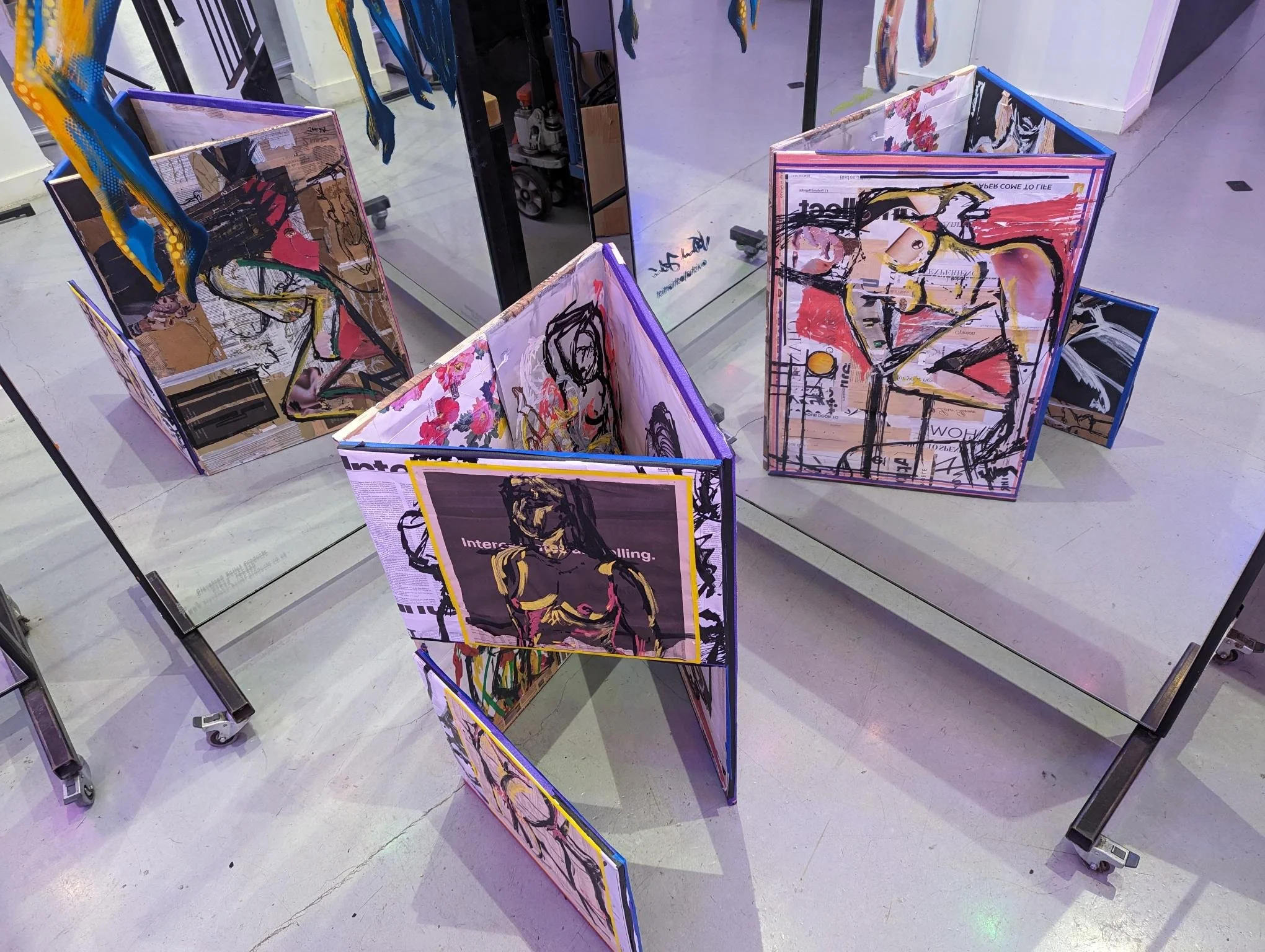
In my ongoing explorations, I have used mirrors to challenge superstitions surrounding “bad luck,” transforming them into symbols of reflection and renewal. Through these acts of reconstruction, I seek to honour the past, reframe loss, and reveal beauty in imperfection—each piece reveals transformation, and the enduring power of material memory.
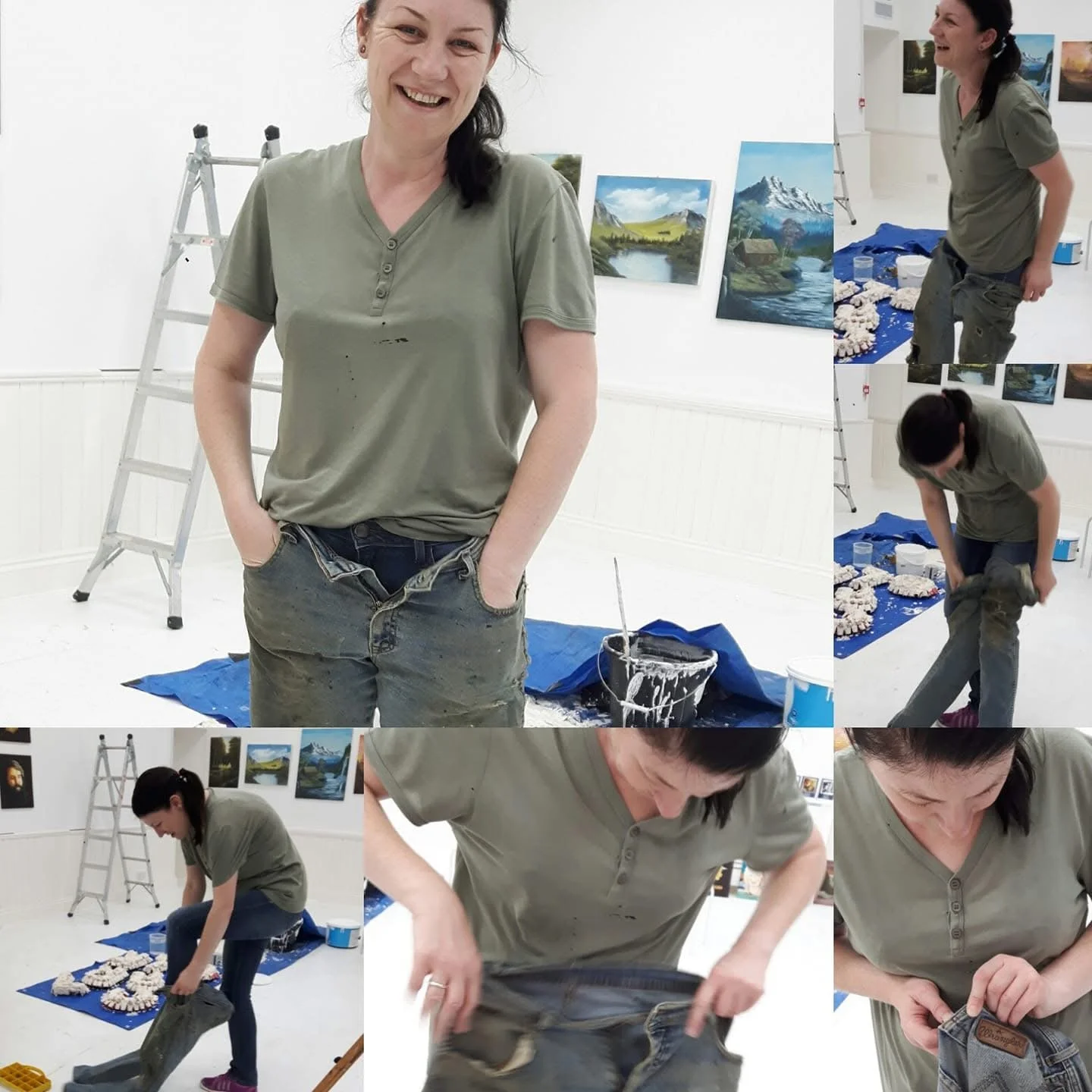
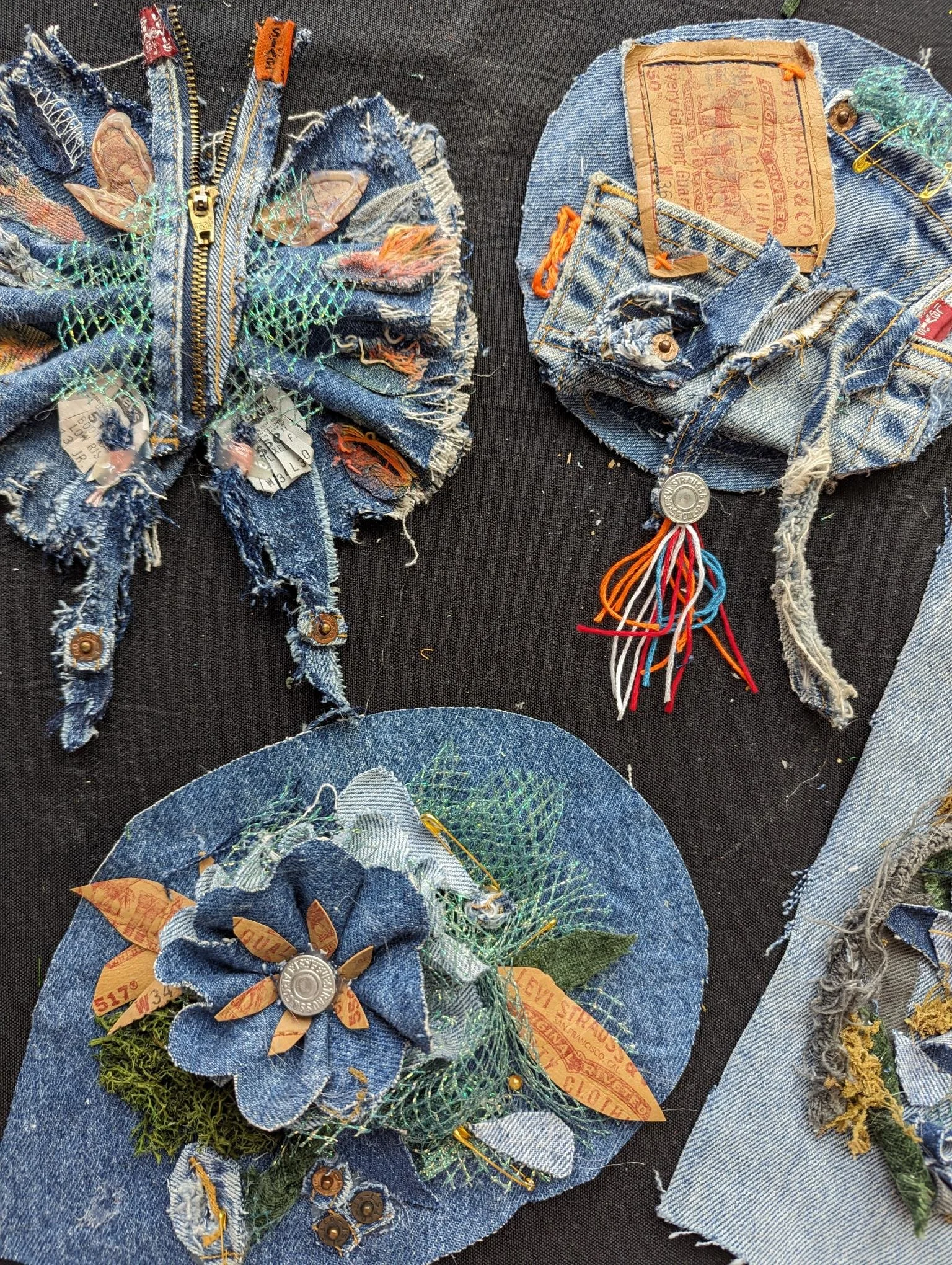
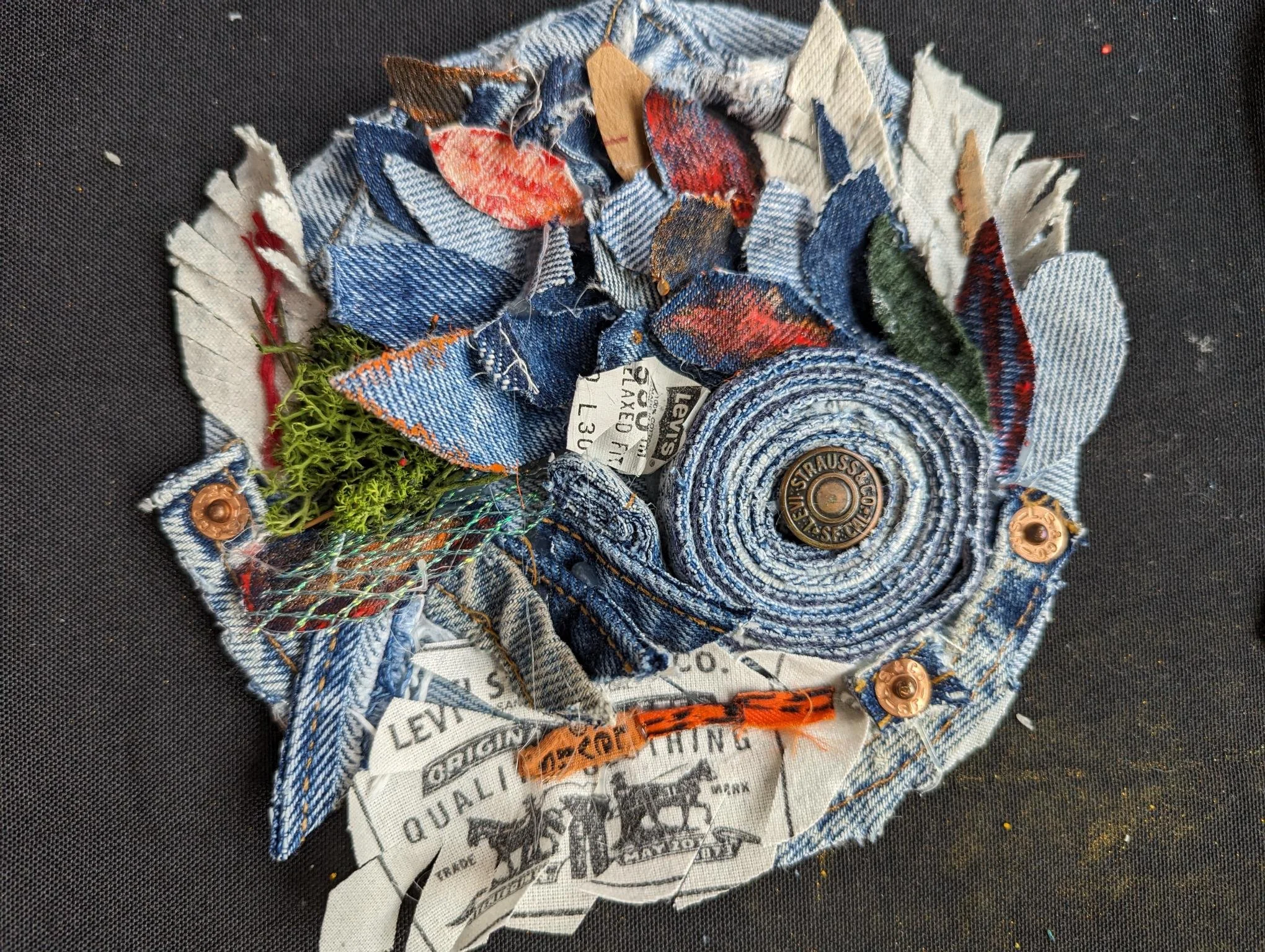
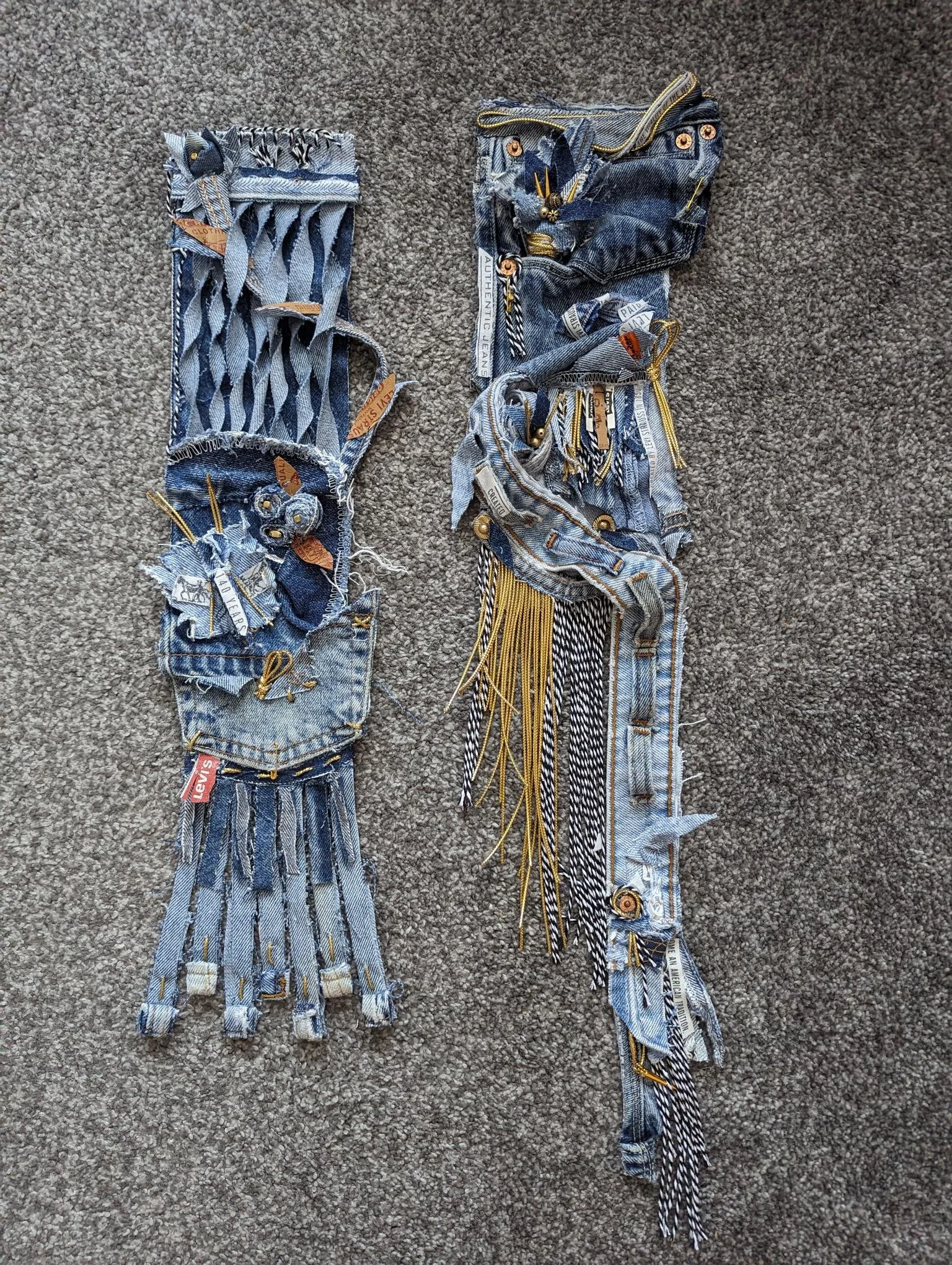
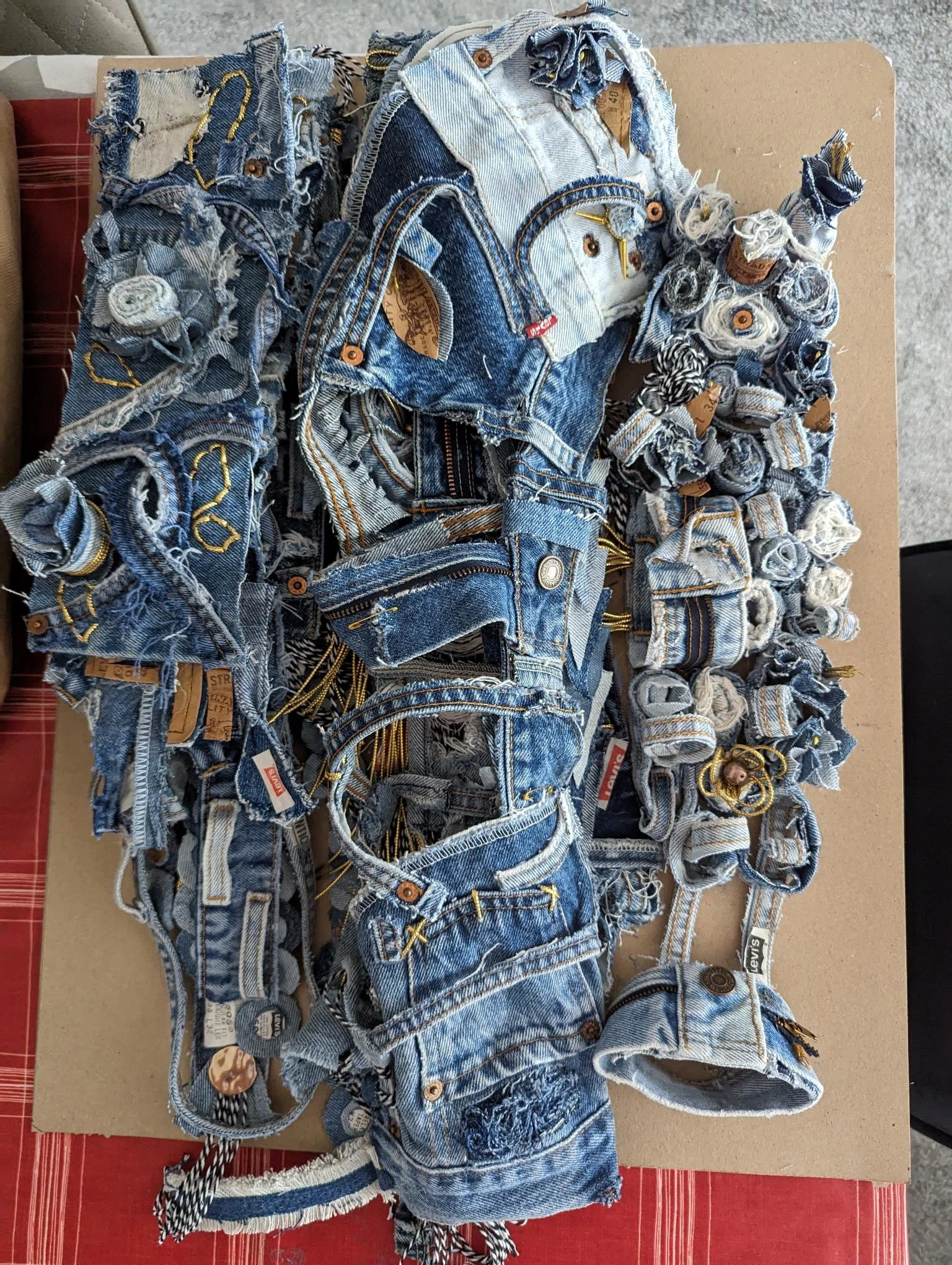
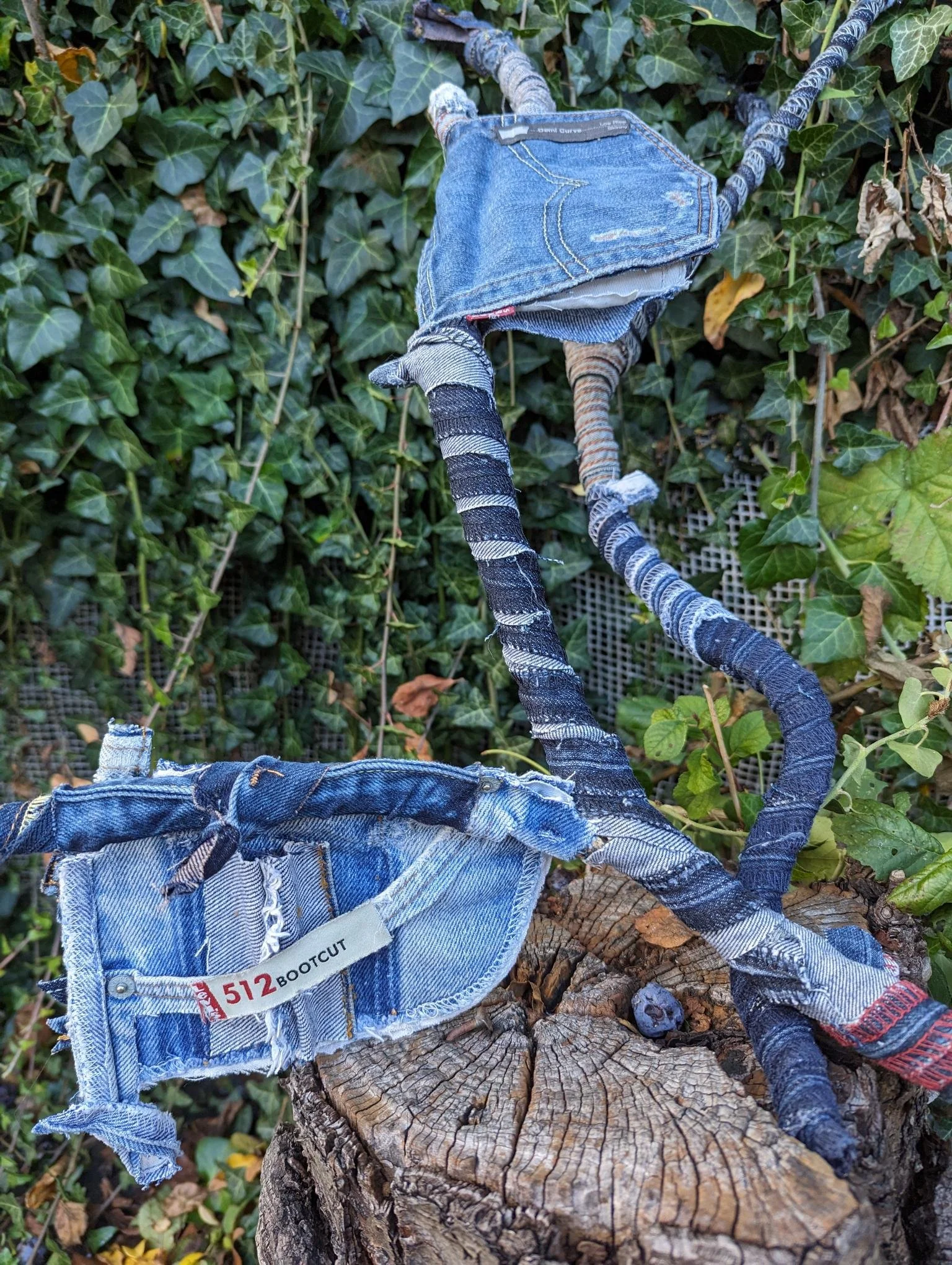
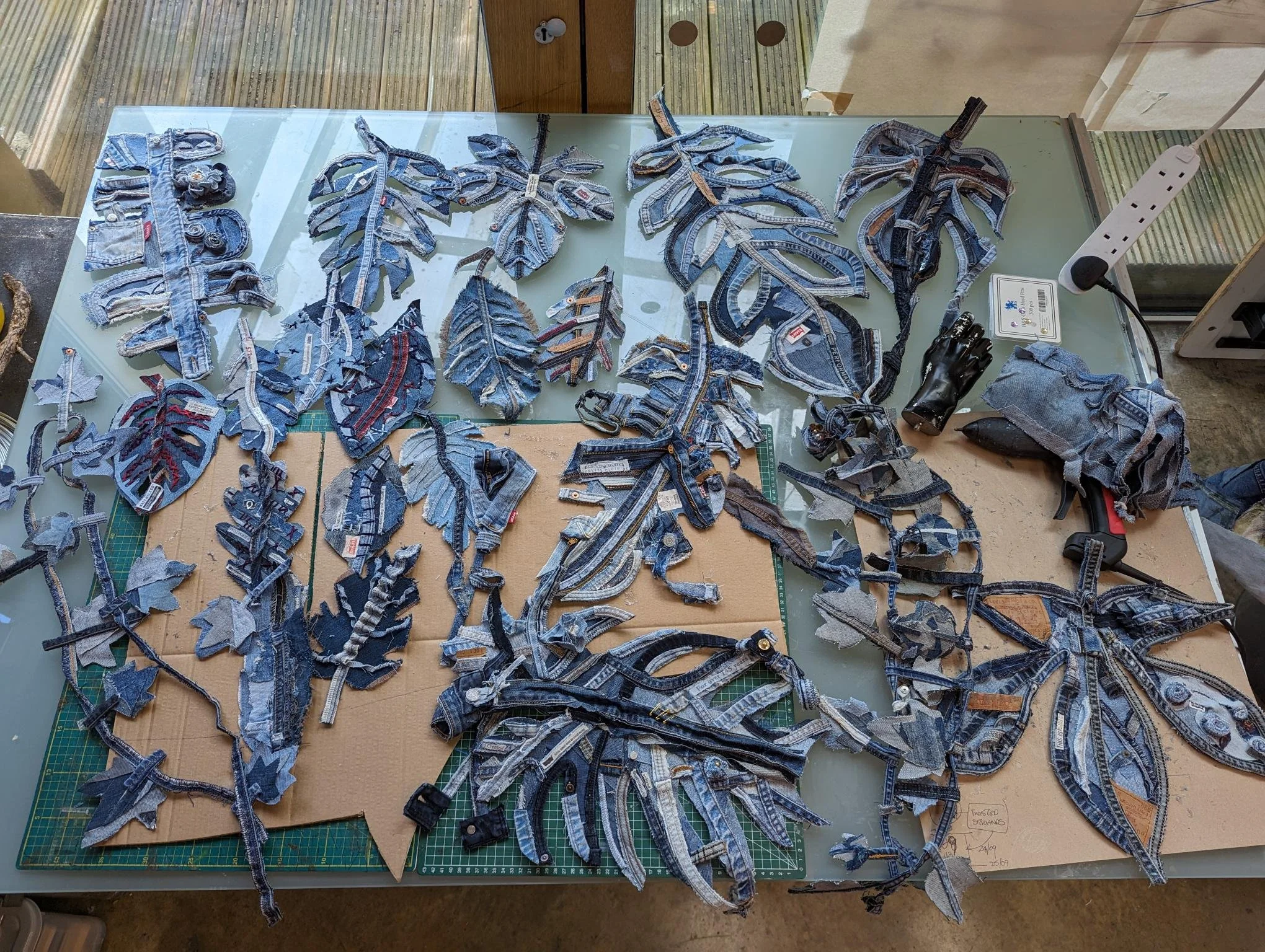
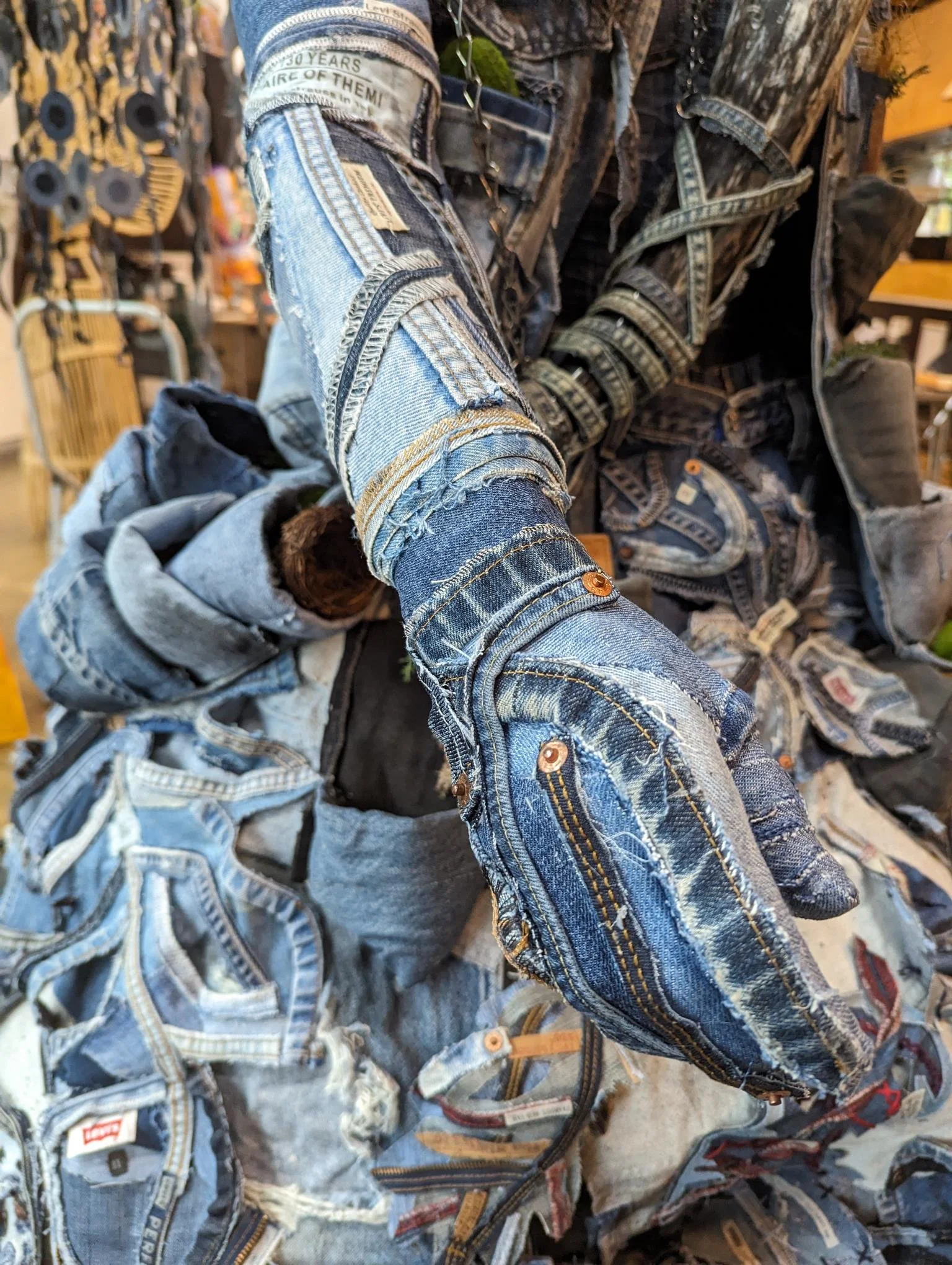
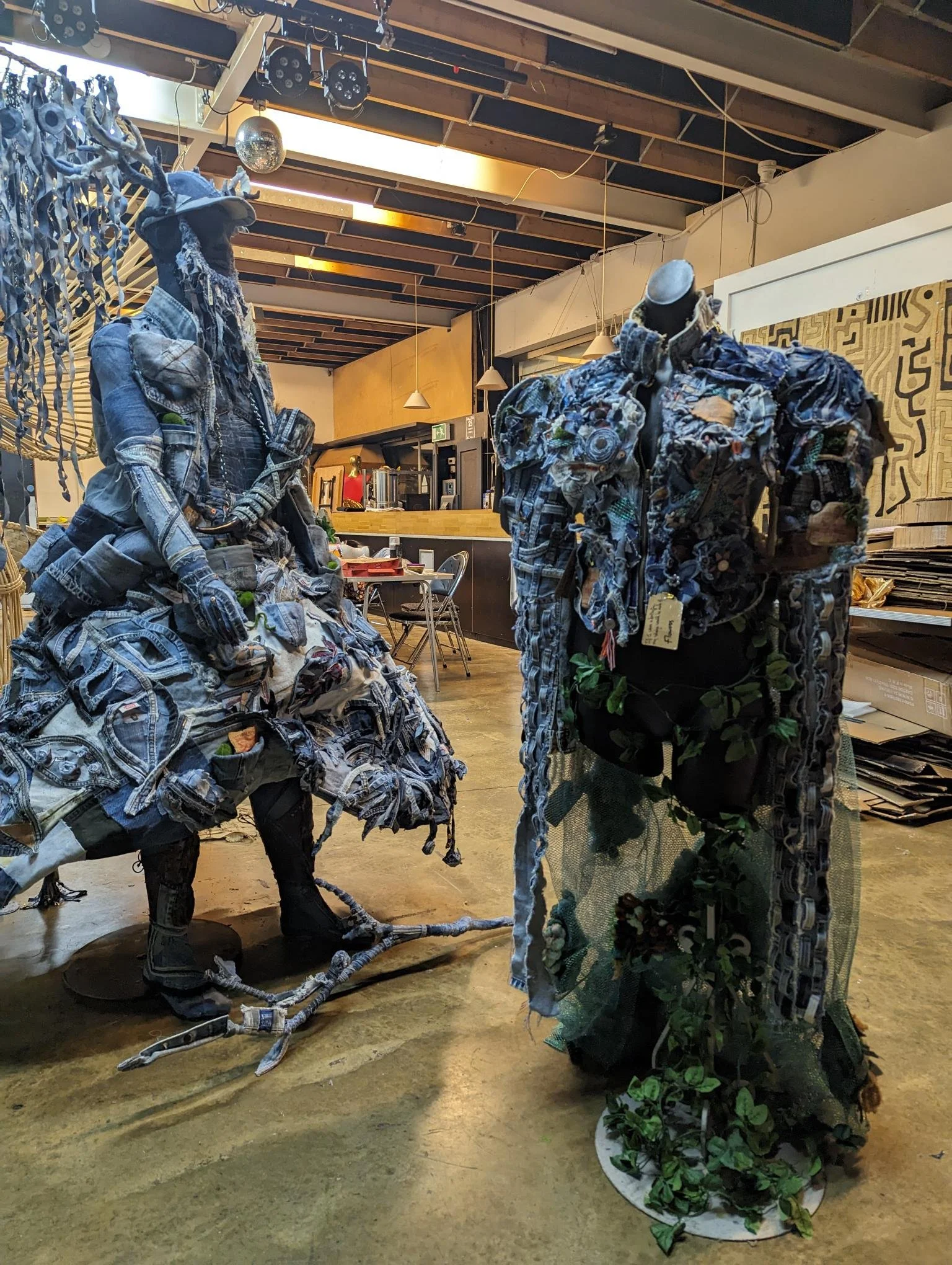
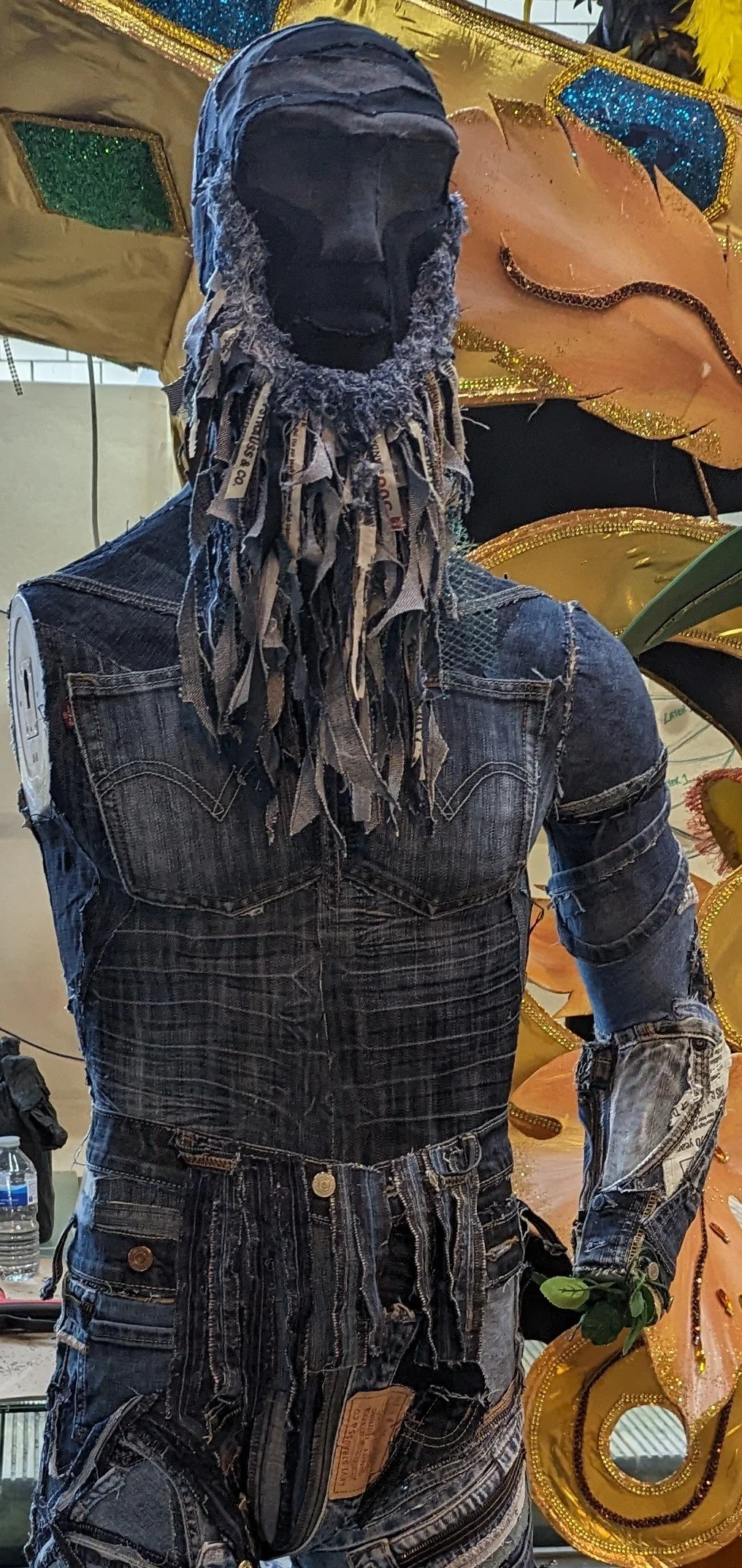
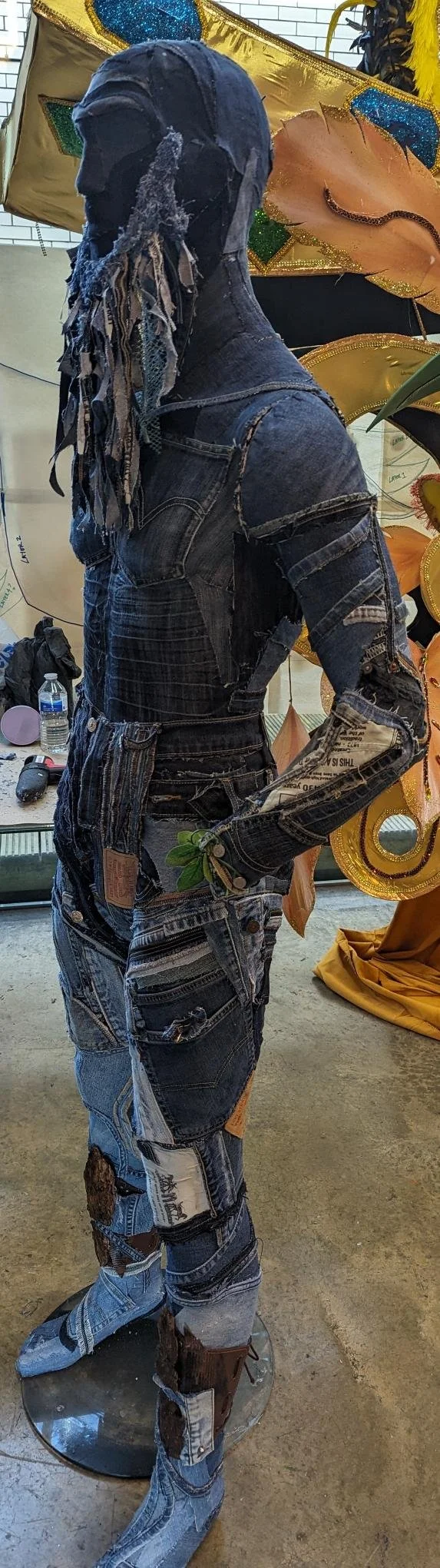
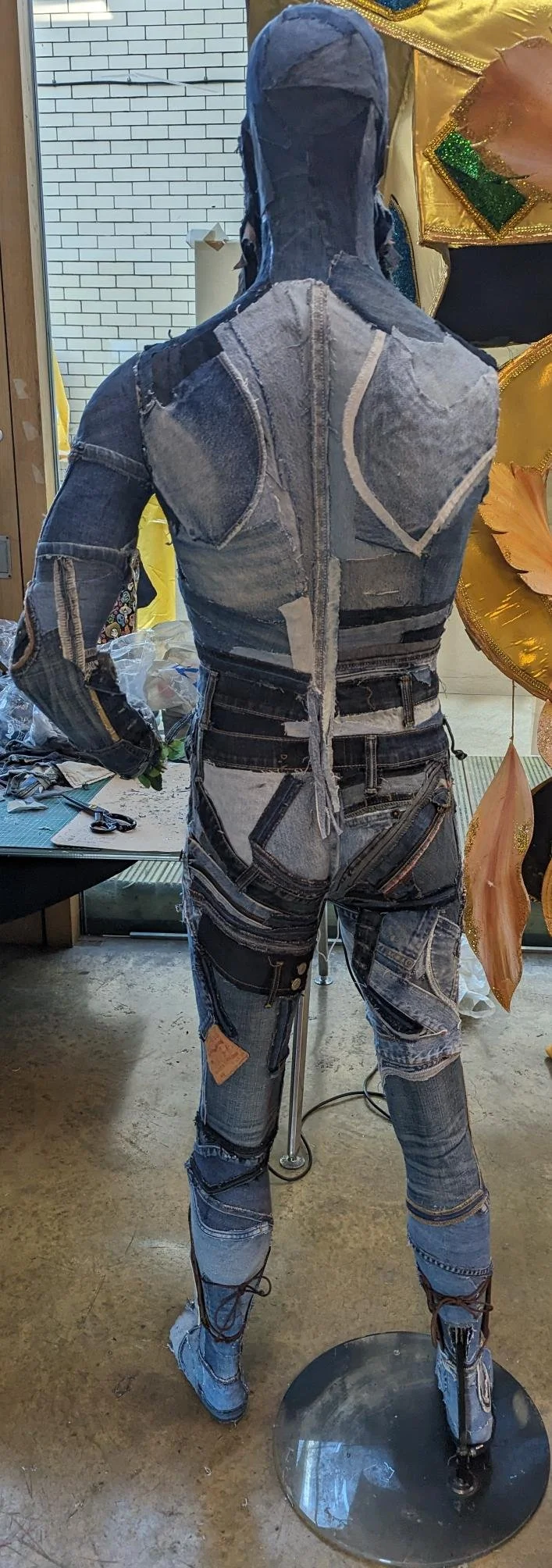
A recent discovery, made during a collaboration with fashion designer Melissa Simon-Hartman, involved deconstructing and reworking Levi’s denim, drawing inspiration from couture fashion and sustainable design. By reimagining this material—once emblematic of the working-class uniform—I transform it into something of renewed value and cultural status. This act of creative reclamation celebrates labour, craftsmanship, and identity, elevating the everyday into the extraordinary while reflecting on how materials, like people, can be continually redefined and reborn.
Ultimately, my creative ambition is one of self-discovery and renewal. Having rebuilt my practice through recovery, I now see my work as a continual process of reinvention and exploration—a journey toward understanding both material and self. I am driven to deepen my artistic voice through collaboration, experimentation, and community connection, using creativity as a means to heal, empower, and inspire. This marks a personal and artistic rebirth—a commitment to transforming lived experience into meaningful expression and building a future rooted in purpose, resilience, and the enduring power of art to restore and redefine.
Luton at Heart — Project Vision
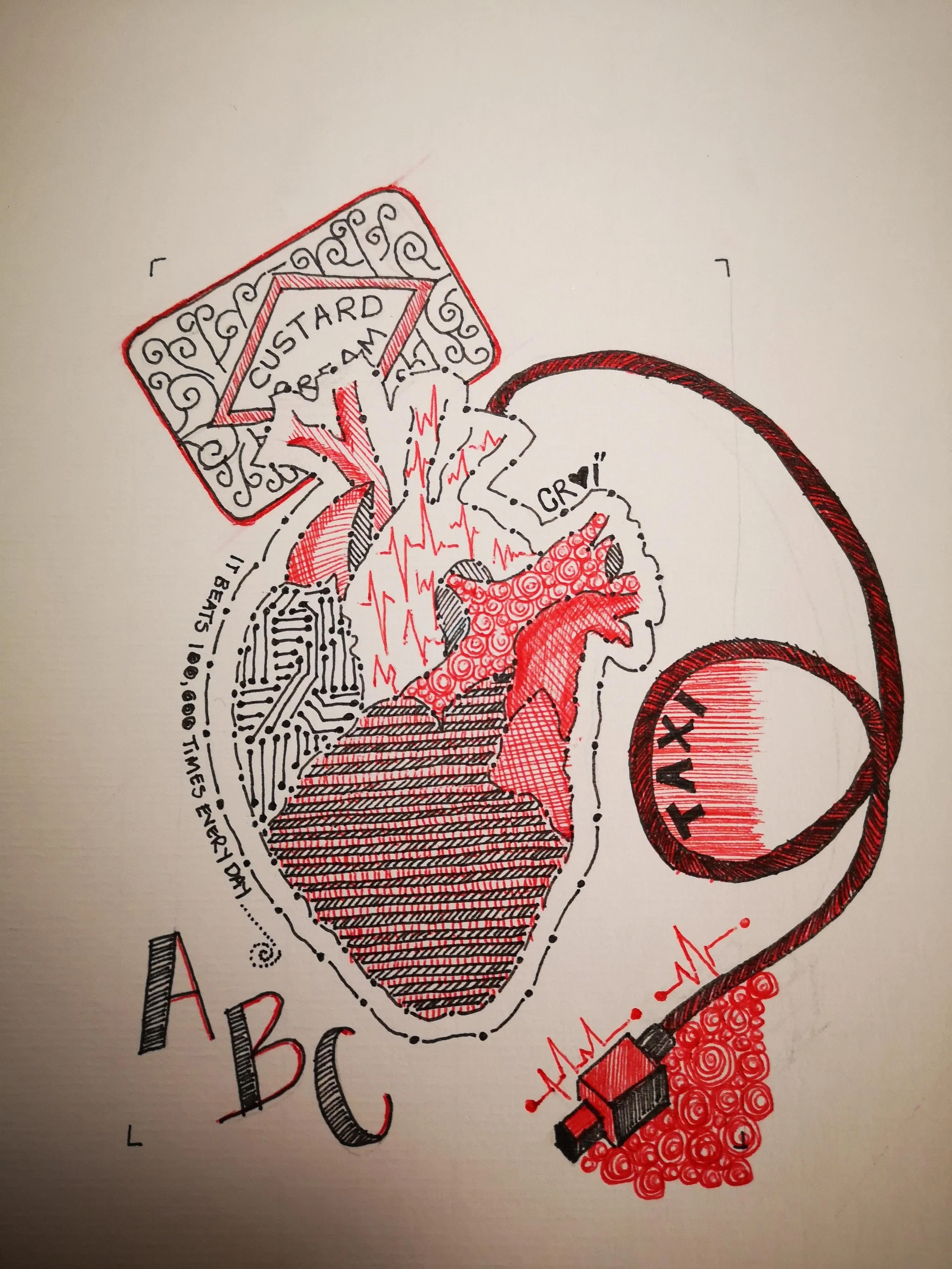
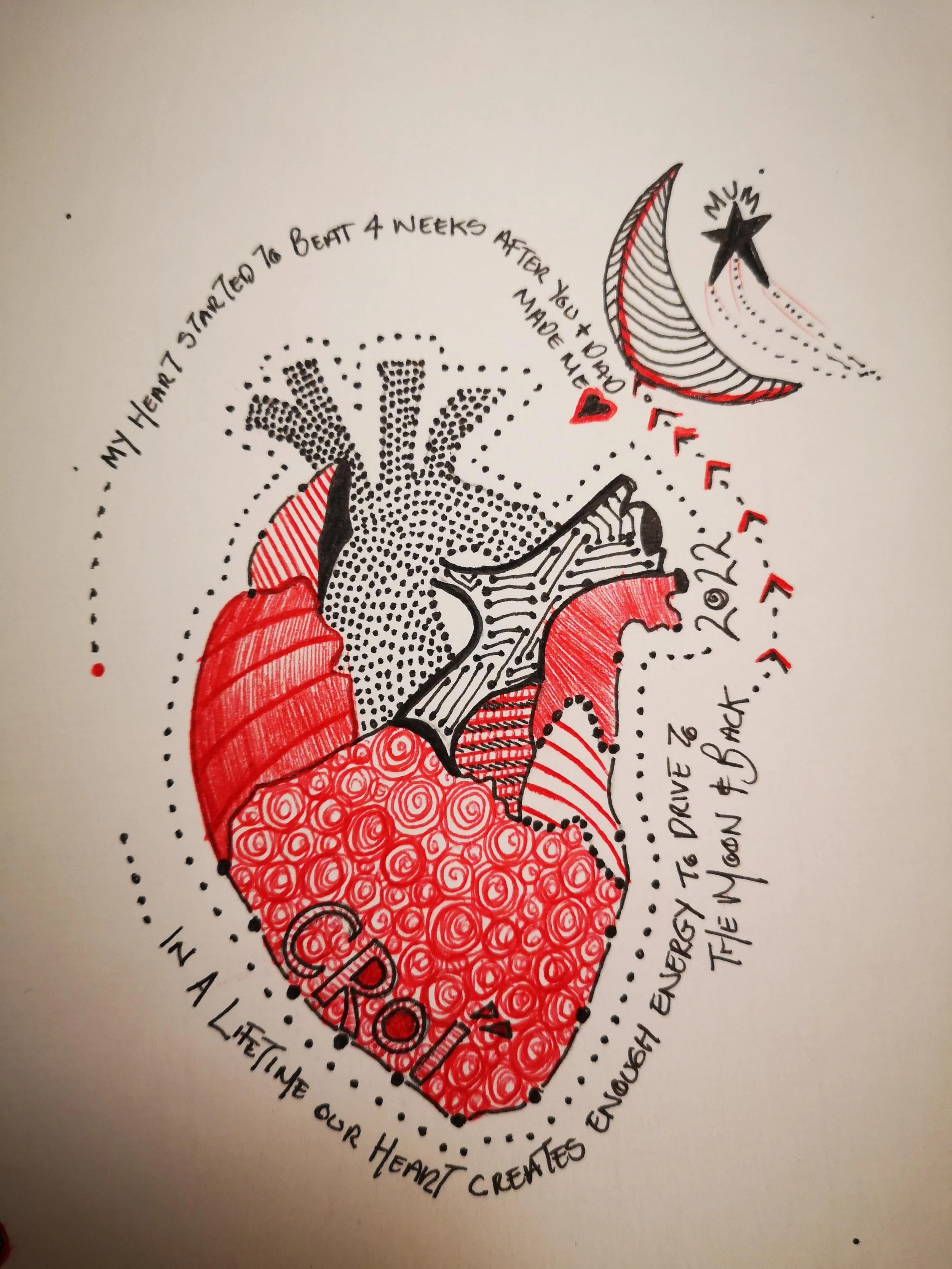
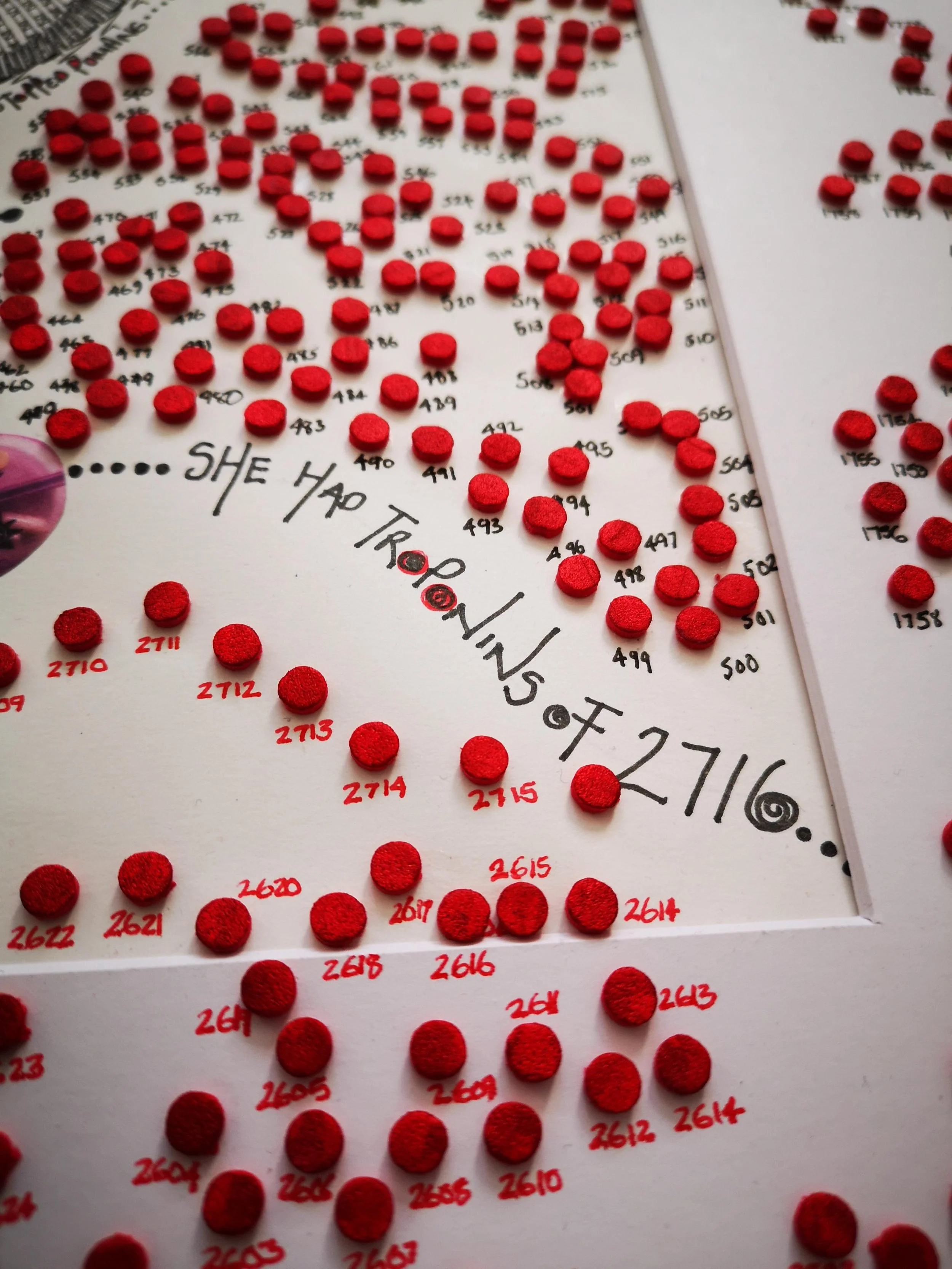
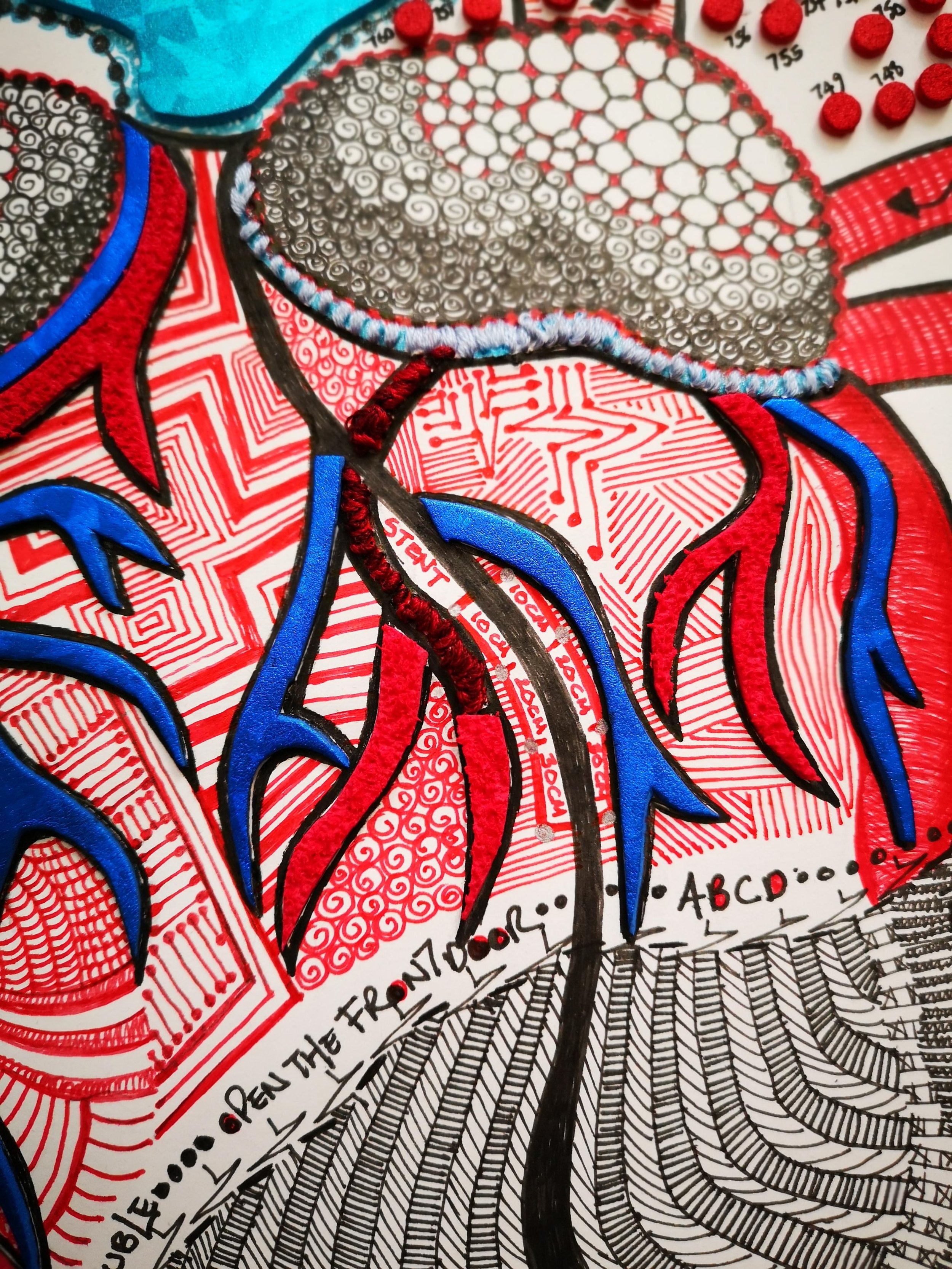
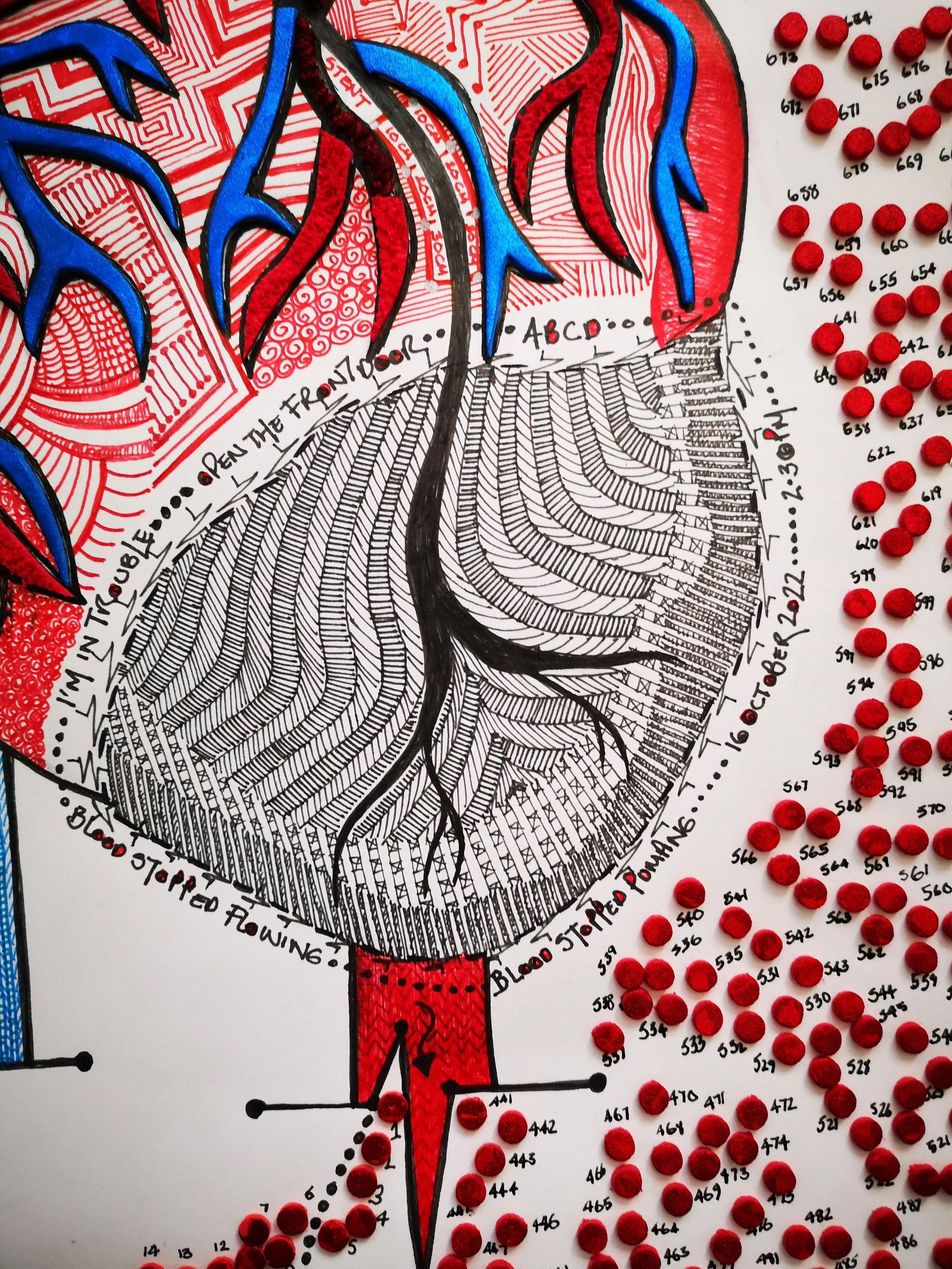
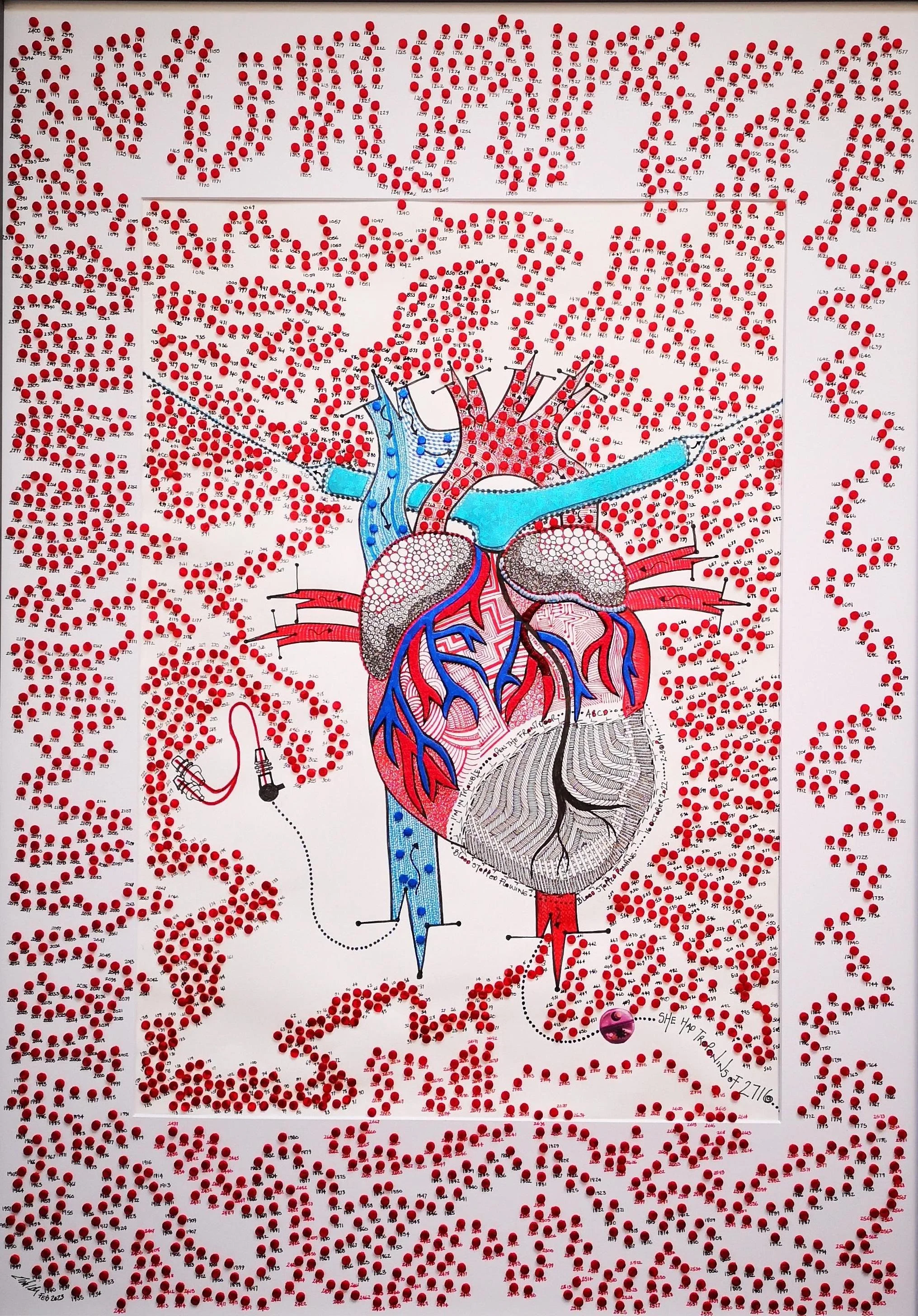
Luton at Heart grew from a moment that changed my life. After surviving a heart attack in 2022, returning to art became a way for me to rebuild not only my strength and confidence, but also my sense of who I was. Through this project, I want to explore how life-changing experiences reshape what we value and how creativity can help us reconnect with ourselves and with others.
Working alongside my sister, artist and creative archivist Fiona Martin, I am creating a series of mixed-media portraits, sound works, and moving image pieces that bring together image, voice, and memory. I use autobiographical and found materials to build portraits that go beyond likeness — works that hold stories, emotions, and fragments of lived experience.
The people involved in Luton at Heart are not defined by illness. What connects us is the shared human experience of vulnerability, humour, resilience, and rediscovering joy after difficult moments. My aim is to make these everyday stories visible and important, showing how creativity can transform personal experience into connection, understanding, and hope.
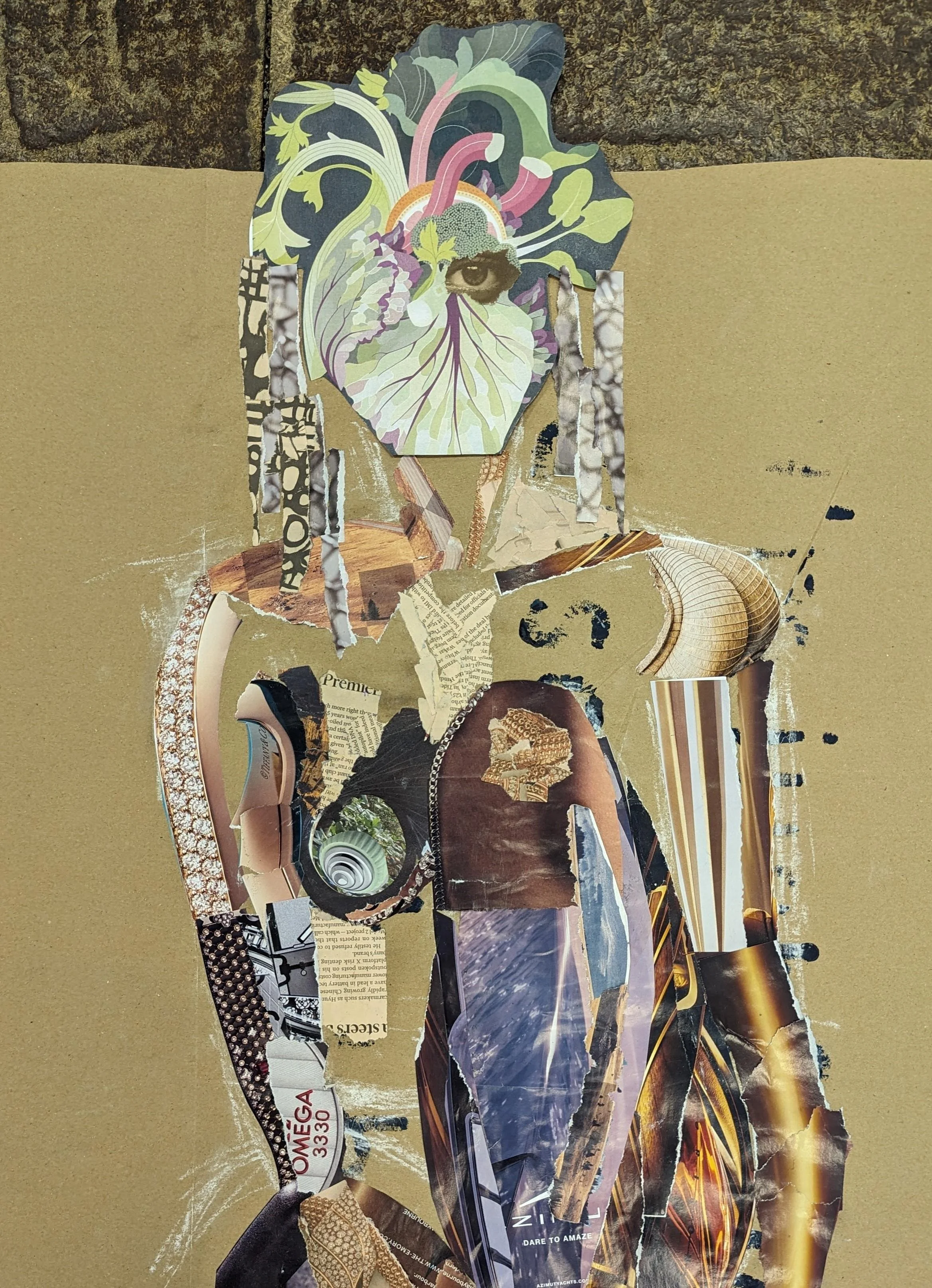
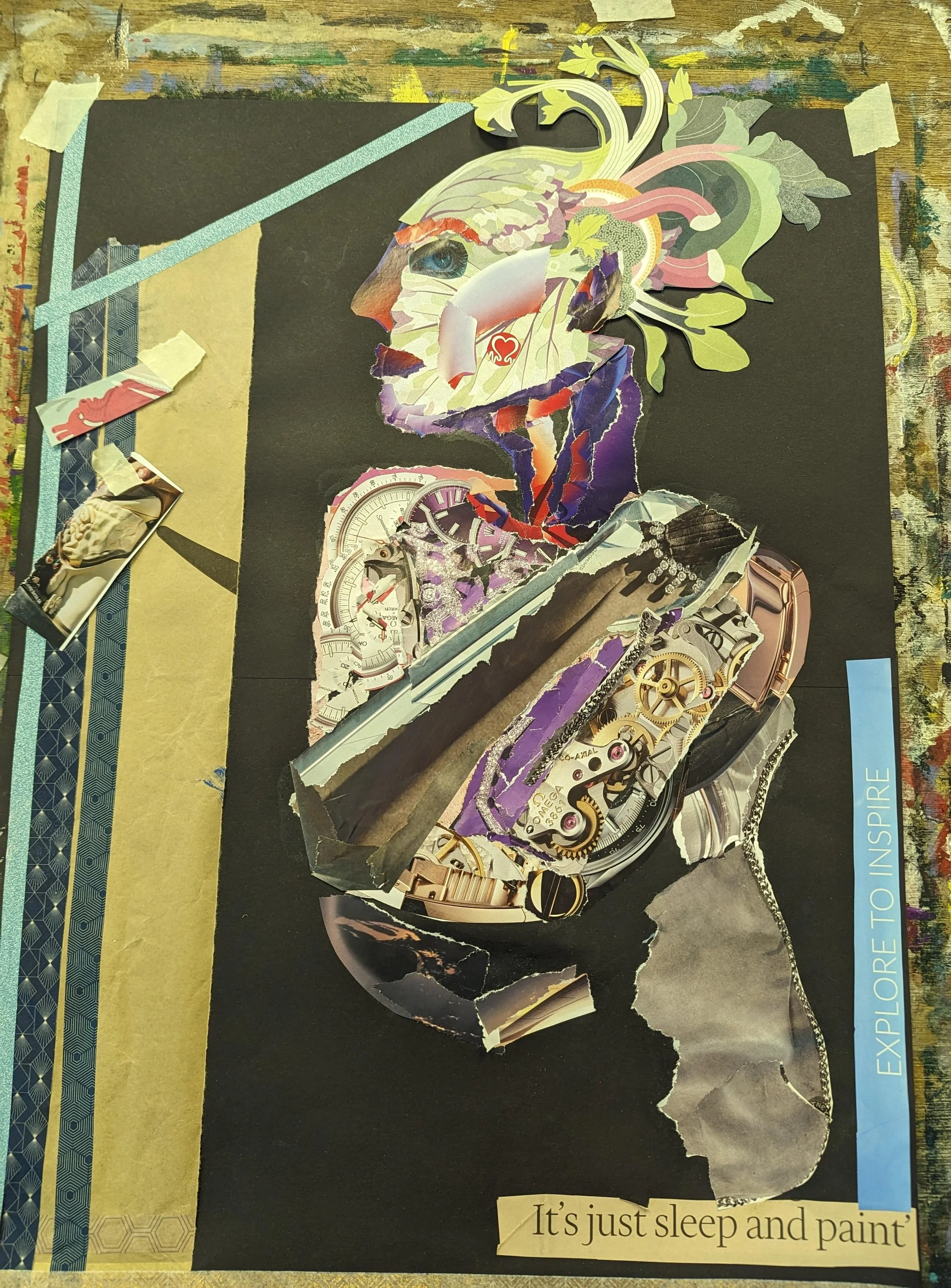
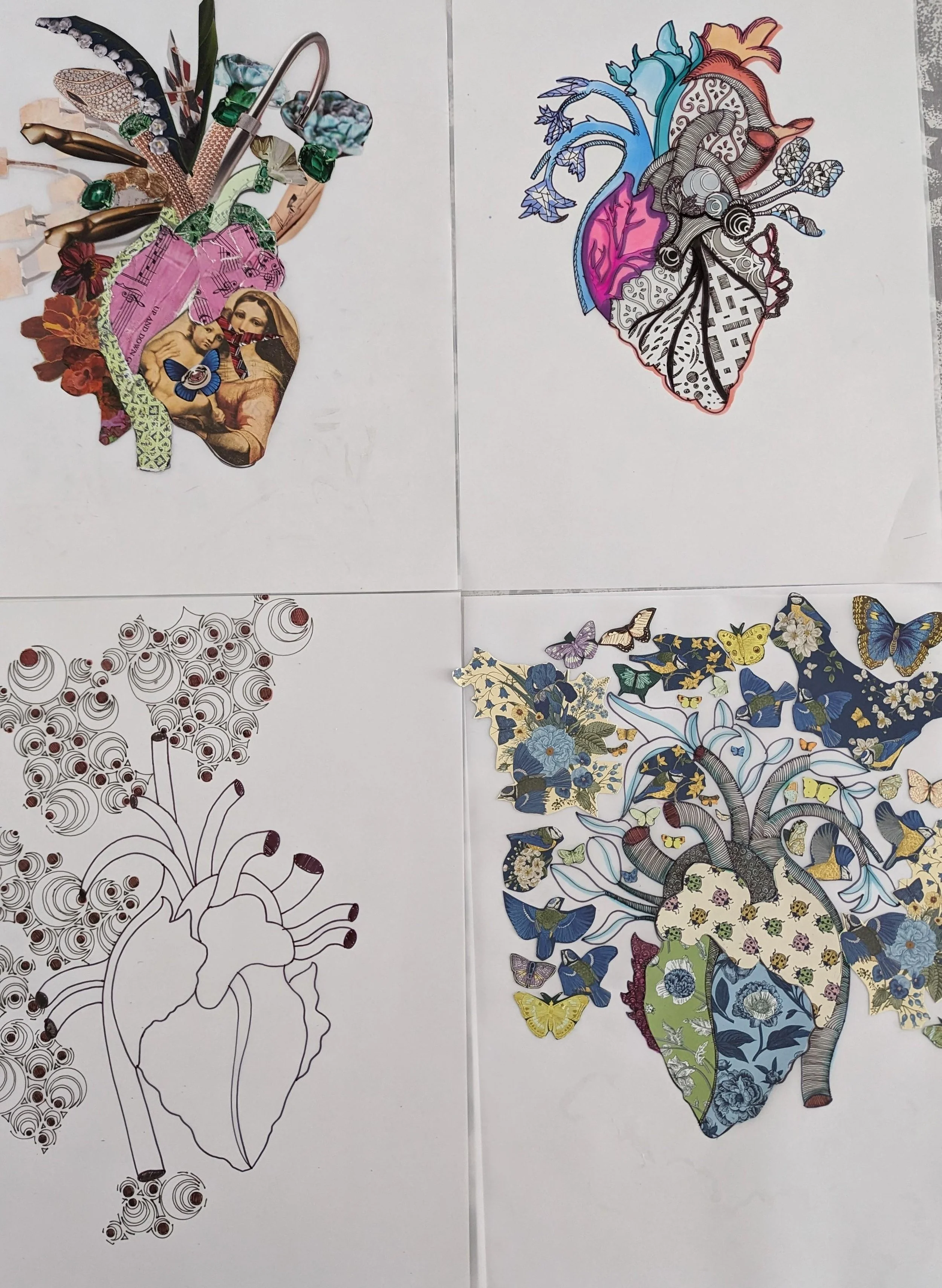
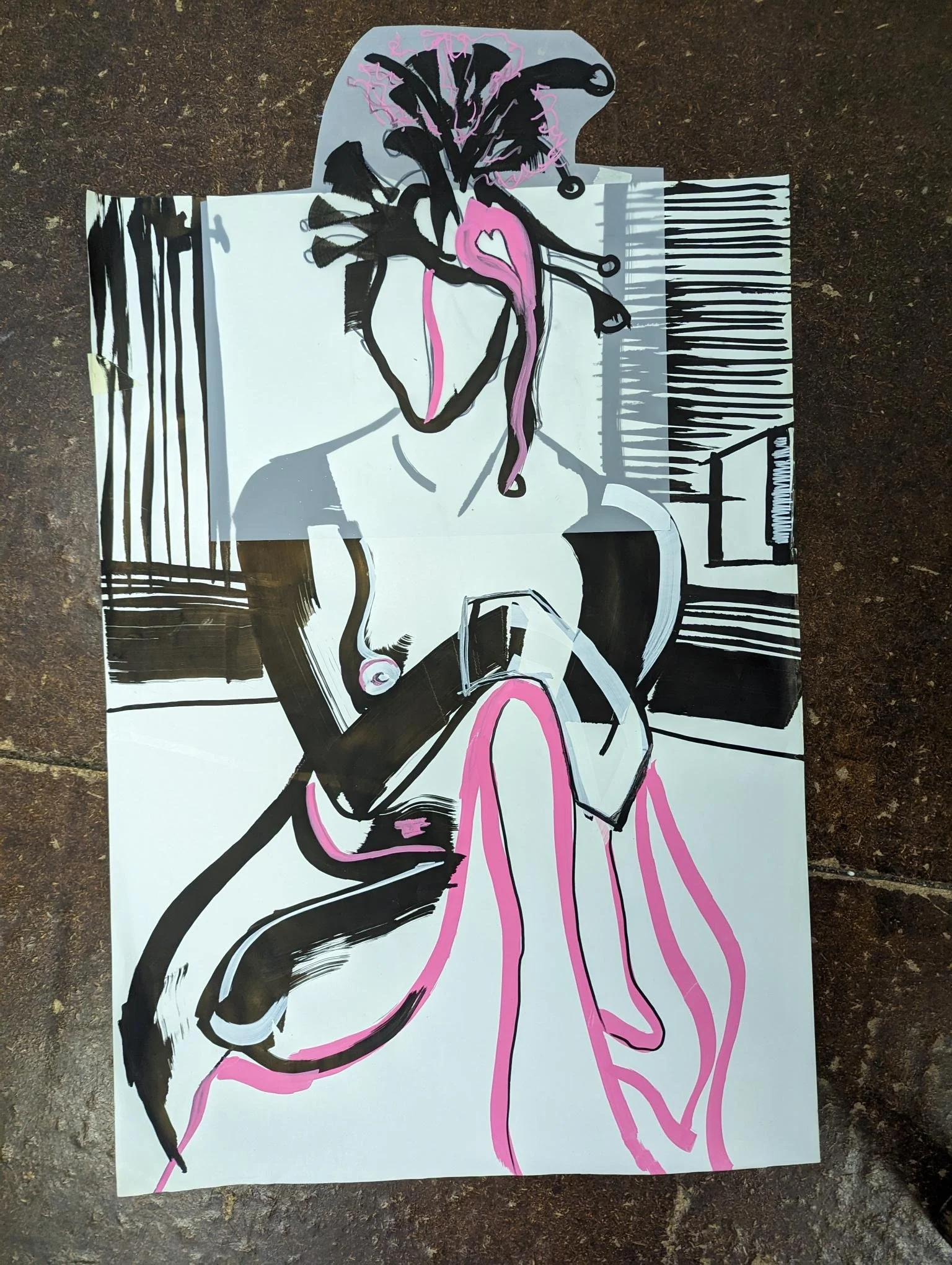
Creative Recovery & Recent Work
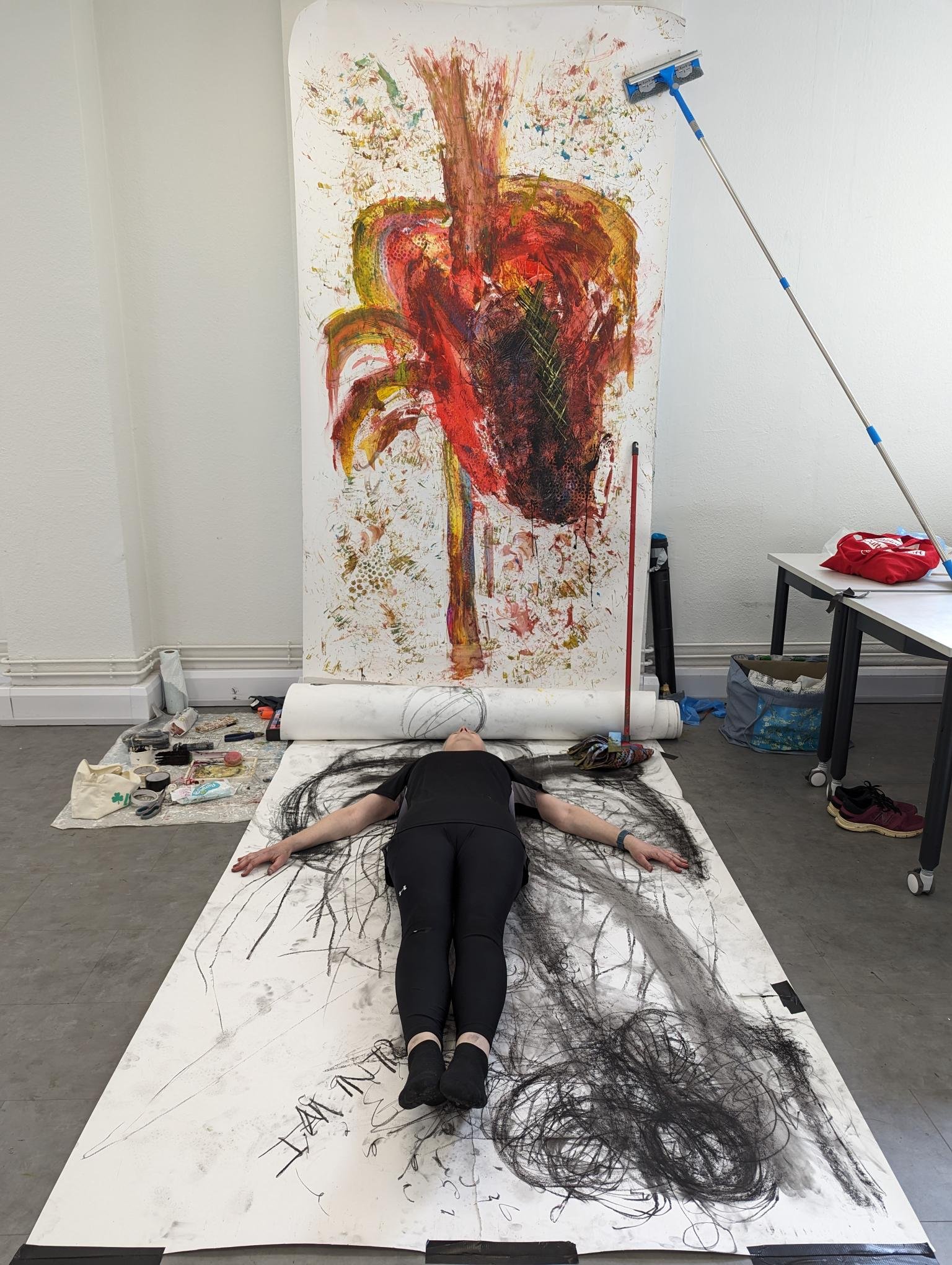
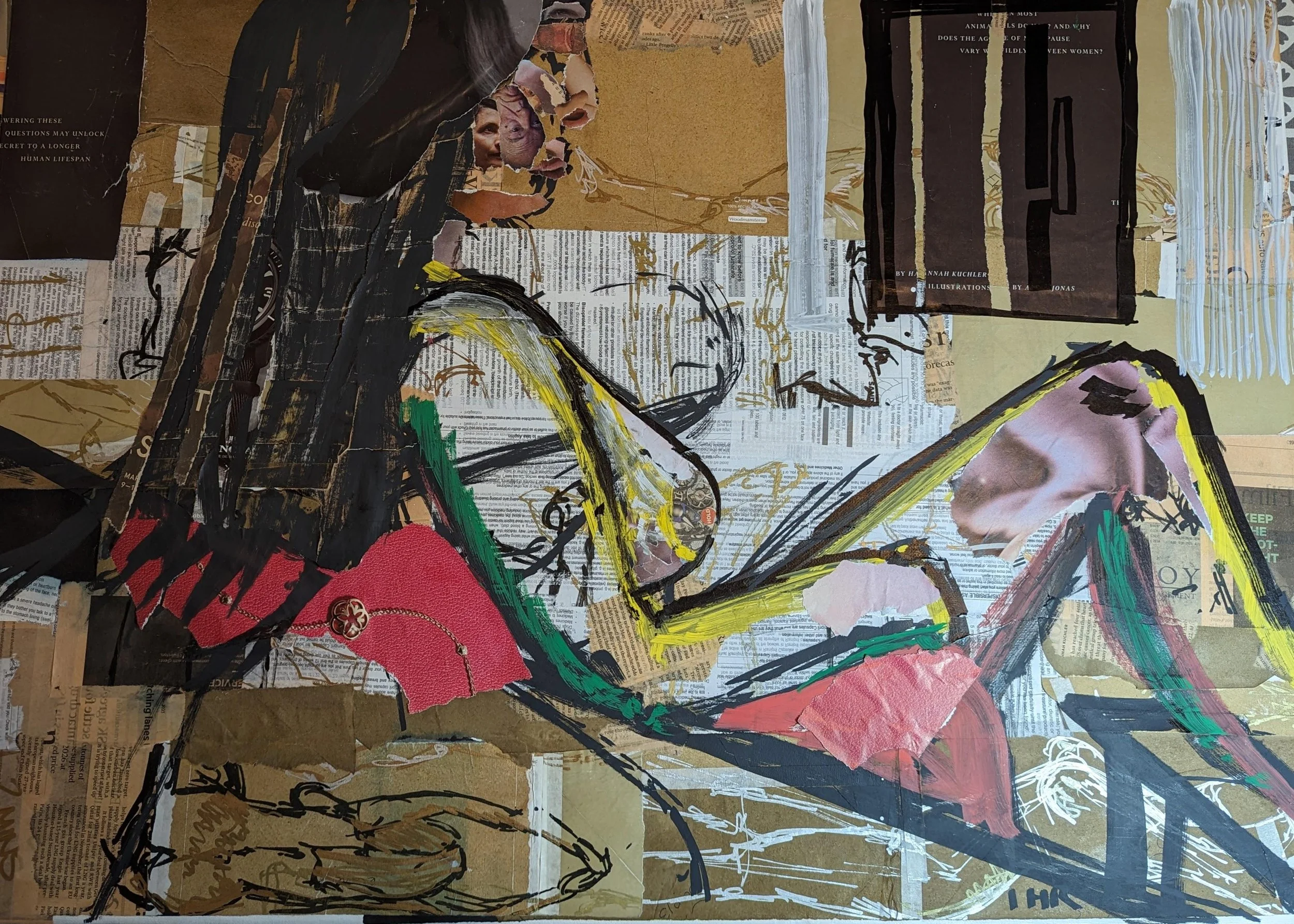
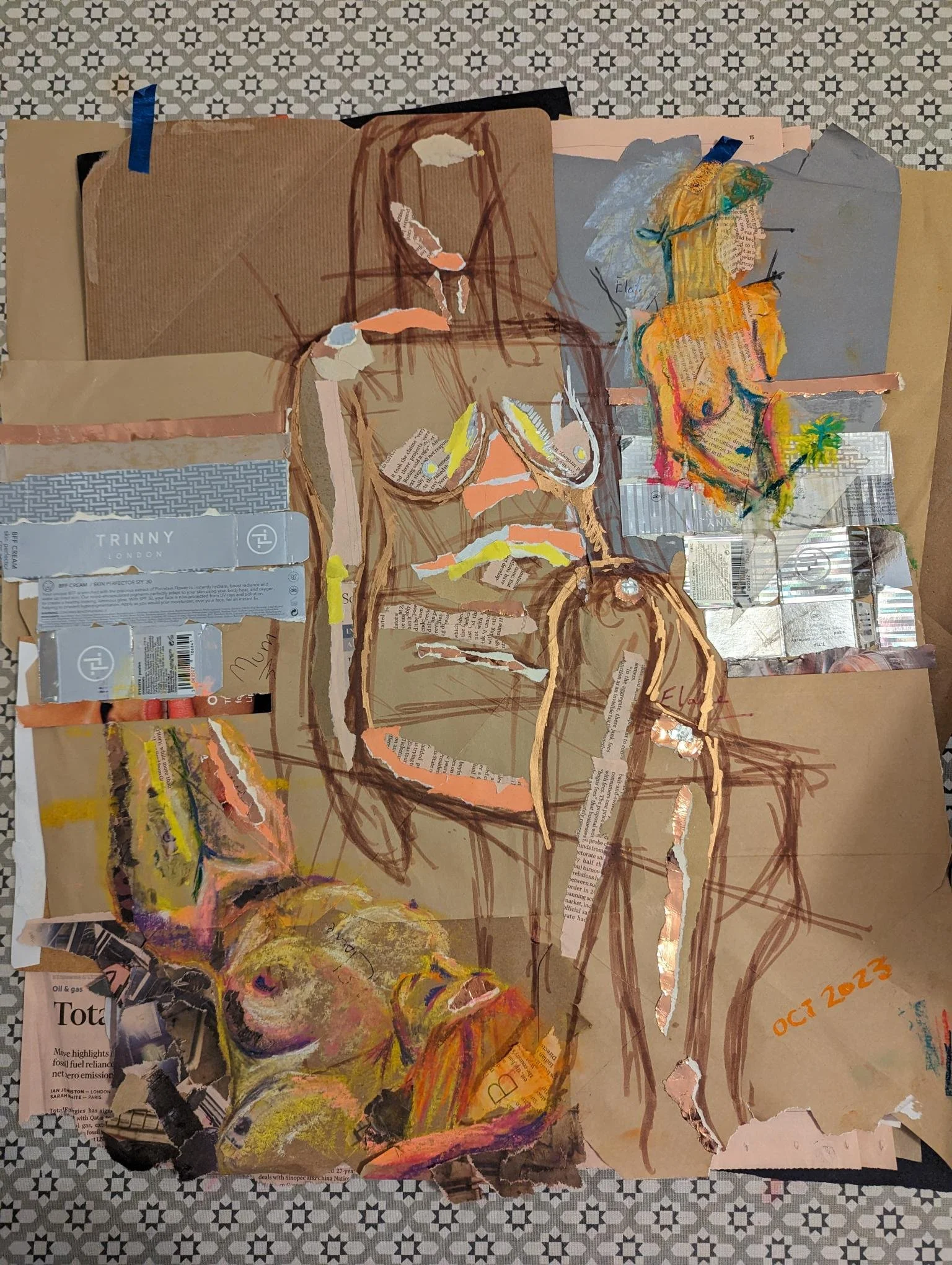
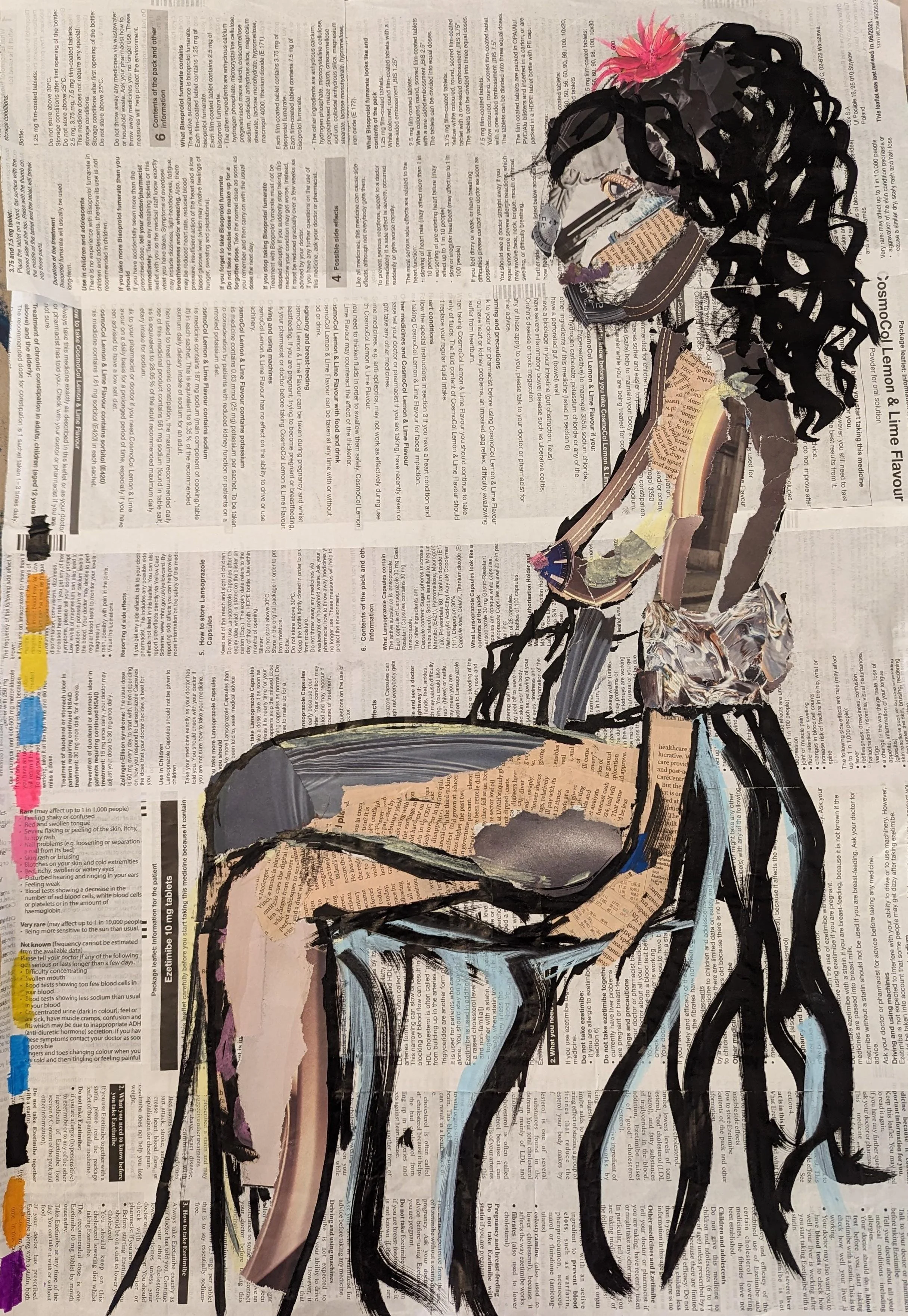
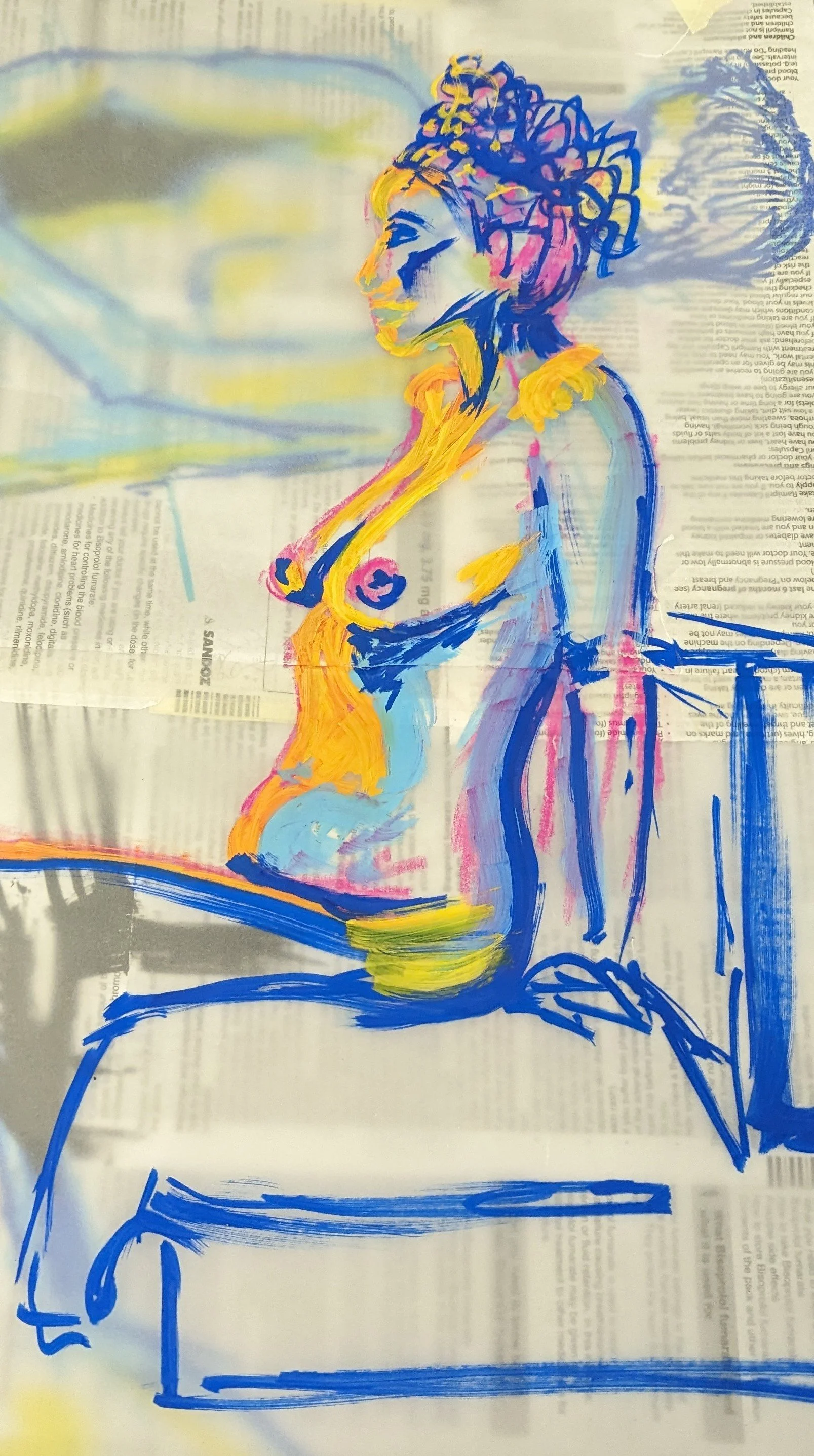
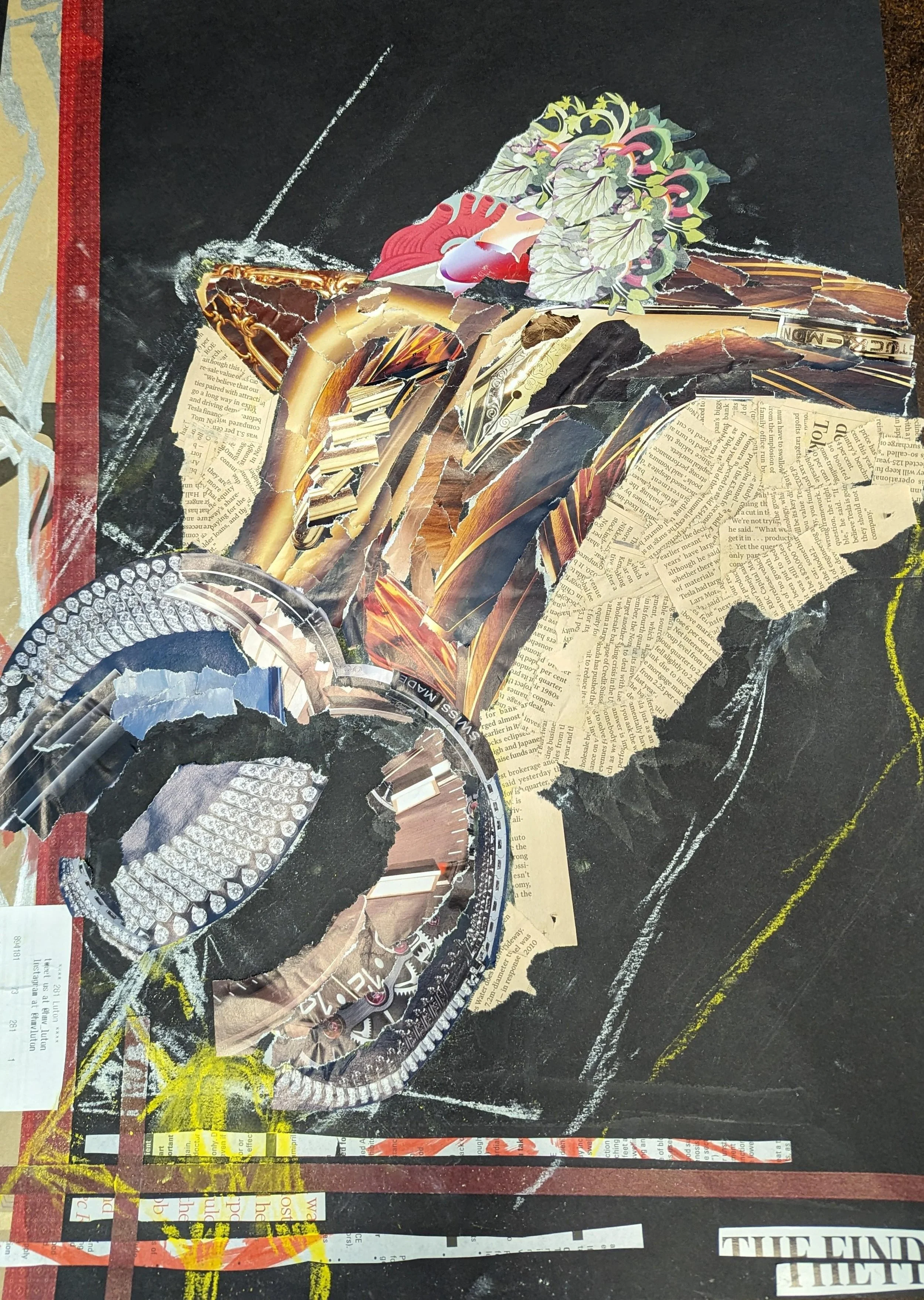
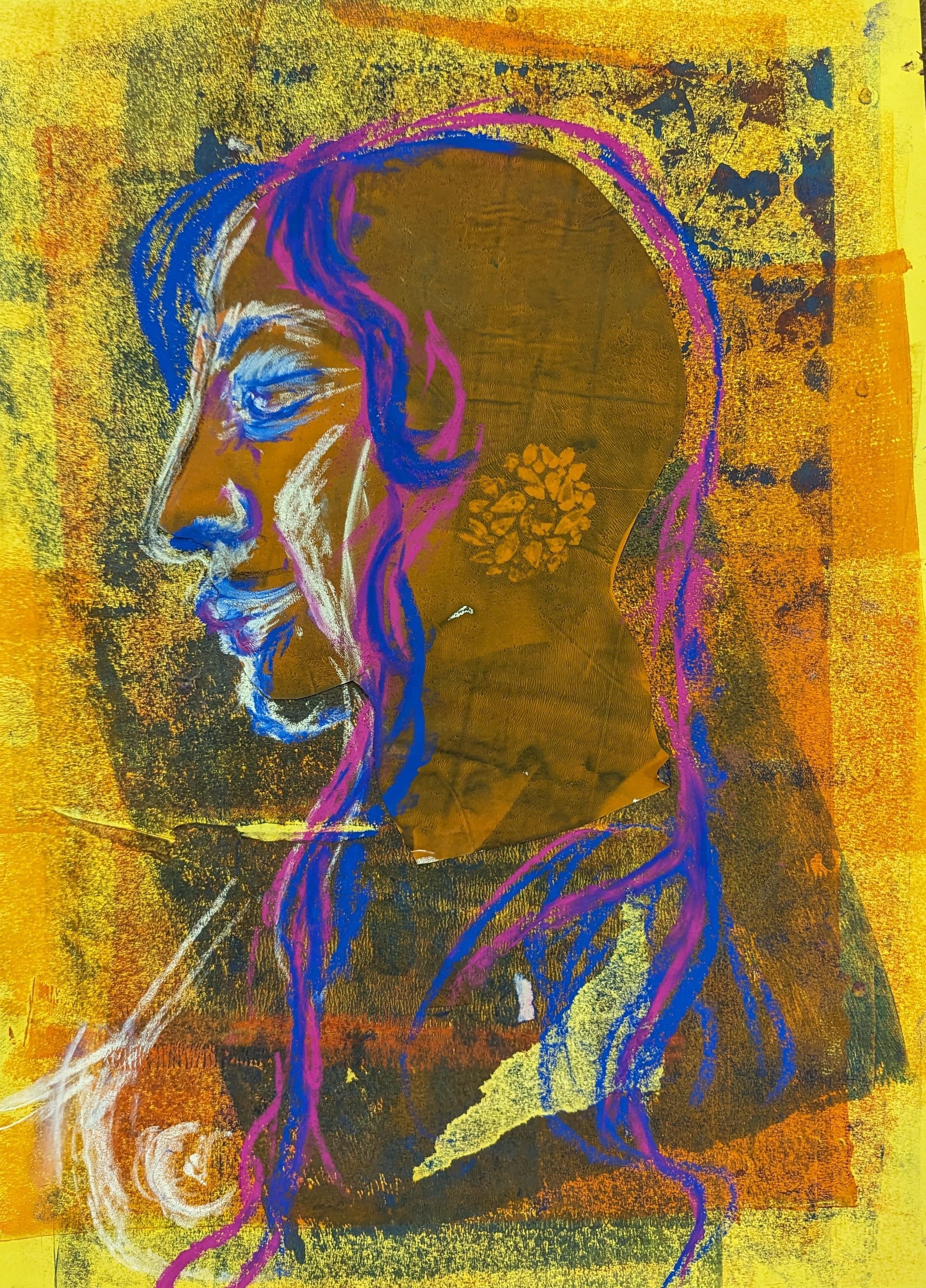
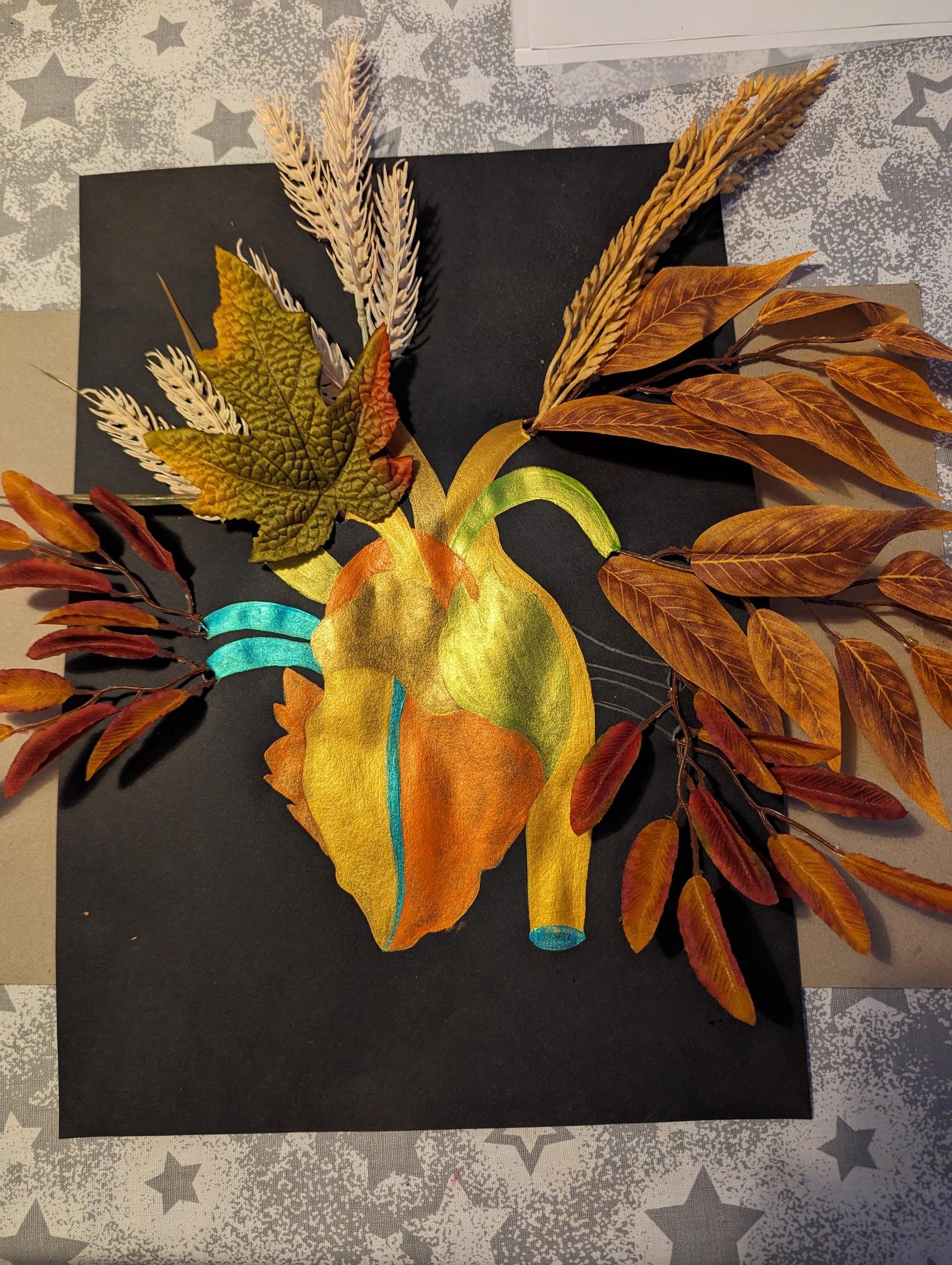
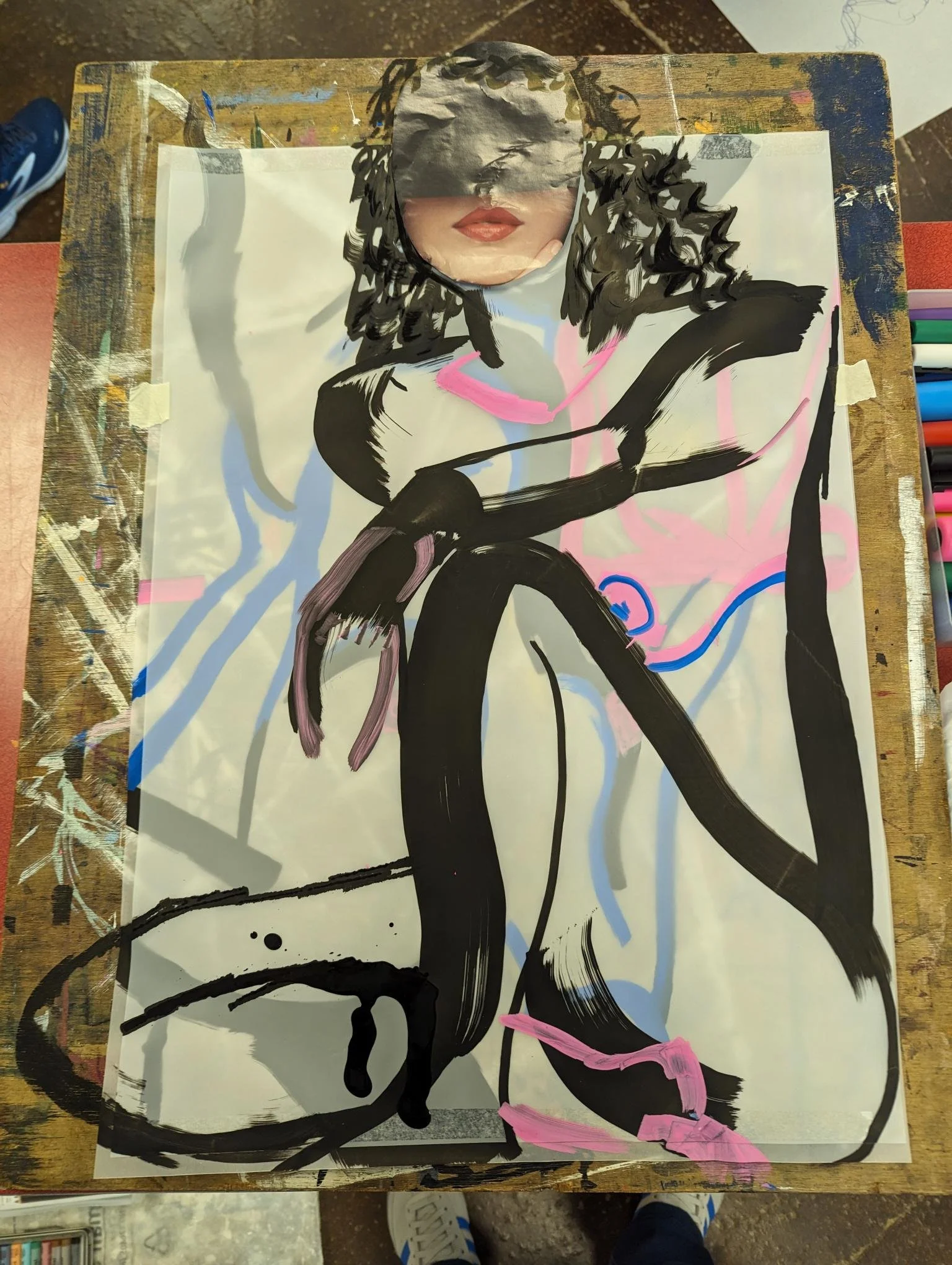
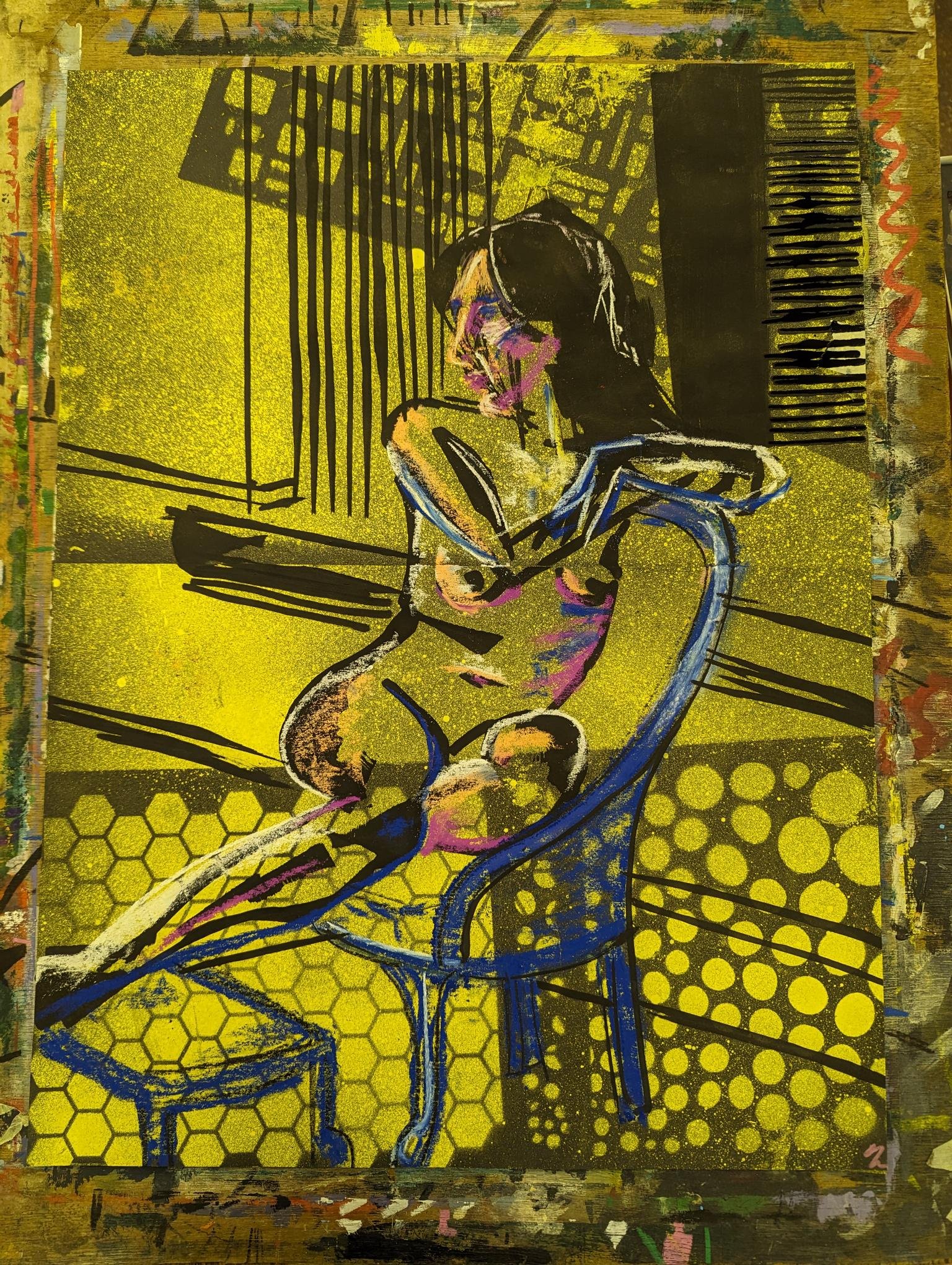
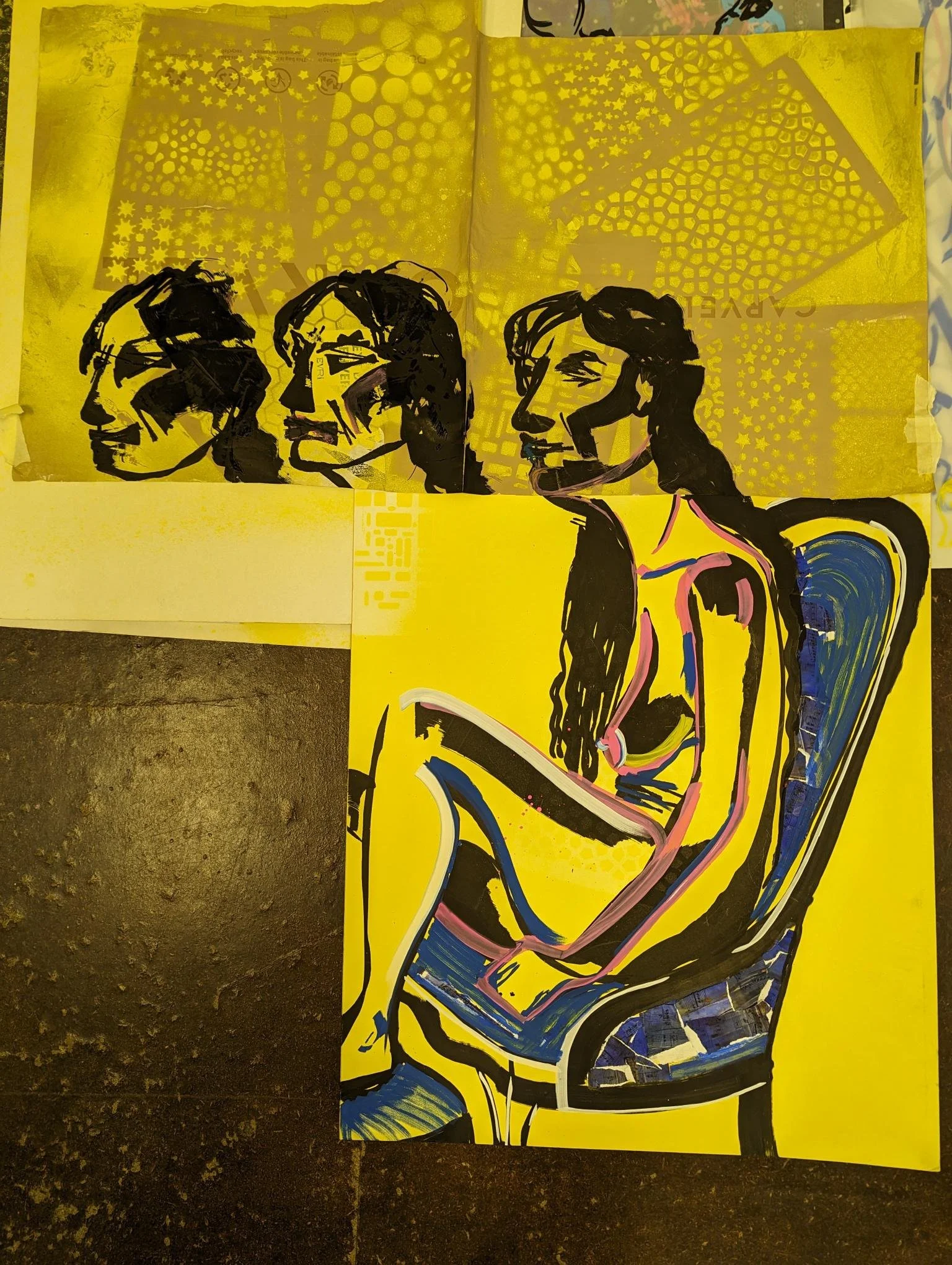
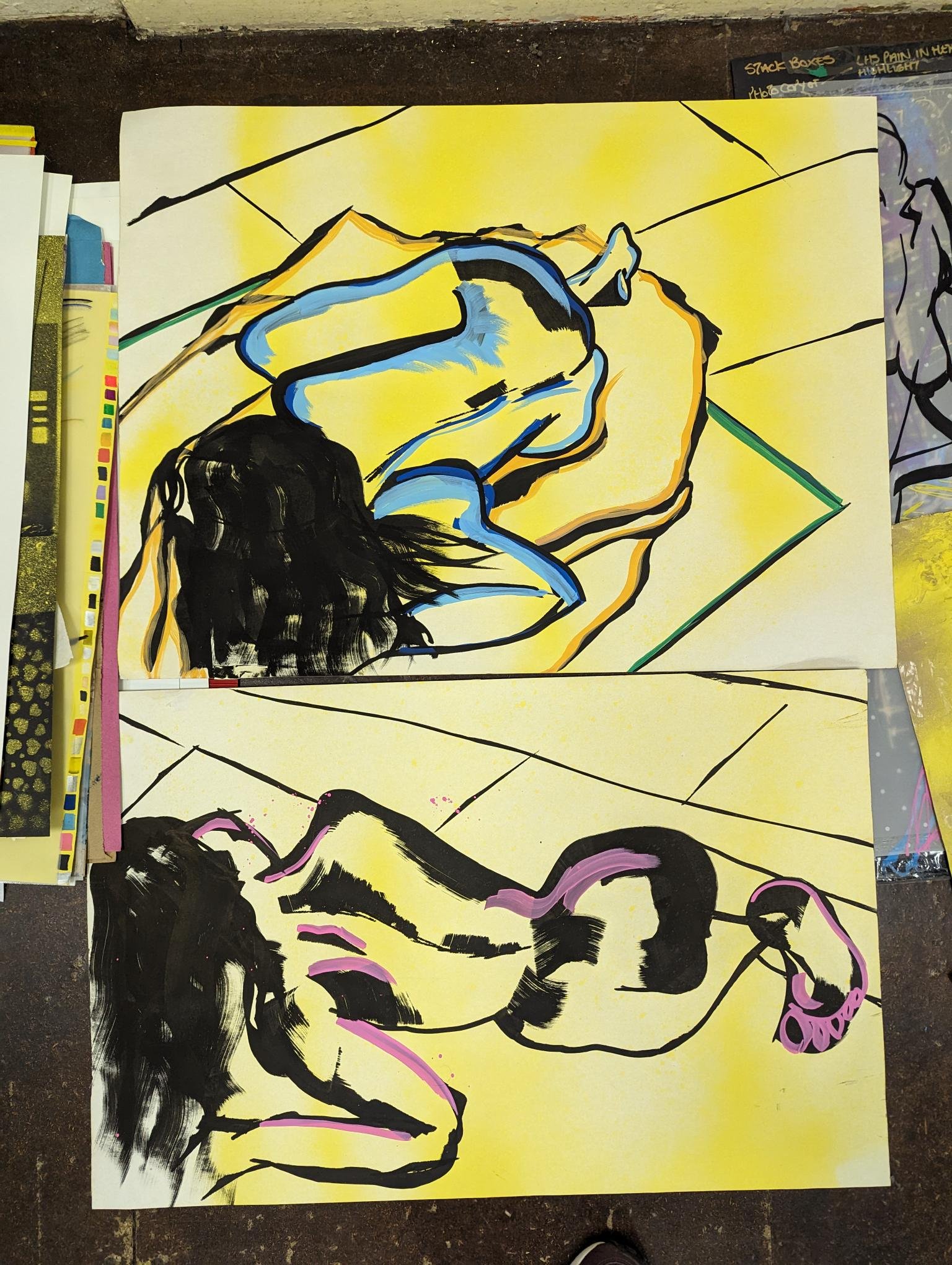
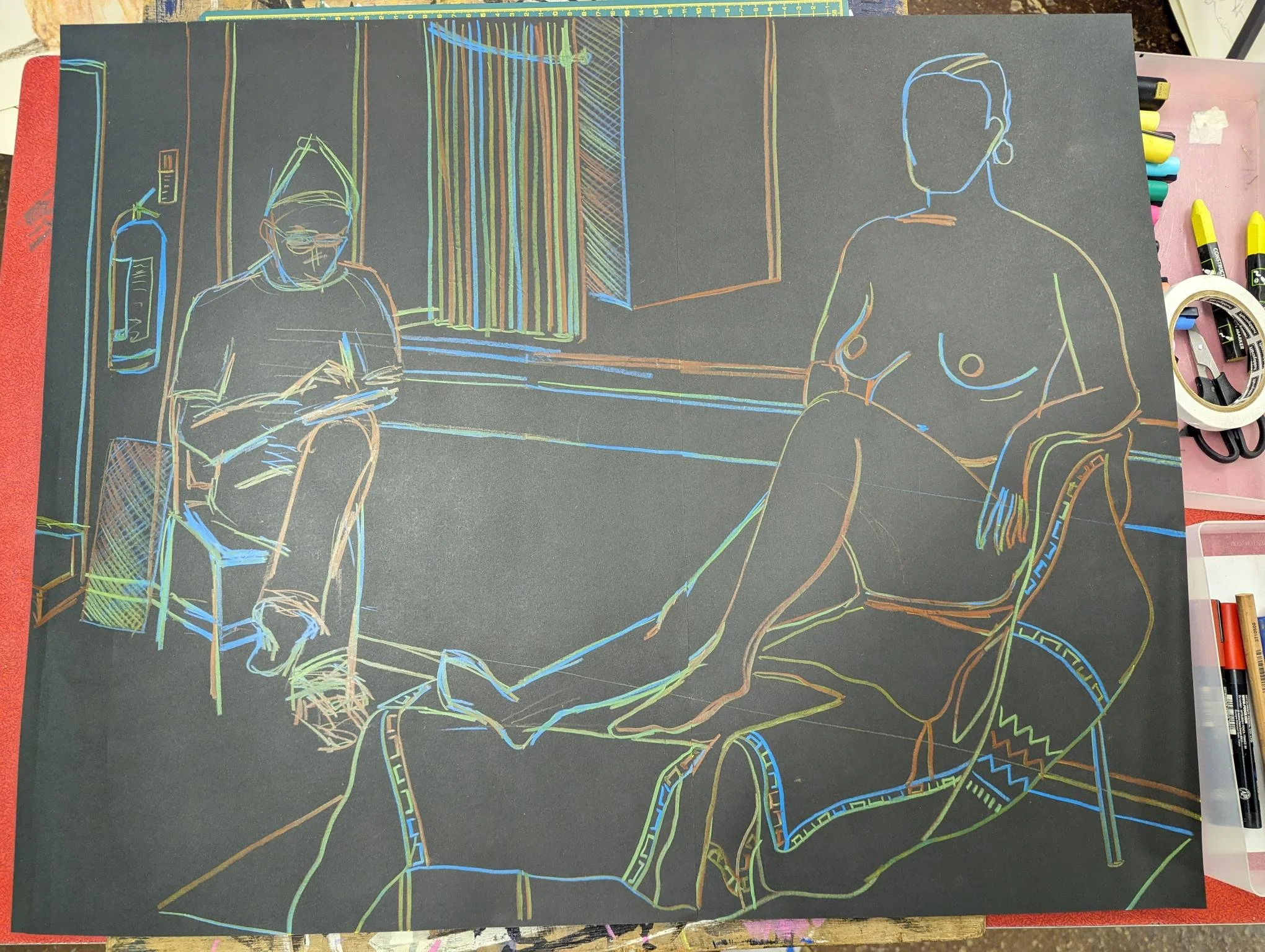
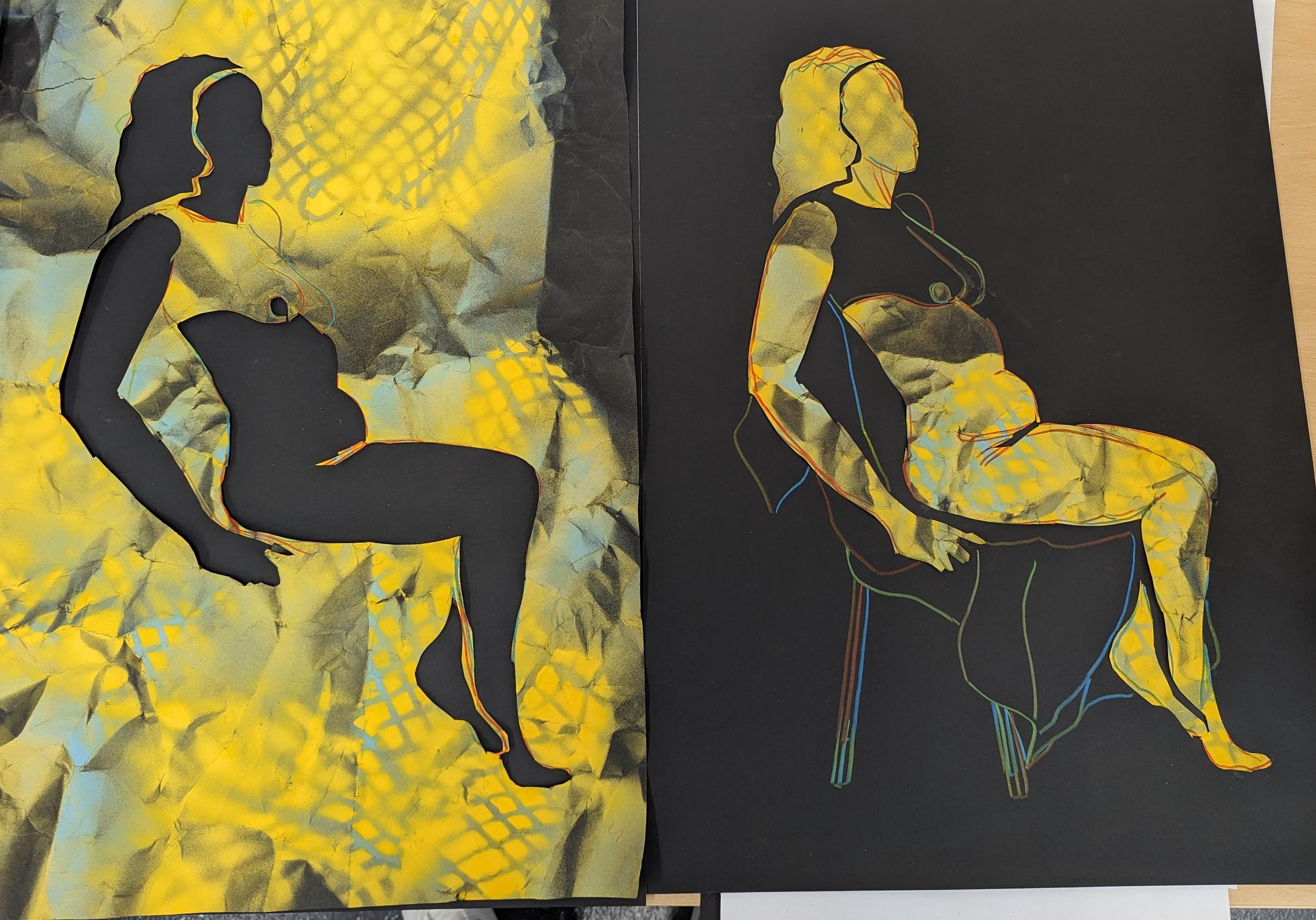
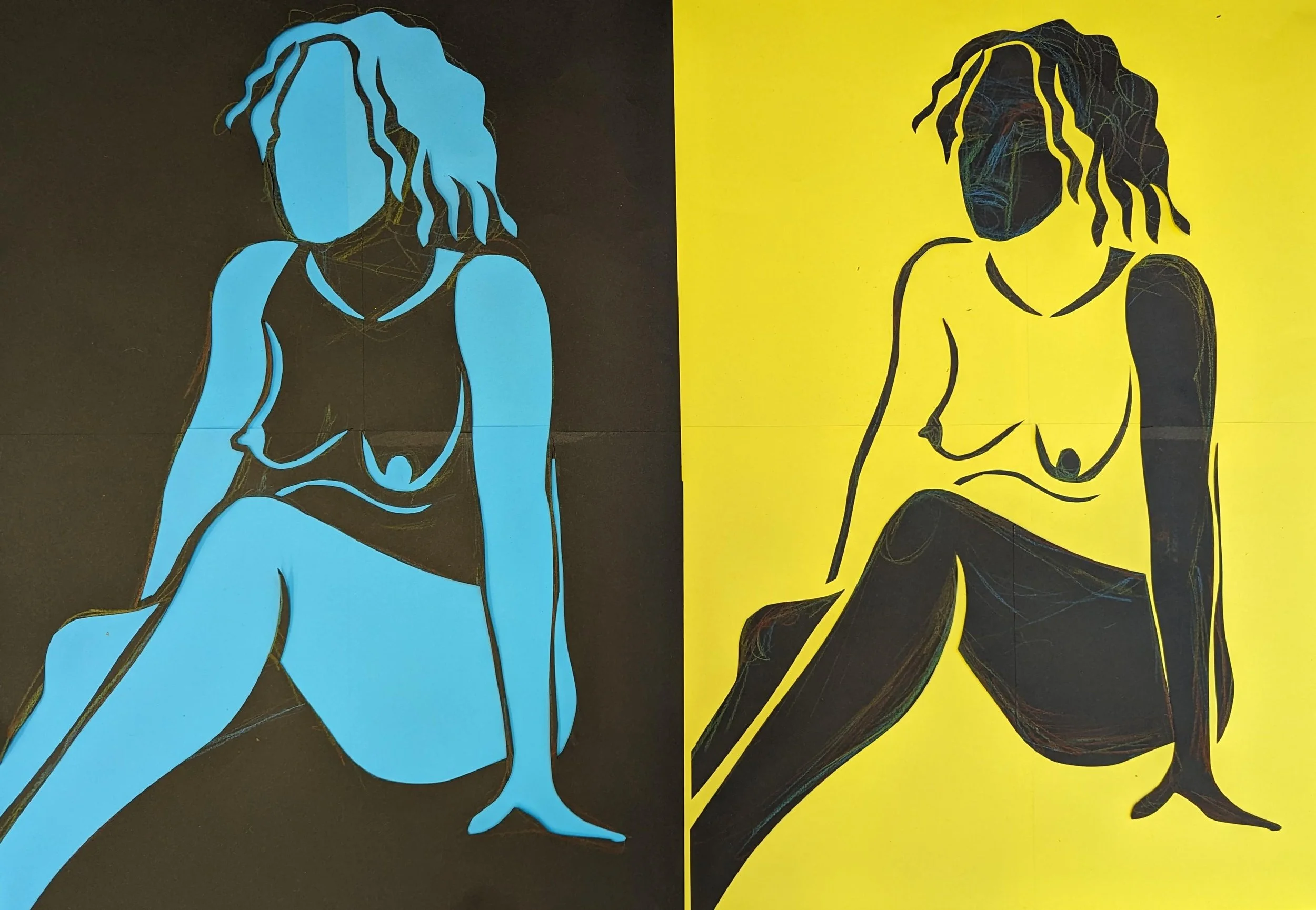
Life drawing became a cornerstone of my recovery—a practice that rebuilt my dexterity, focus, and confidence while offering space for reflection and healing. Weekly sessions in Luton provided both structure and solace, reigniting my creative instincts and expanding my visual language through gesture, colour, and found materials.
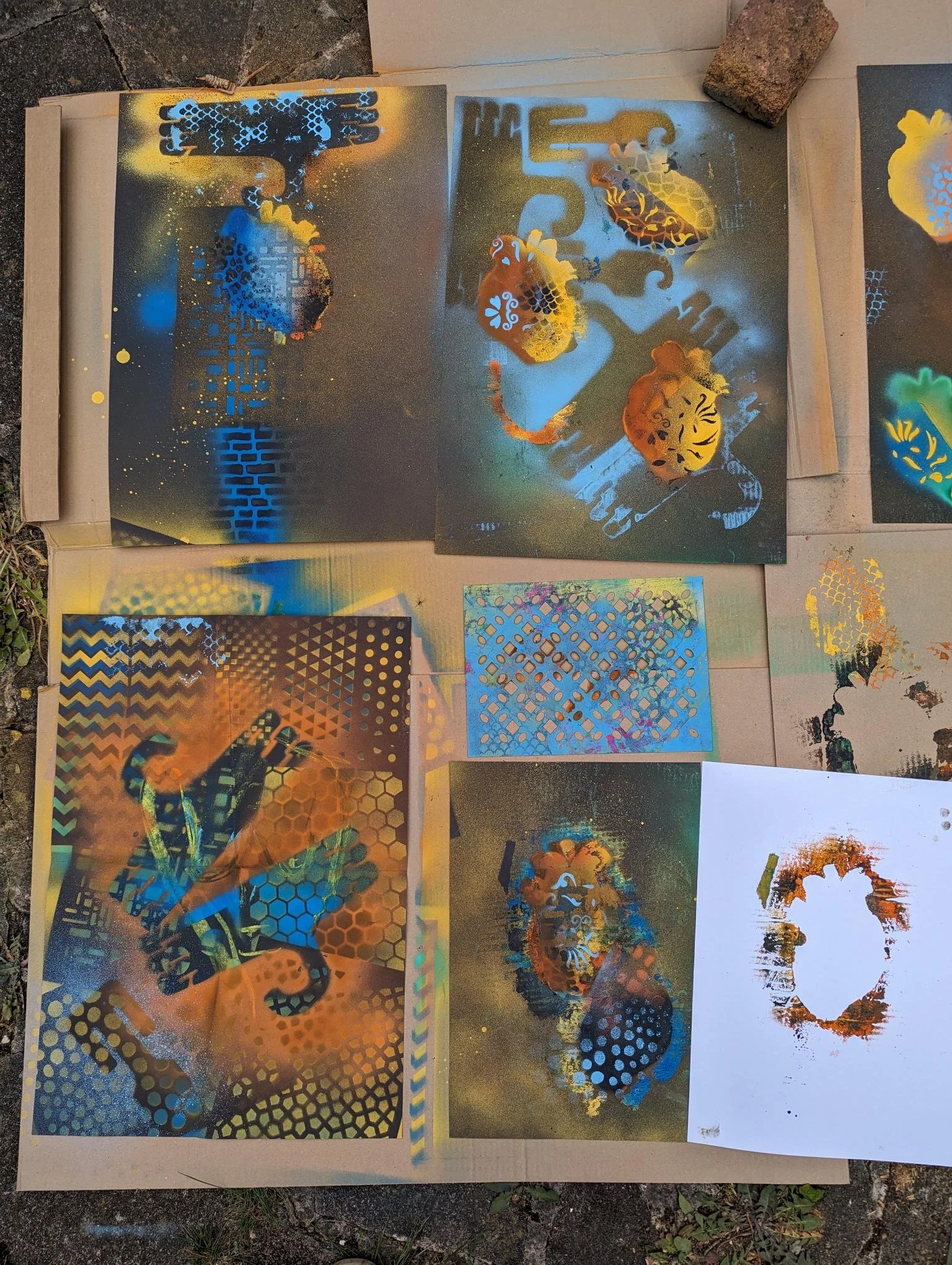
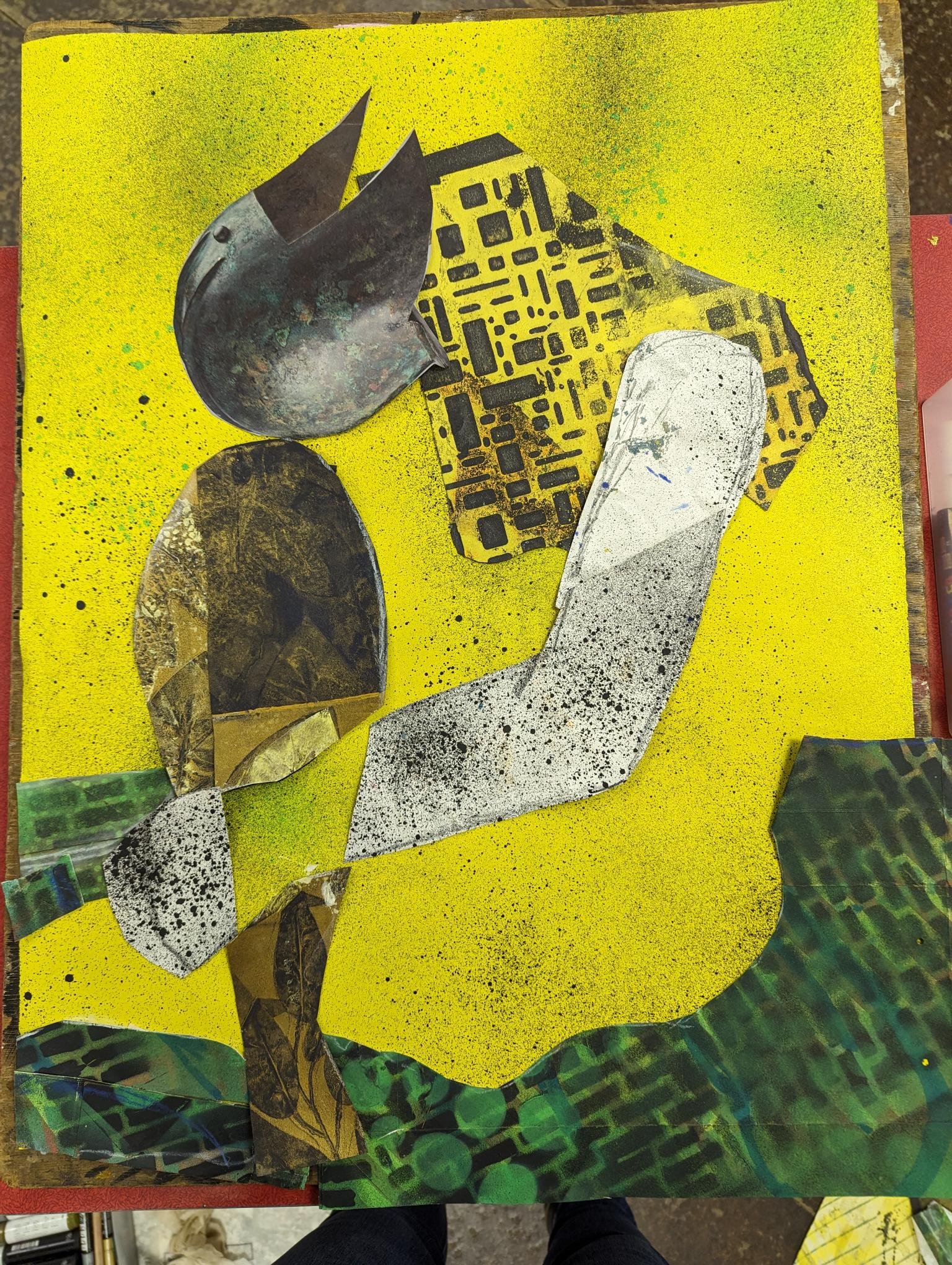
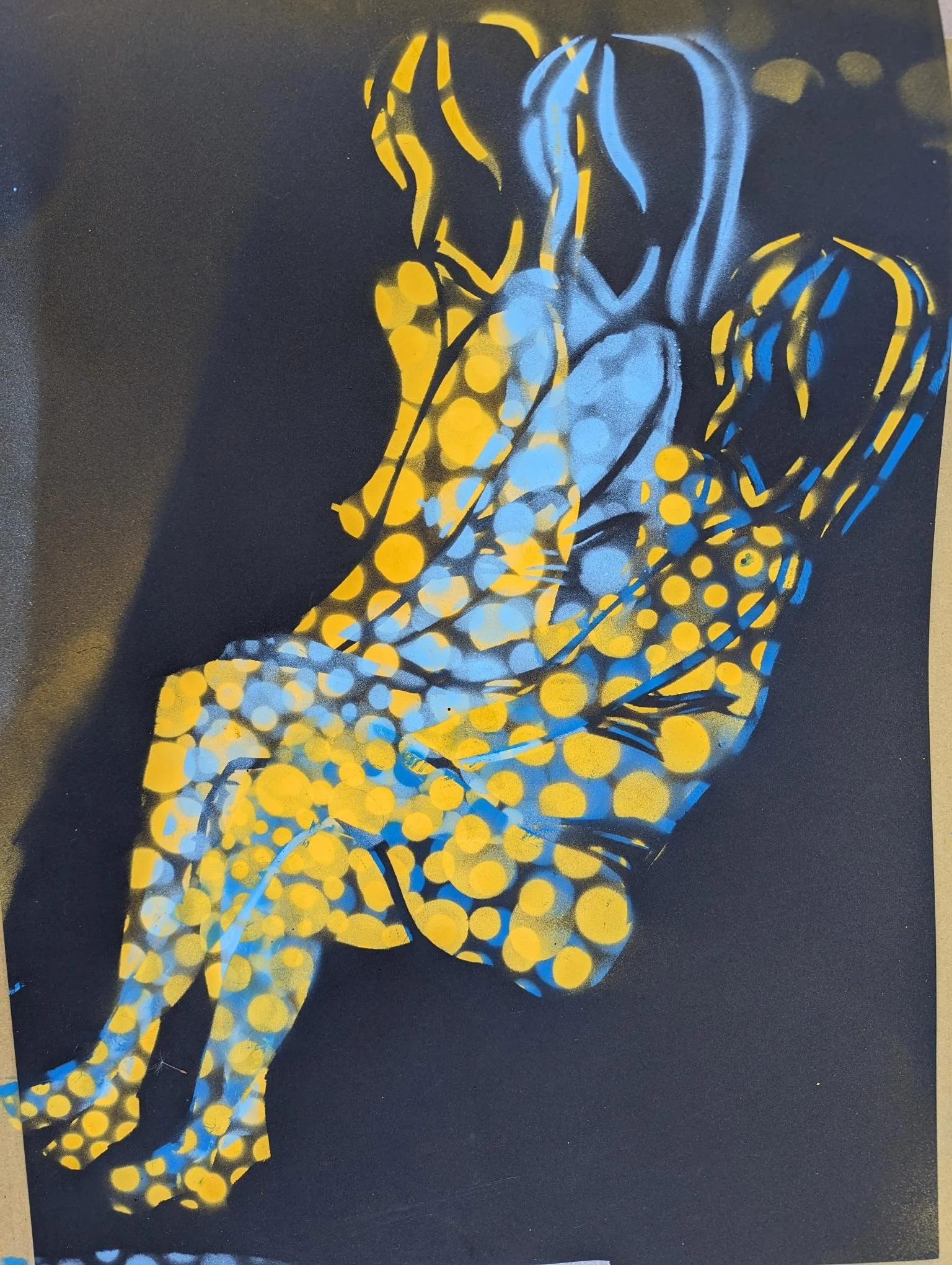
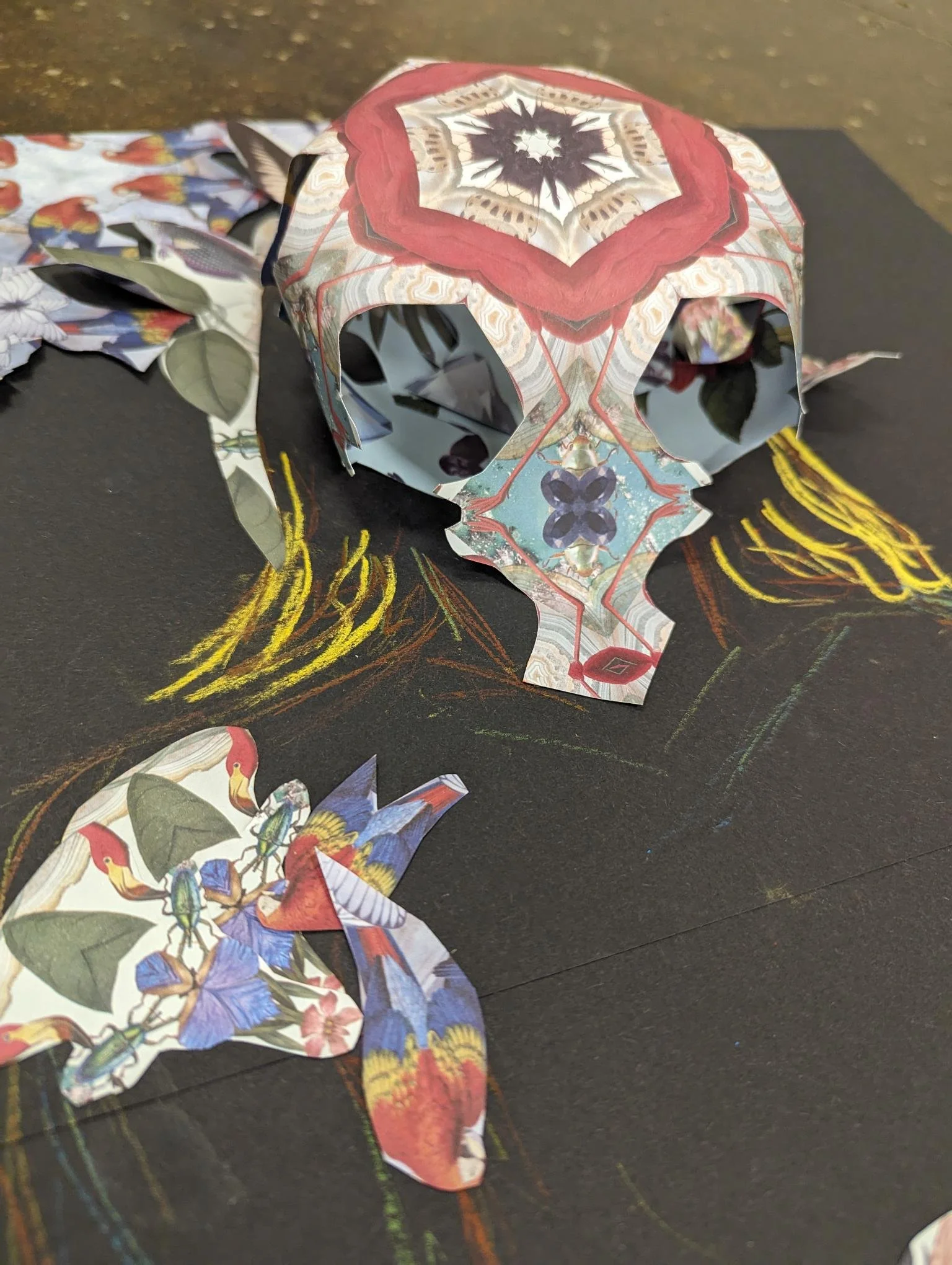
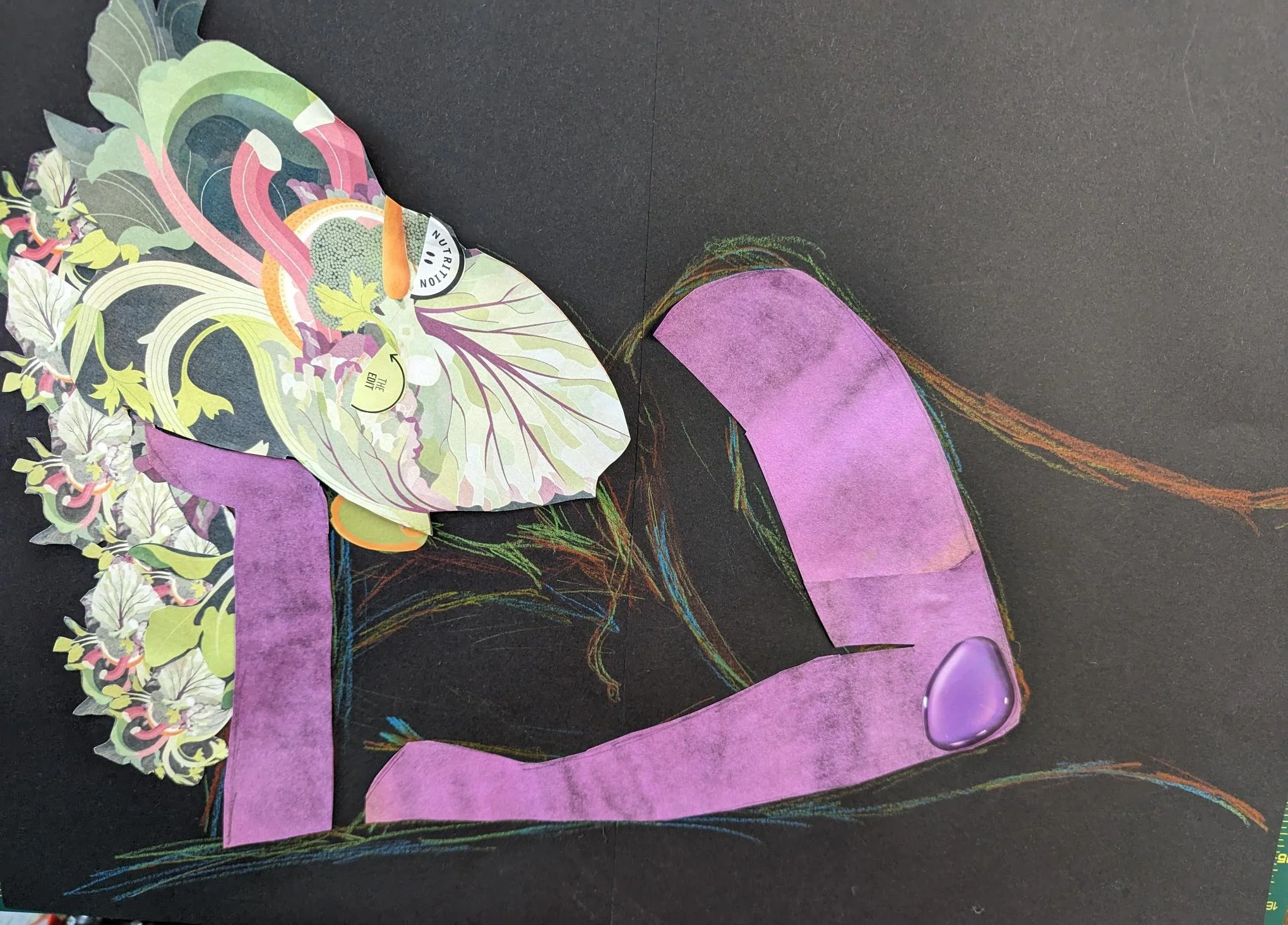
My approach to portraiture is deeply personal and rooted in experimentation. I combine traditional techniques, such as drawing and collage, with expressive mark-making, spray paint, and stencil work to explore emotions, memories, and the human form.
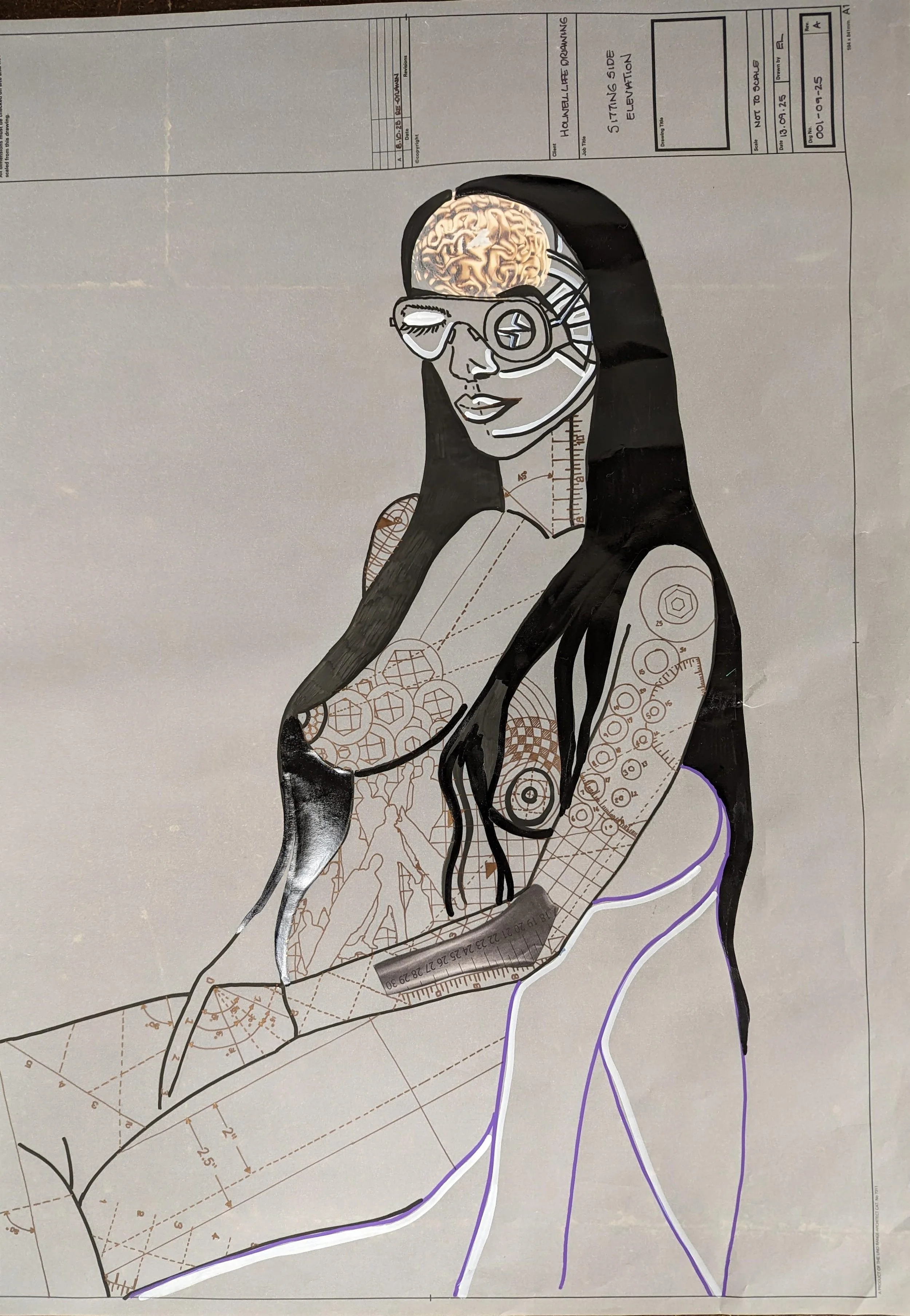
Working with denim
As part of a mentorship with Melissa Simon-Hartman, a Luton-based fashion and carnival designer, my work contributed to Melissa’s Papa Bois and Redefining Fashion: Future Threads projects, which focus on sustainable design and reimagining old Levi’s as wearable art.
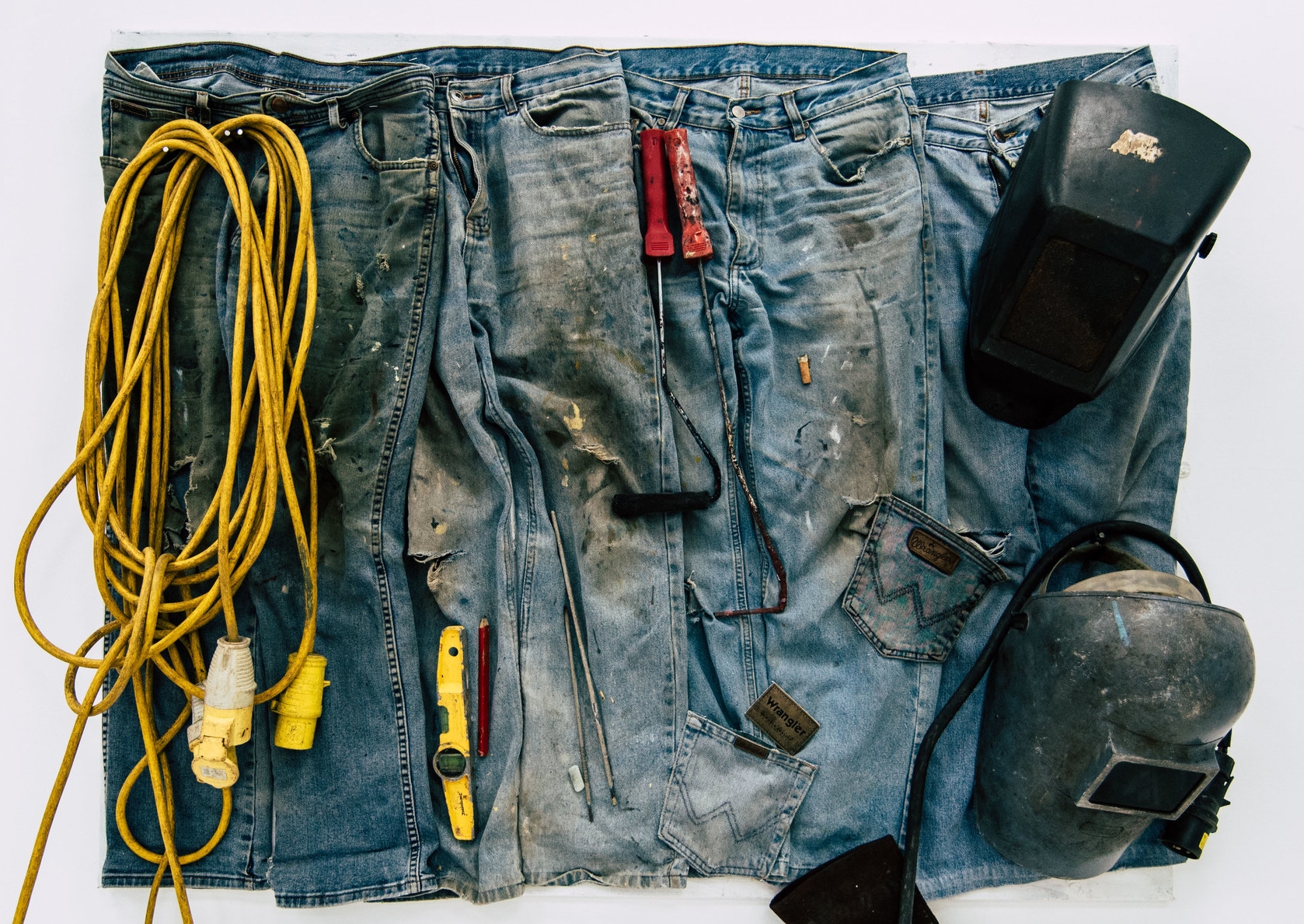
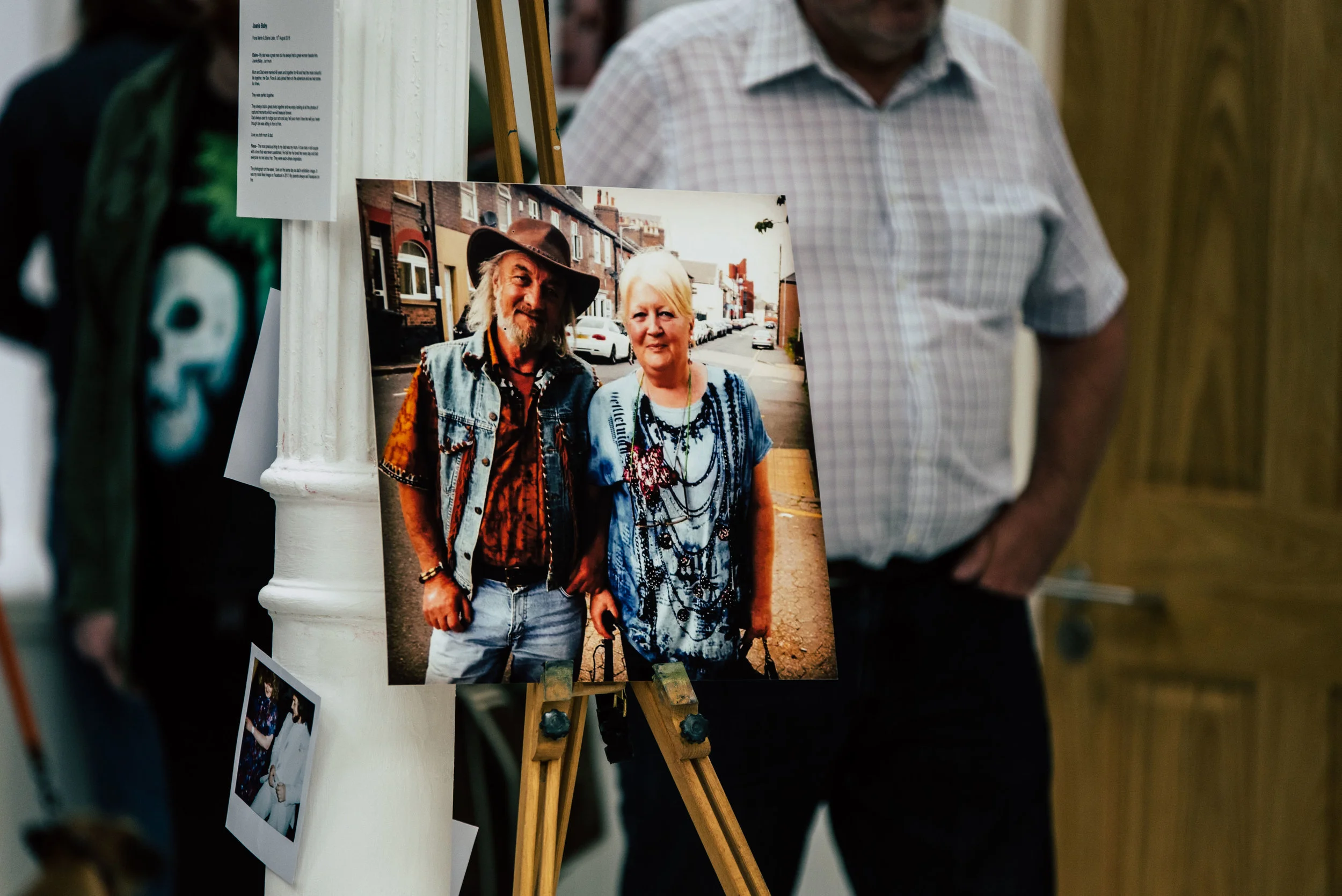
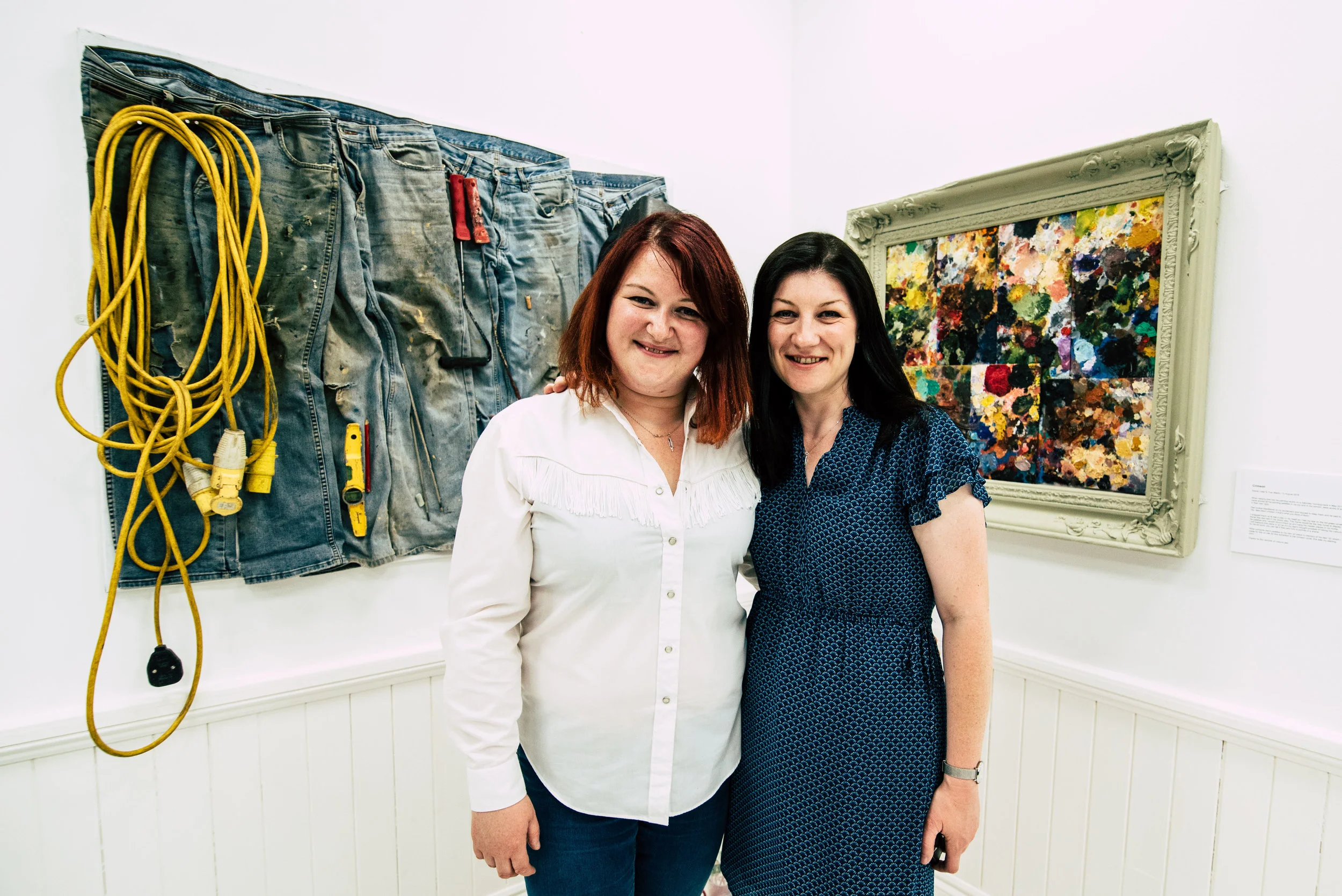
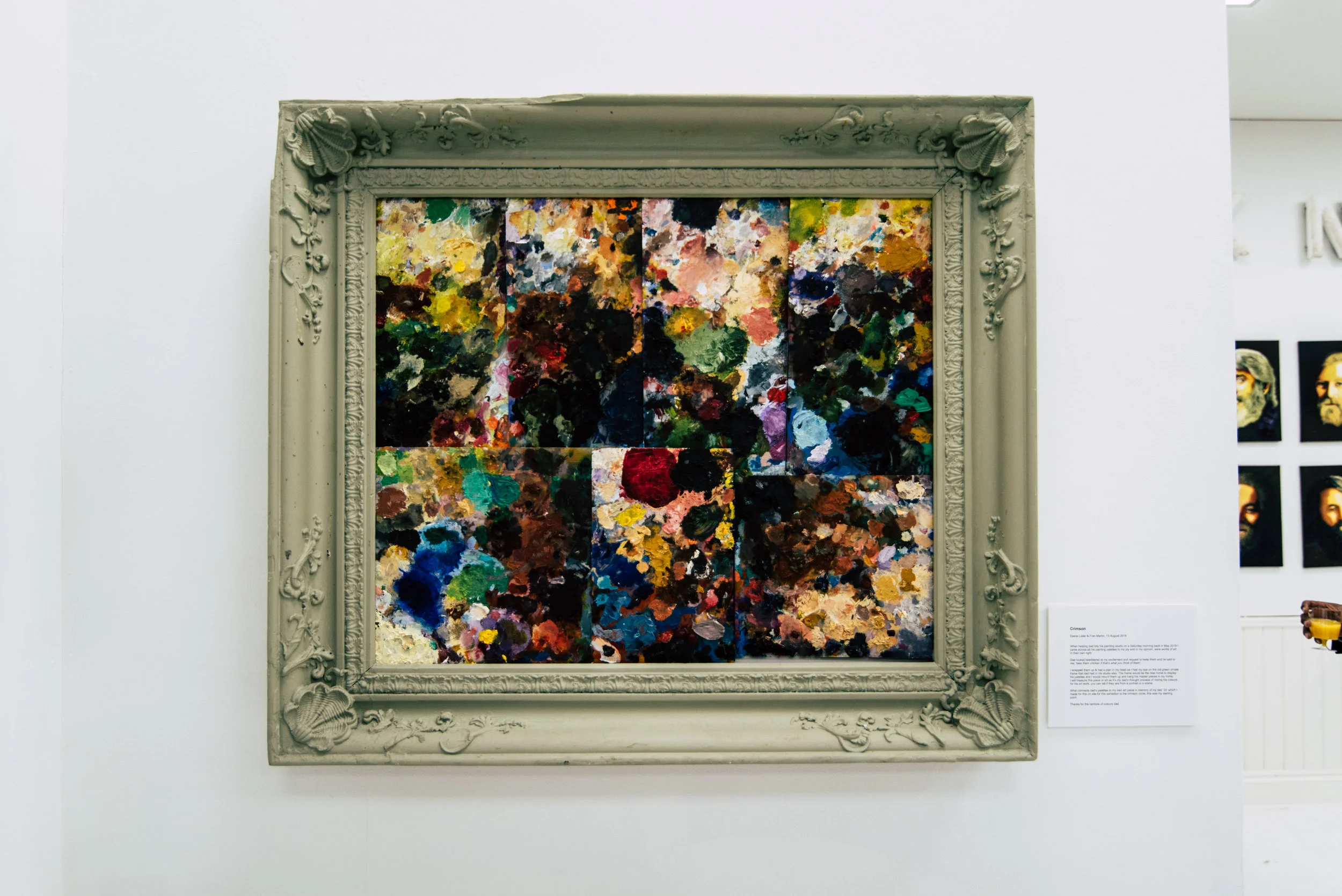
For me, denim carries a deeply personal connection, rooted in memories of my father, a skilled welder whose workwear reflected his dedication and working-class ethos. His jeans symbolised resilience, pride, and a quiet strength that continues to shape my own attitude to work and making. I first explored this connection in 'Imagine' (2018), a collaborative exhibition with my sister, created in response to our father’s passing. This project helped me work through grief, honour his creativity, and affirm the importance of his influence within my own artistic journey.

Links to Earlier Works
My earlier practice laid the foundations for my current exploration of memory and identity through material.
Jacket of Memories – 1993
This cropped 1990s denim jacket was one of my favourite pieces of clothing, transformed over time into a deeply personal artwork. I adorned it with collected objects and materials—golden pheasant feathers, bar towels from my student job, and coins from my travels—each element holding a fragment of memory. The smashed mirror pieces, a recurring motif in my early work, appear in clusters of reflective beauty, echoing themes of transformation and imperfection.
Other details are drawn from my life at that time: suede from a beloved jacket, handmade red Fimo beads from another project, and circles of string inspired by the doodles that filled the margins of my university lecture notes. The jigsaw embroidery on the back continues from a child’s jigsaw chair I designed and made by hand, with the blue fabric left over from its cushion. The piece combines a mix of fixing methods—hot glue, superglue, and stitching—each decision intuitive and improvised.
This photograph shows me in 1998 at my solo exhibition at 33 Arts Centre, Luton, shortly after completing my Master’s in Furniture and Technology.
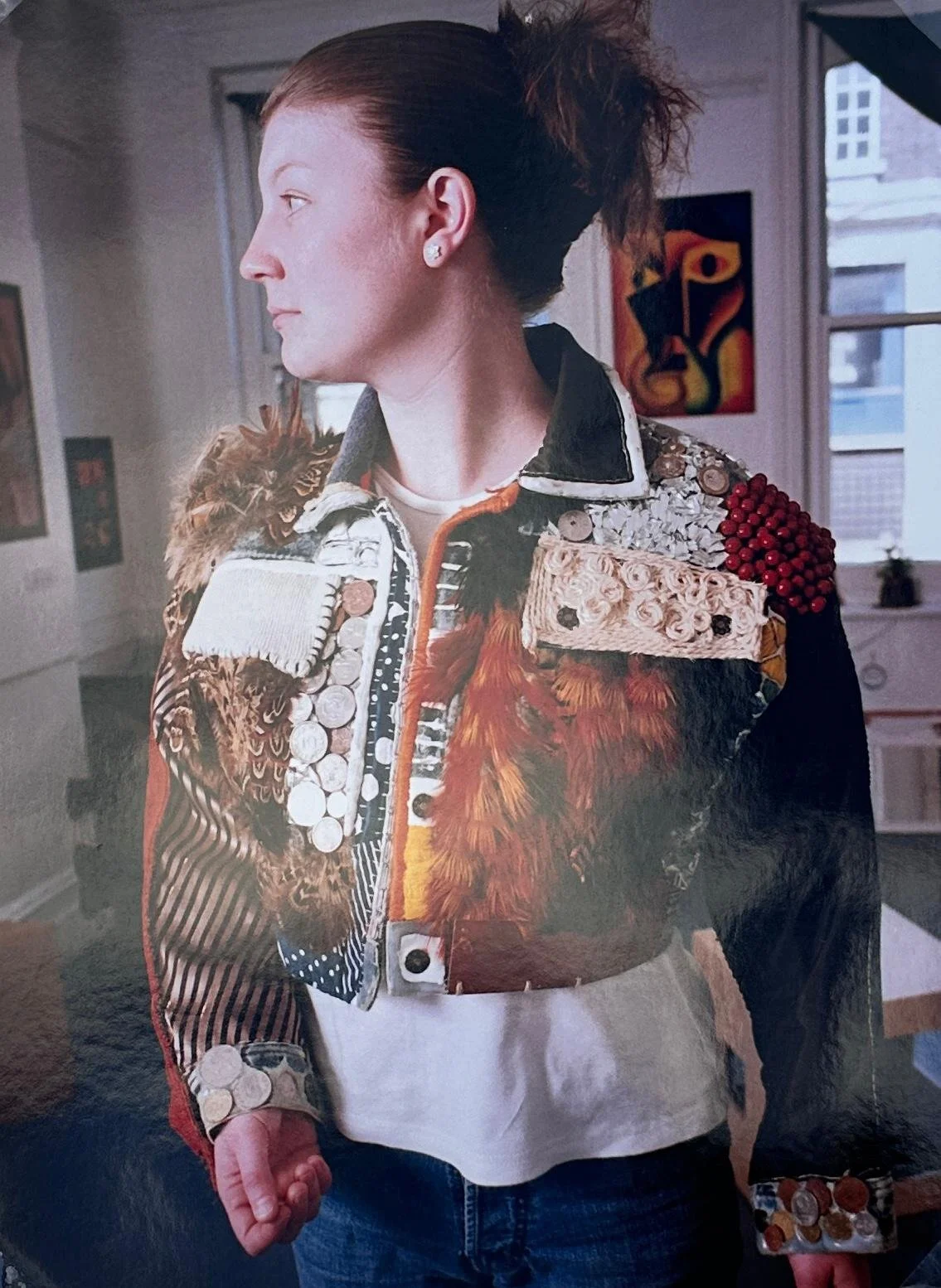
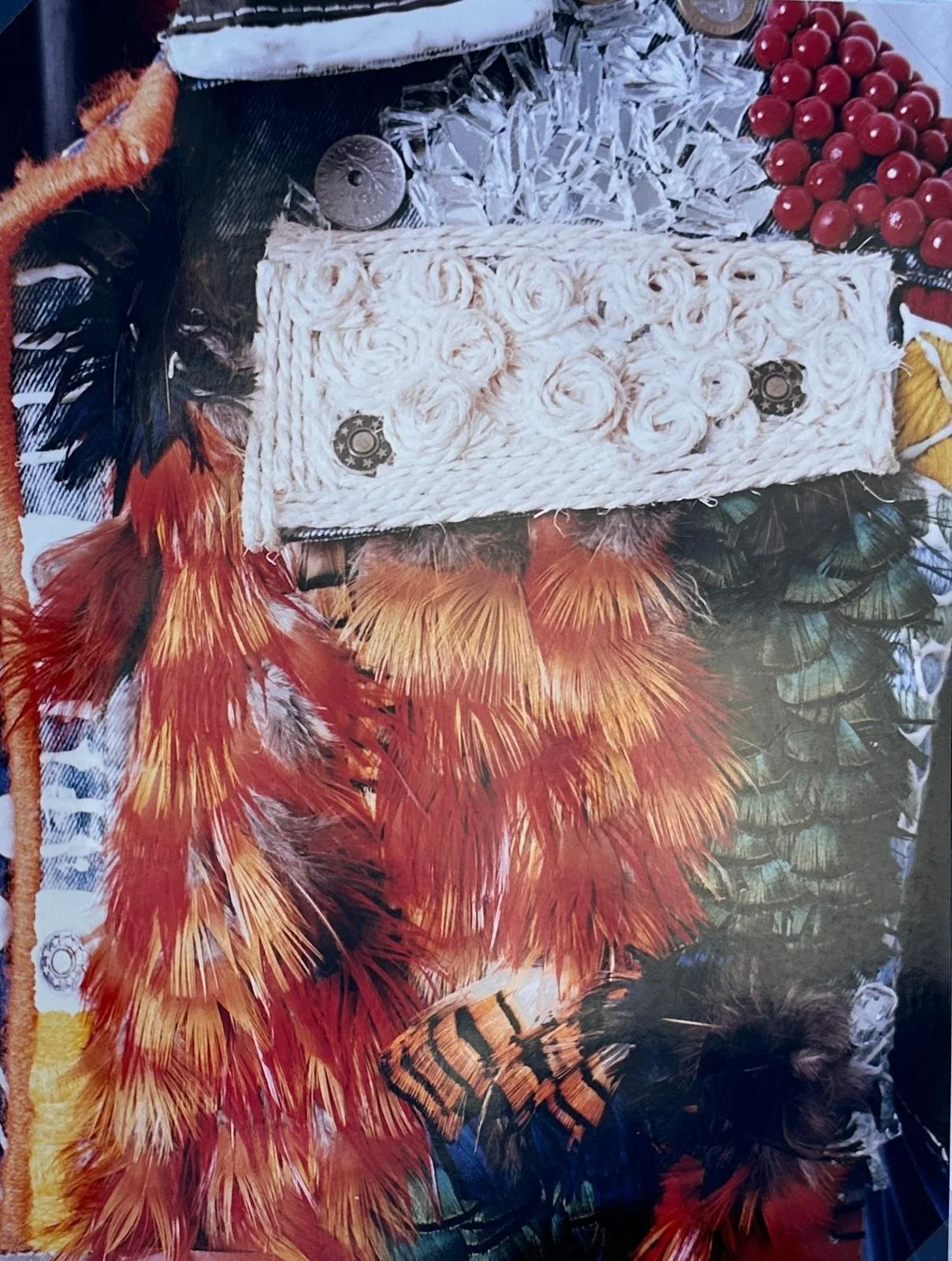
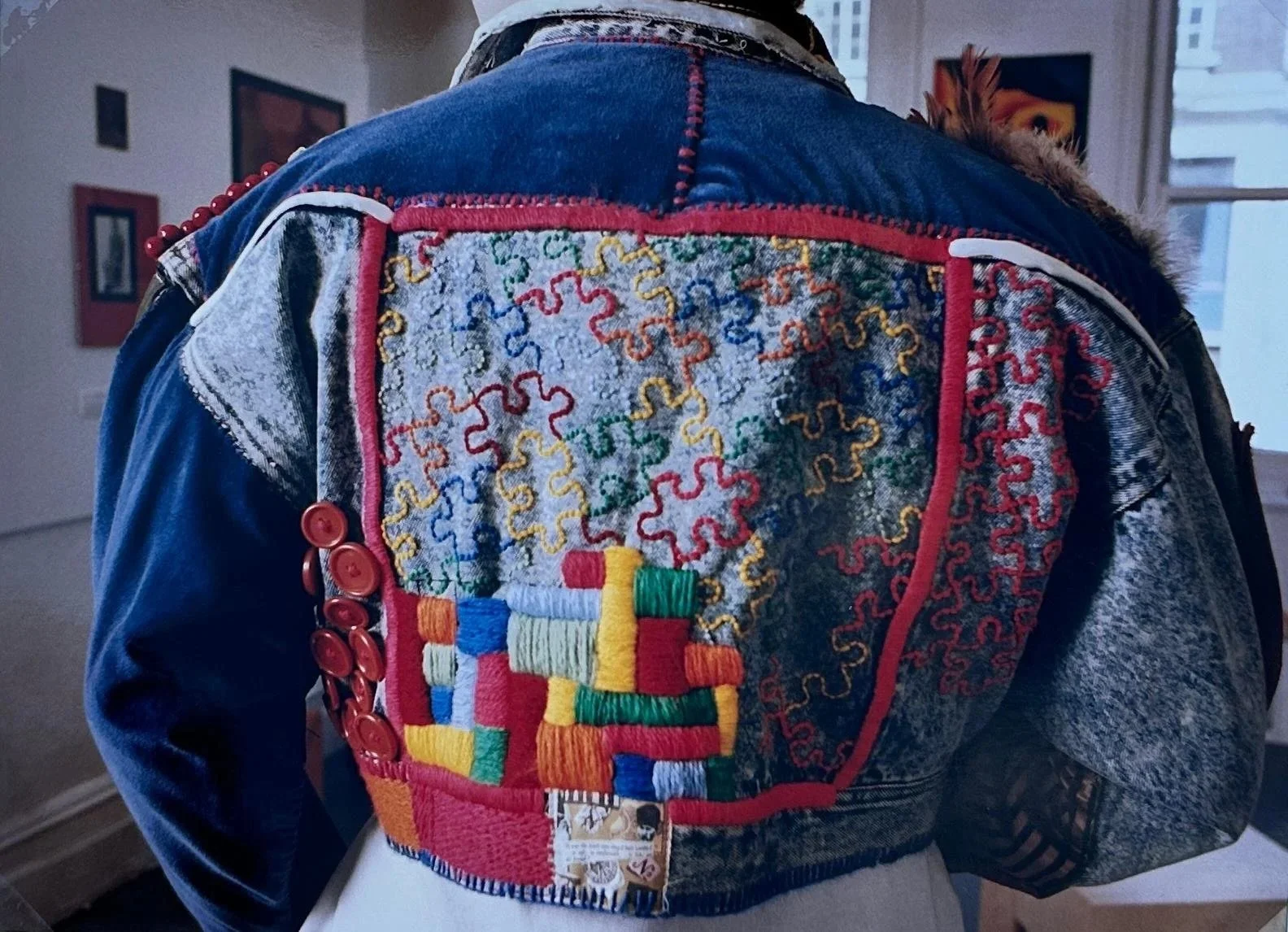
Sculpture: Unfolding Box – 1993
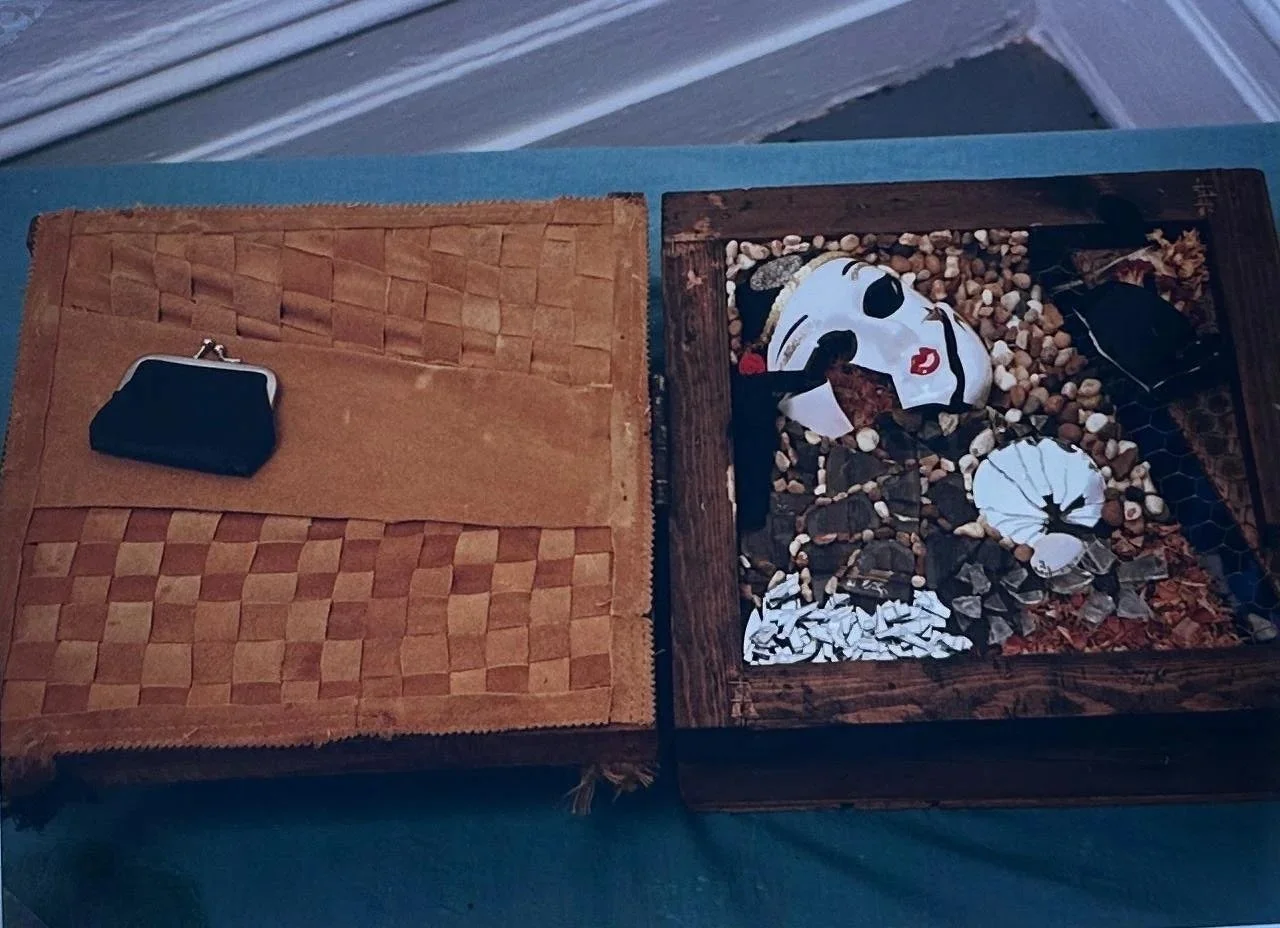
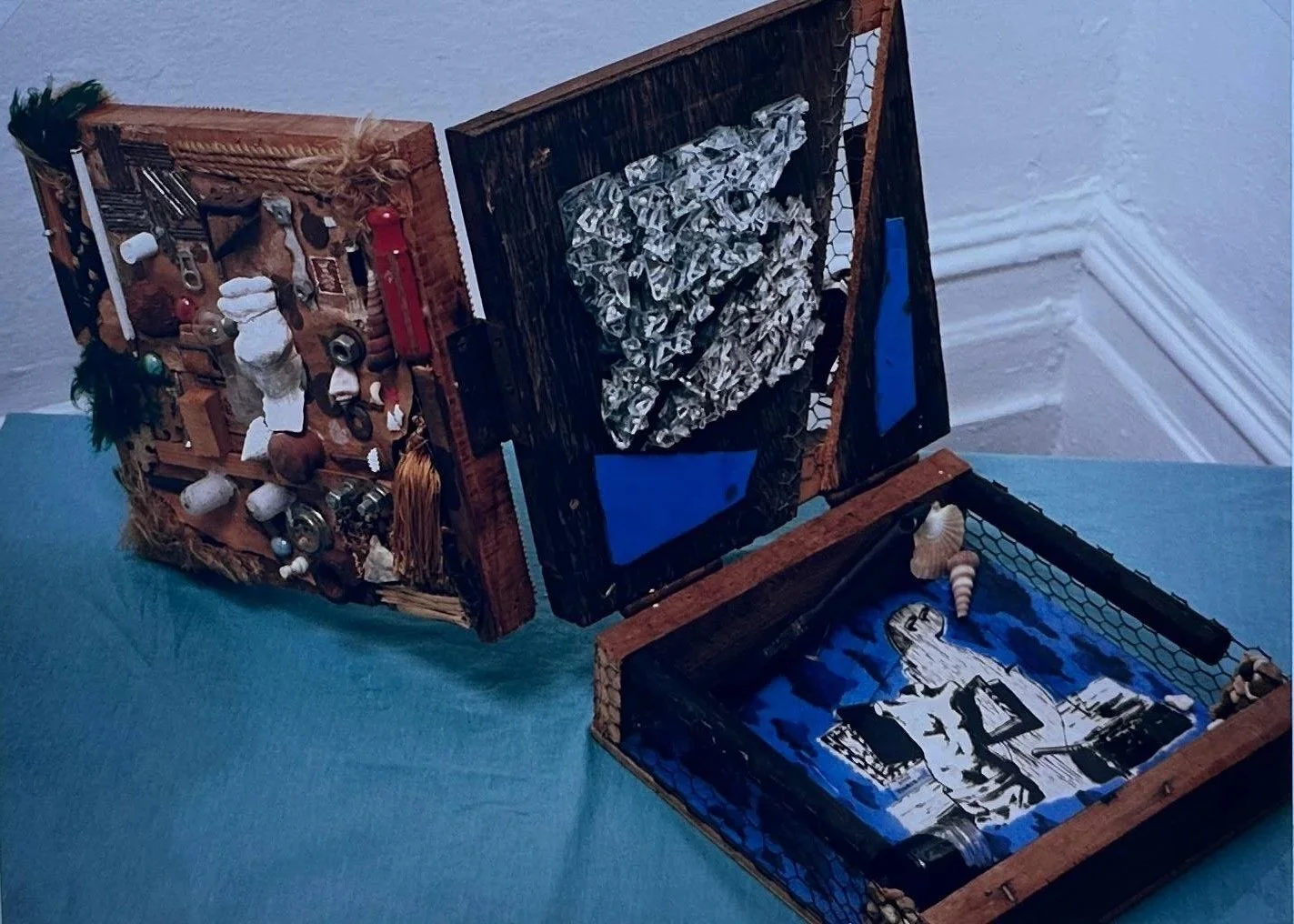
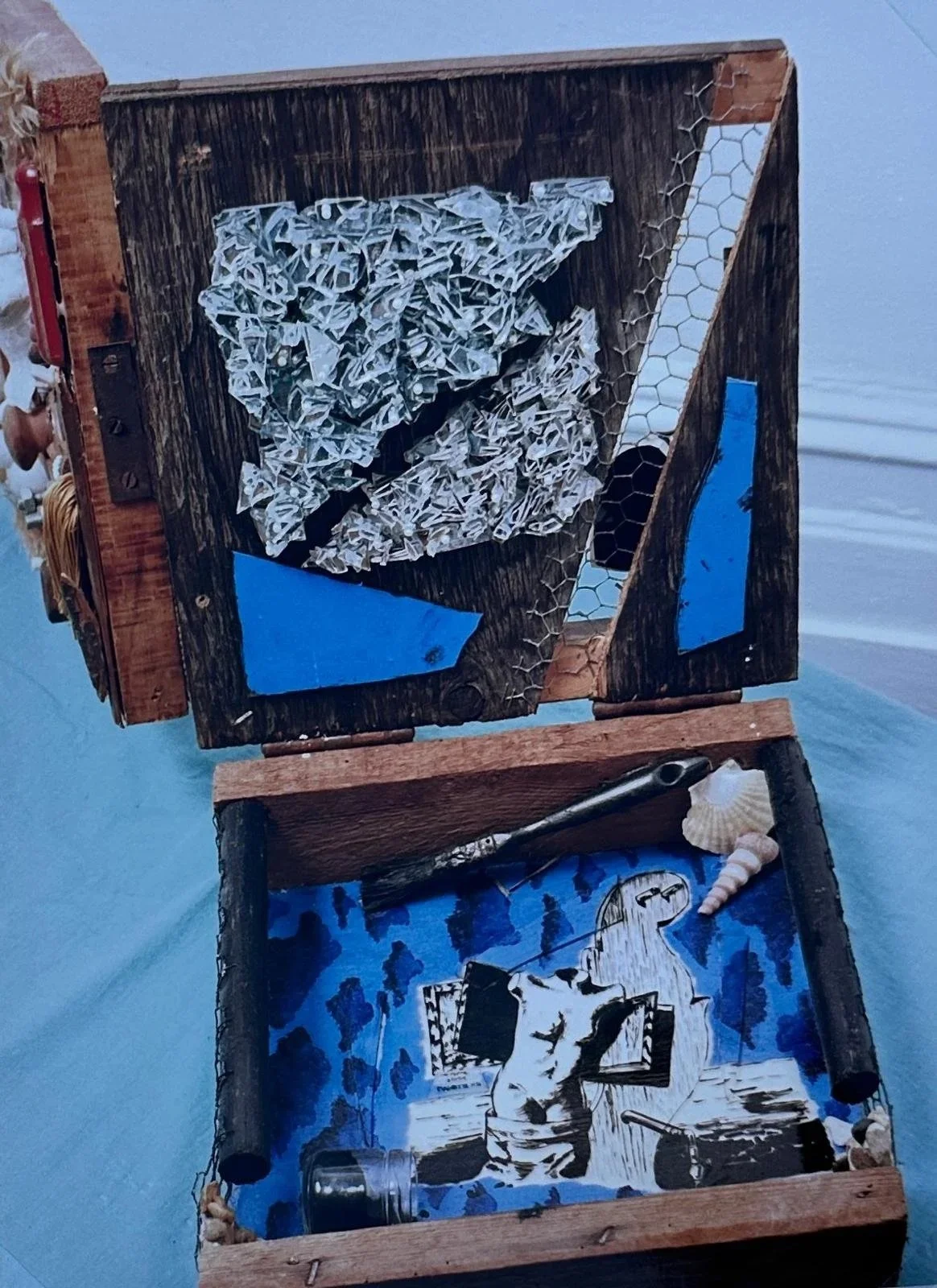
Unfolding Box was conceived as a living sculpture—a structure that could grow and evolve, each section representing a layer of memory. My idea was that, as life unfolded, I could continue adding to it until it became a hinged column of my experiences, a physical timeline built from collectables and discarded fragments that mark moments and memories.
Constructed entirely from found materials—hinges, timber, and chicken wire salvaged from the shed and college off-cuts—every component held its own quiet history. I assembled the Box using a glue gun, woven strands of silk rope, and scraps of wire, transforming humble materials into something precious.
The piece features my recurring motif of smashed mirrors, donated by neighbours who watched curiously as I worked in my garden.
At its centre is a ceramic clown face—a gift I never liked but could never bring myself to throw away. By shattering and reassembling it, I transformed my discomfort into acceptance; the act of breaking became an act of healing.
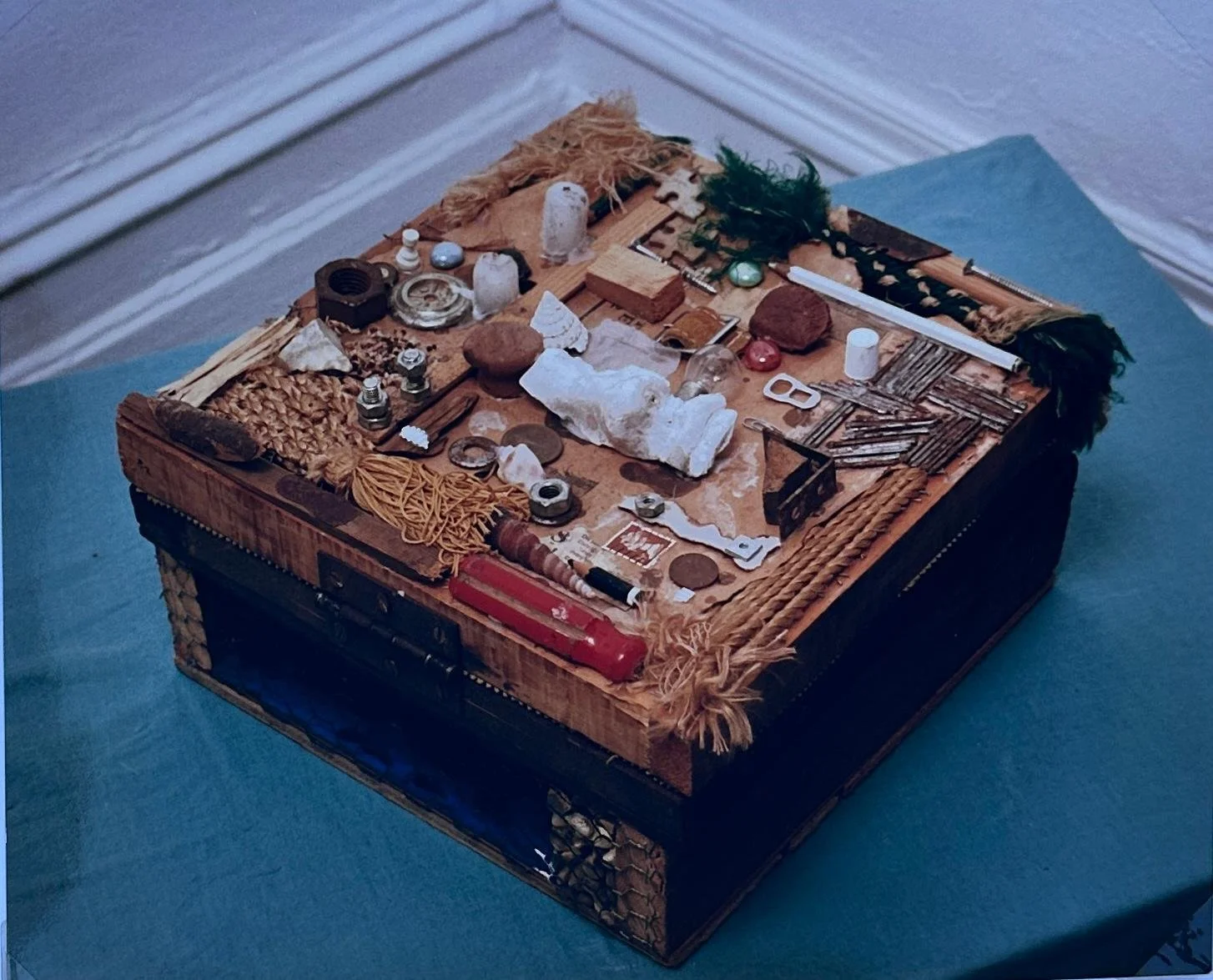
Self-Portrait with Mirror - 1992
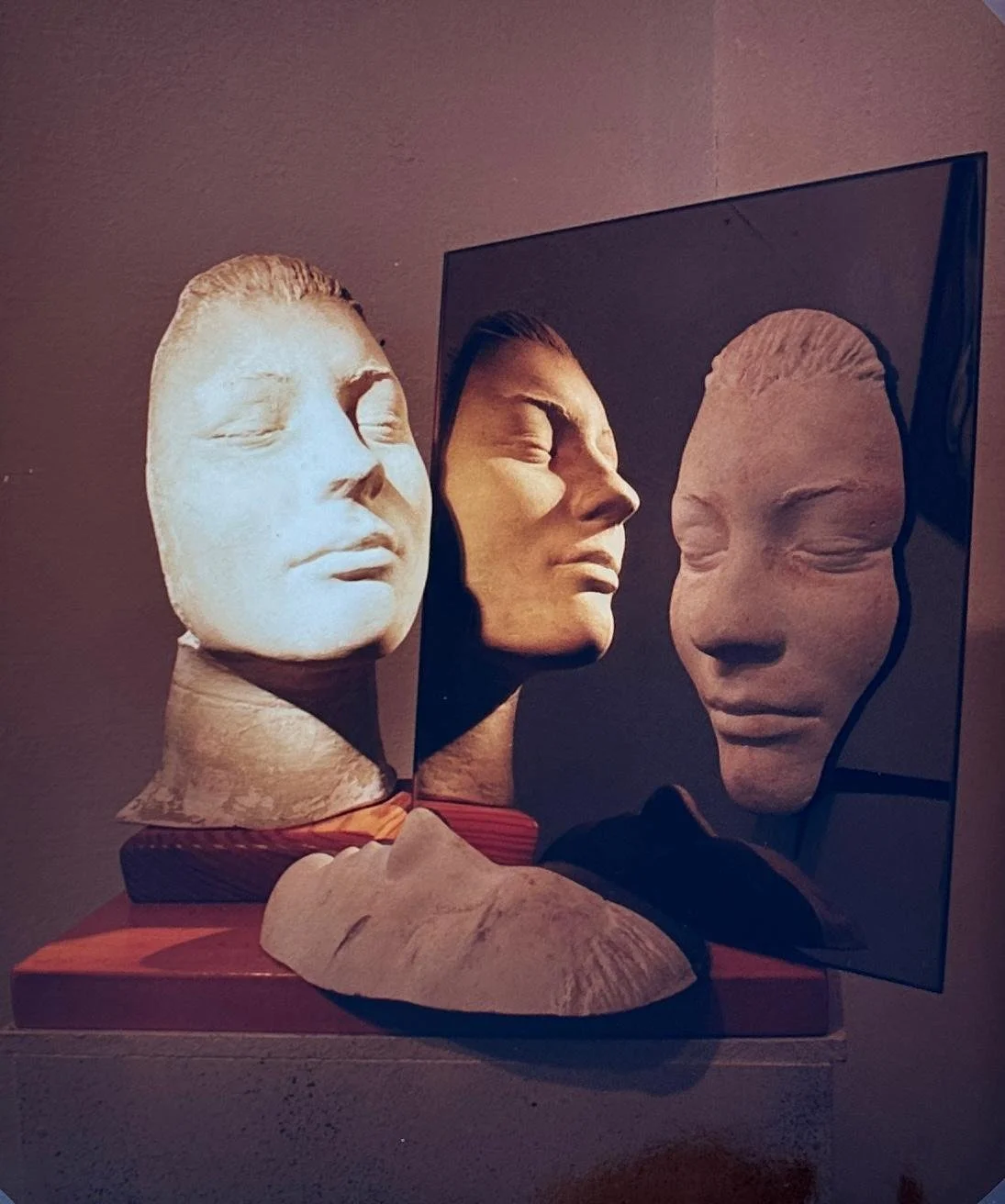
Created at the age of nineteen, Self-Portrait with Mirror is a sculptural exploration of a self-portrait. Using casting and moulding techniques, I sought to capture a snapshot of myself in time—both literally and symbolically.
The work combines a mirrored surface with a cast of my face emerging through it, representing the act of becoming and the moment of self-recognition. The contrast between the black and white surfaces symbolises the two sides of my identity—opposing yet connected—reflecting how I understood myself at that stage of life.
This early work marked the beginning of my fascination with materials that hold meaning beyond their form. The mirror, in particular, has remained a recurring motif throughout my practice—an object of reflection, vulnerability, and rebirth.
Cubes – 1996
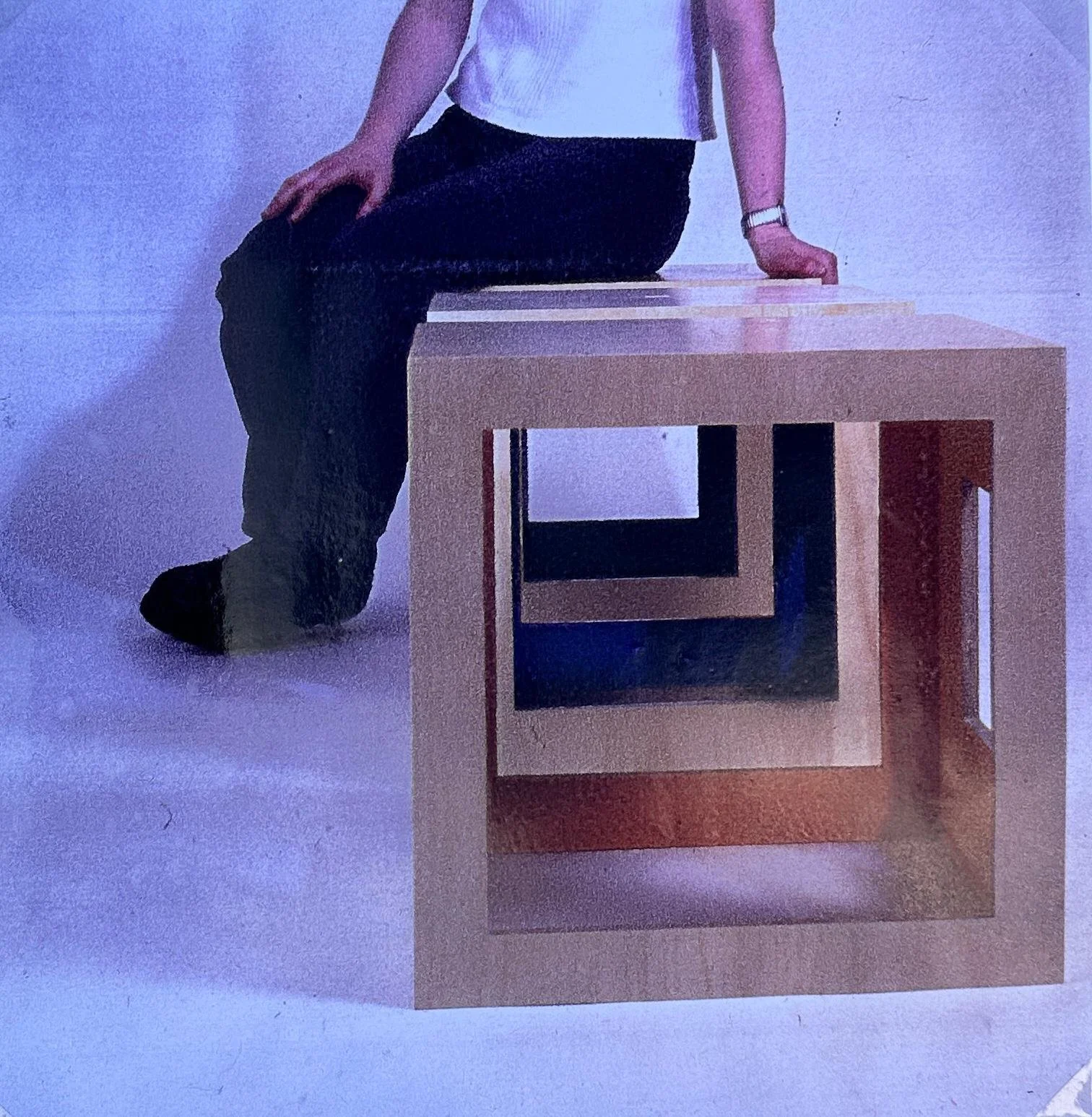
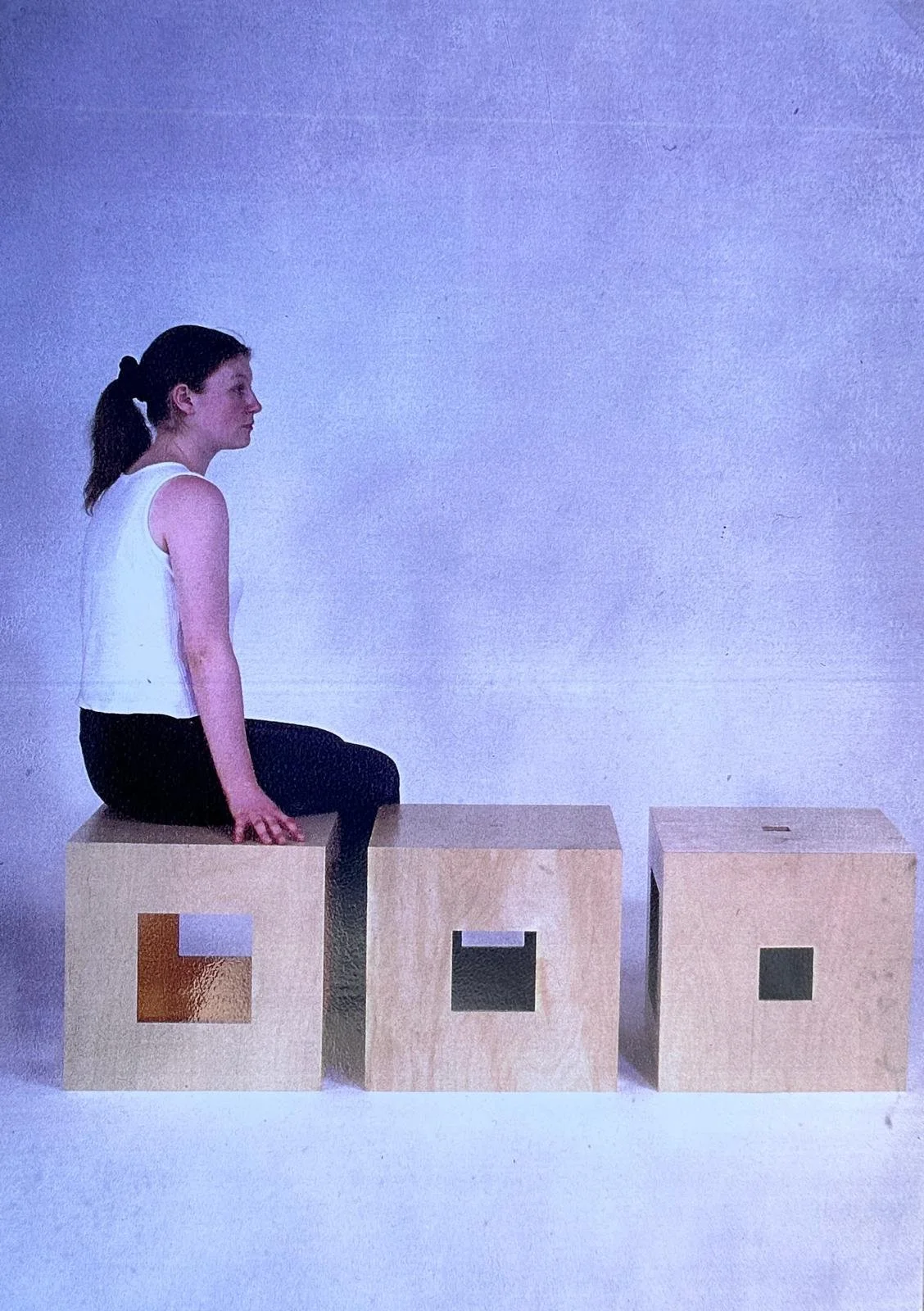
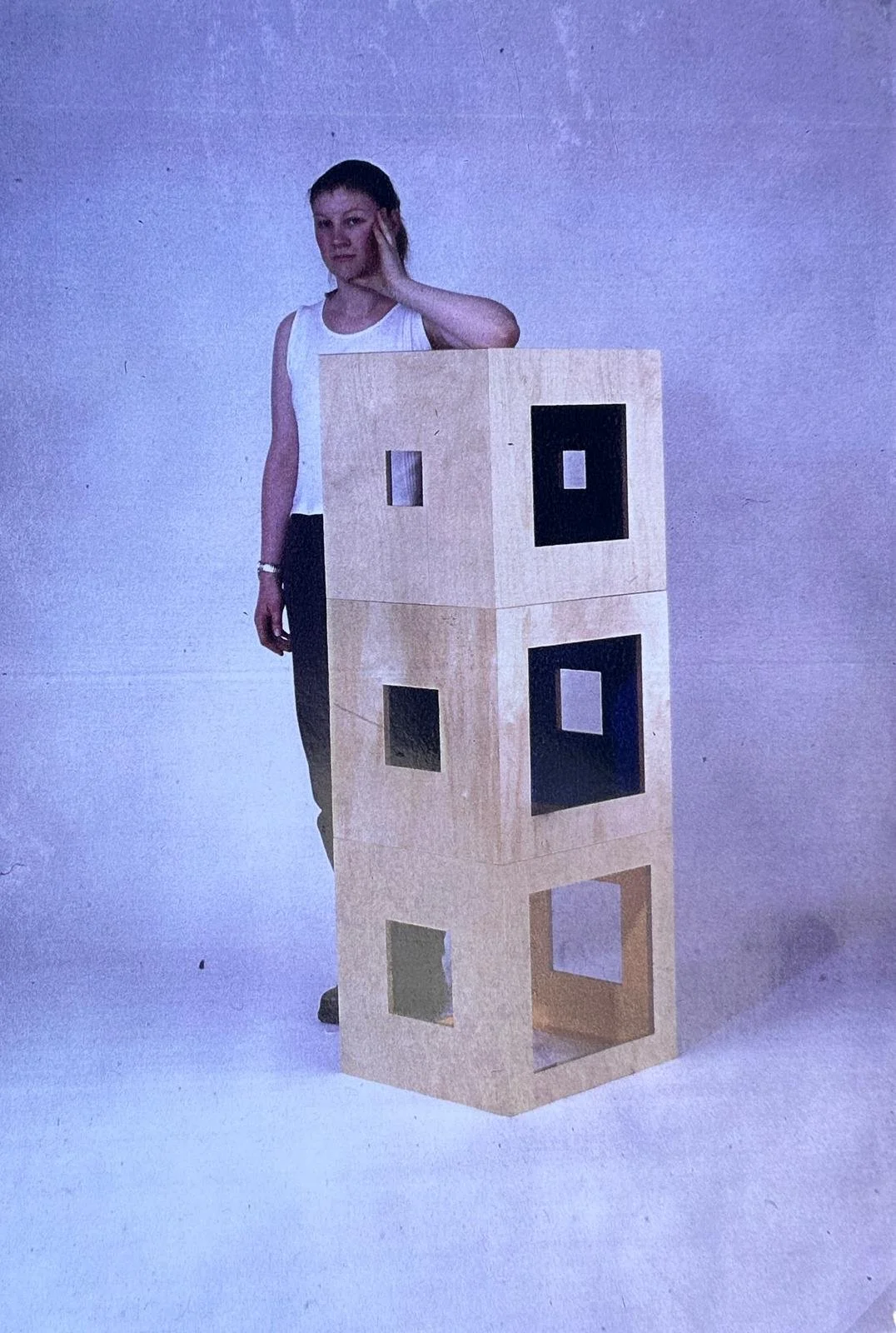
Cubes reflect my long-standing fascination with materials and structural potential. Influenced by the work of Frank Stella, I explored form and precision through a minimalist approach.
The cubes were constructed using hidden internal structures based on the Fibonacci sequence, creating a subtle mathematical harmony that contrasts with their clean, understated surfaces. Though they resemble functional objects, they were intentionally presented in an exhibition context to provoke reflection: Are they furniture, or are they art?
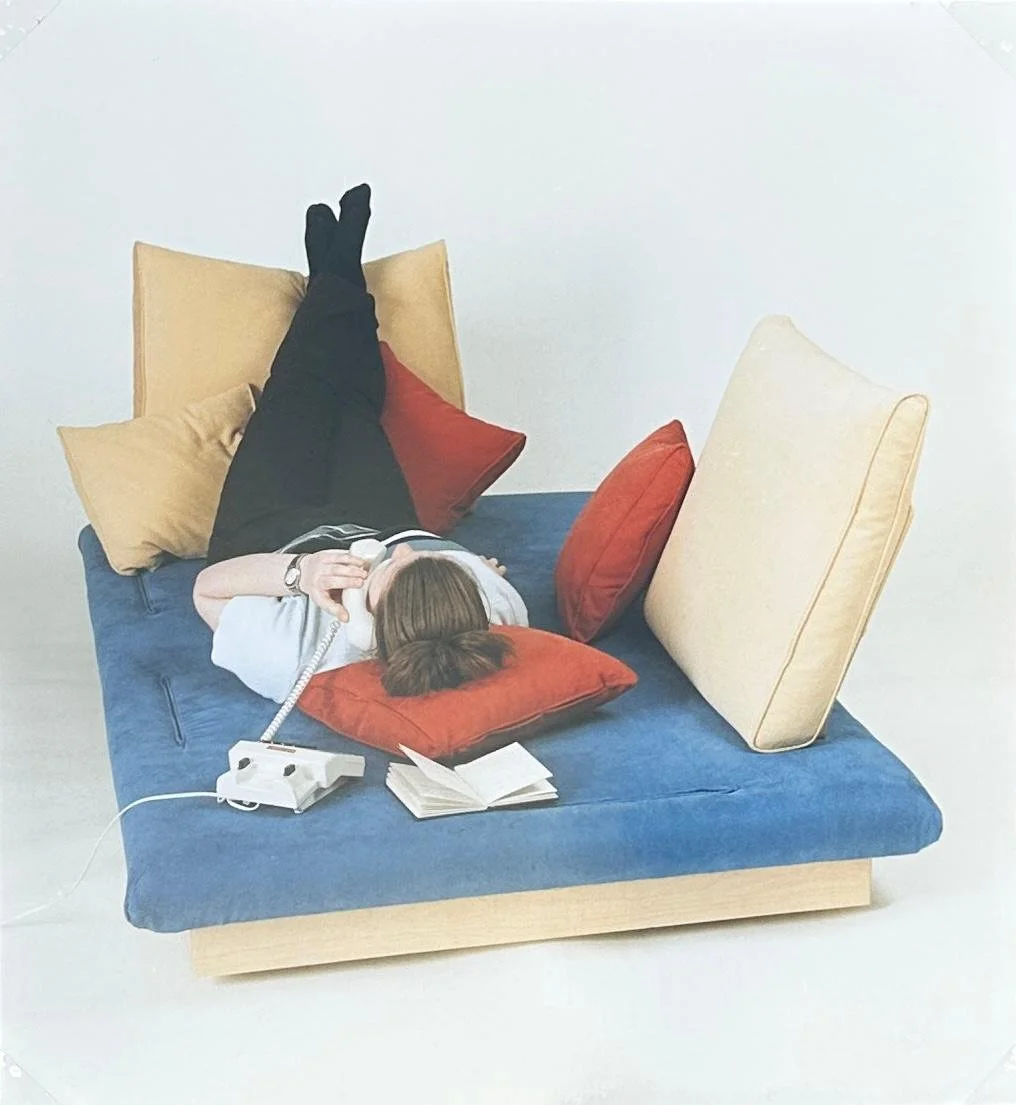
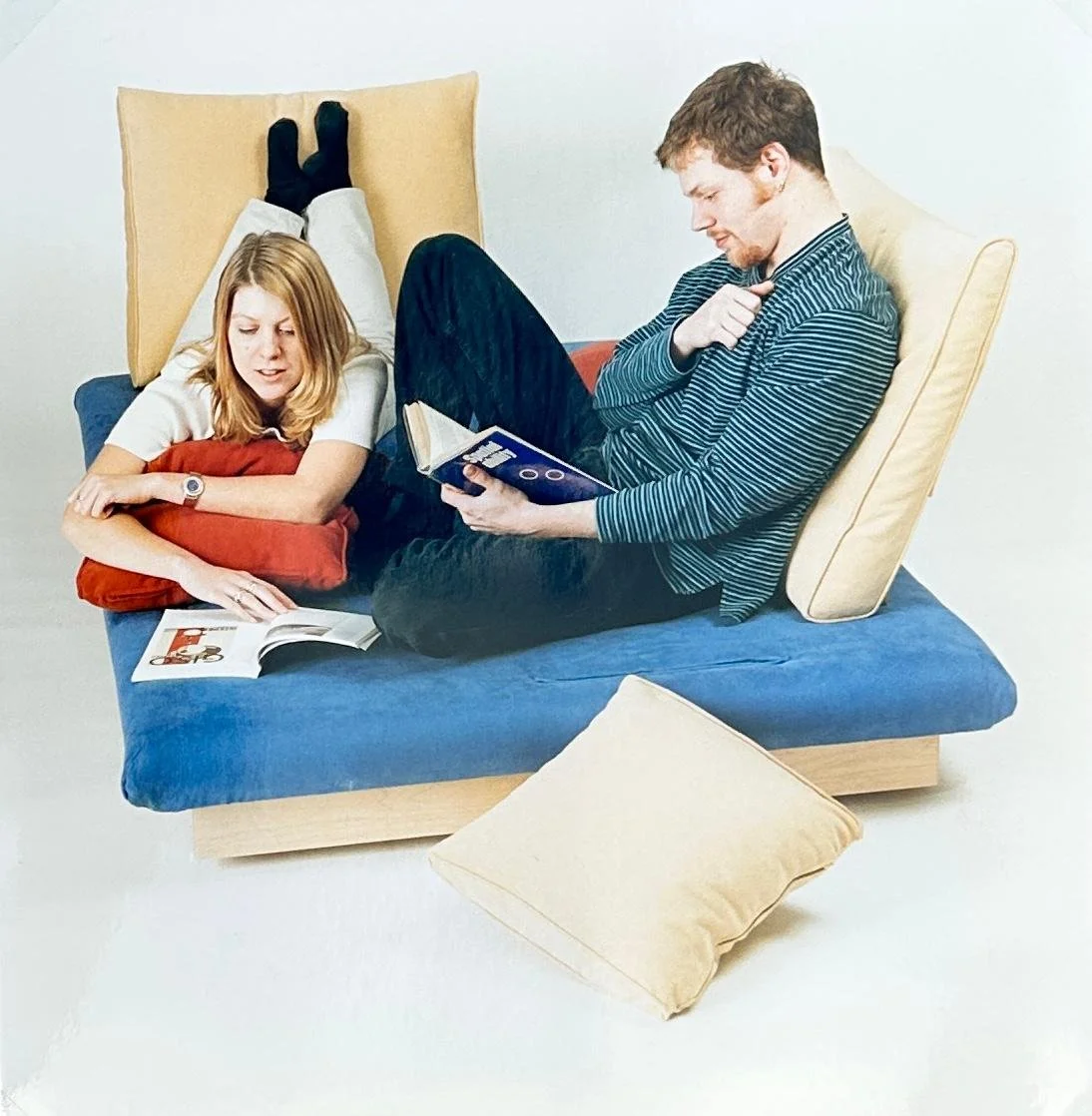
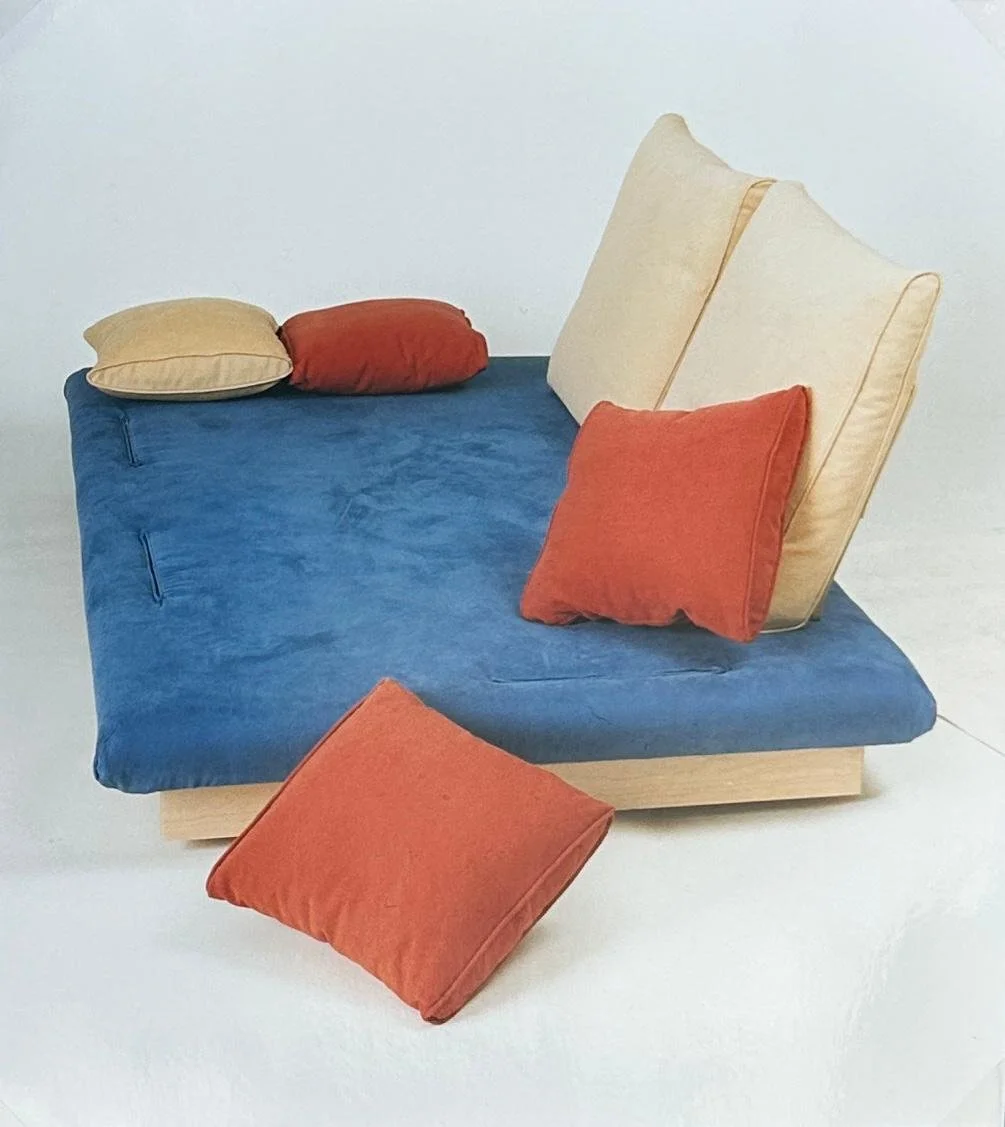
Sofa: Communicating a Connection – 1998
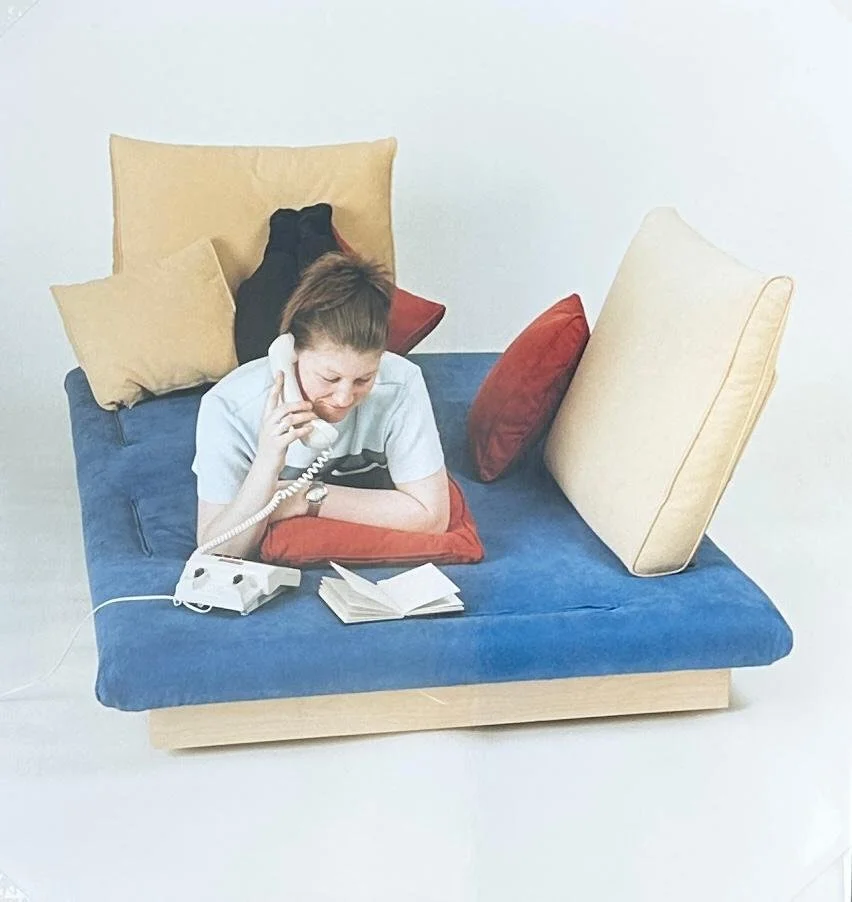
Created as my Master’s degree final piece, Sofa: Communicating a Connection explores how furniture design can express human relationships. The work poses an open question: how do physical forms influence emotional and social interaction?
The arrangement of the back supports and cushions was designed to evoke different dynamics—those between strangers, friends, family members, or partners—inviting users to reflect on the subtleties of proximity, comfort, and personal space.
Collaboration
Imagine – 2018
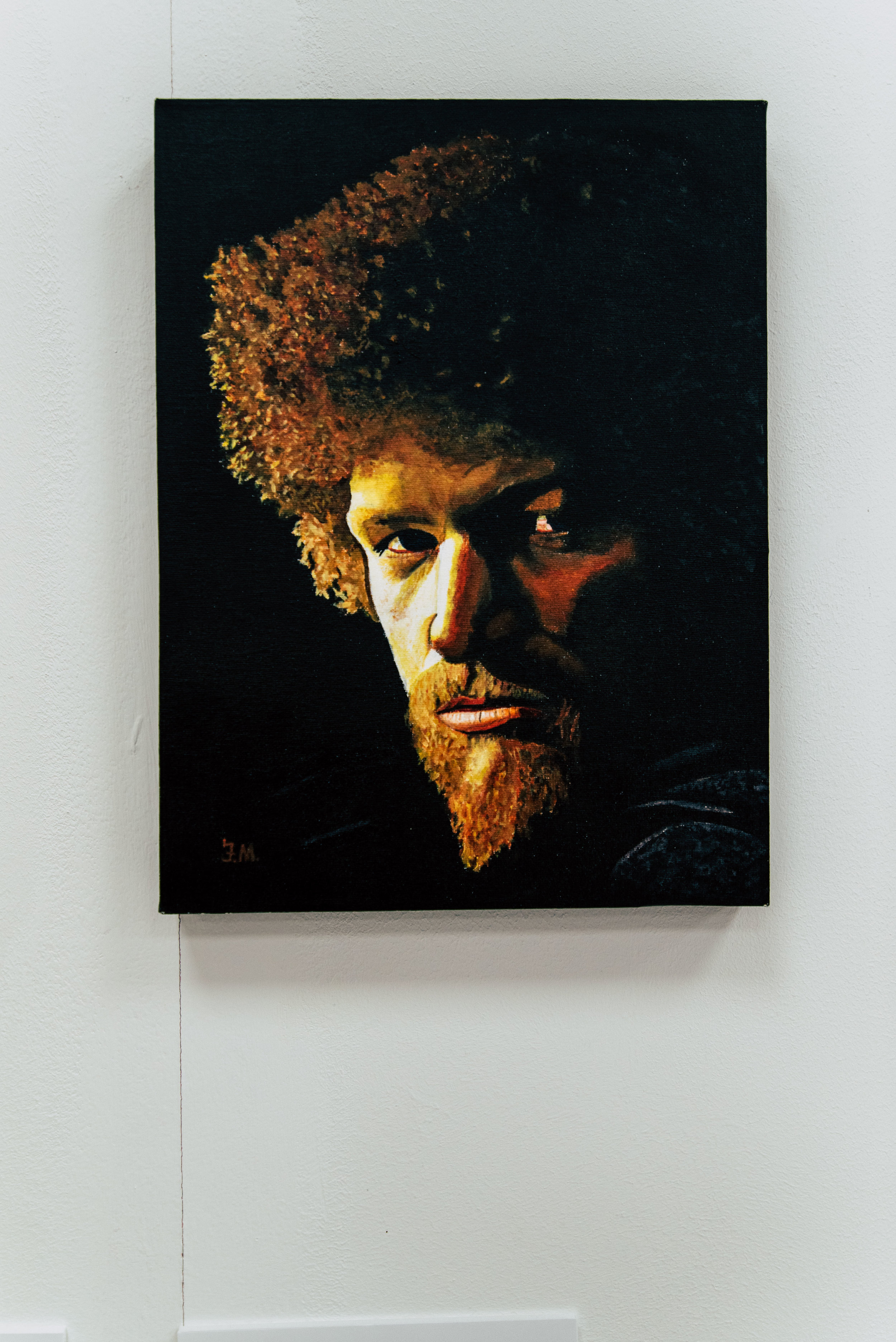
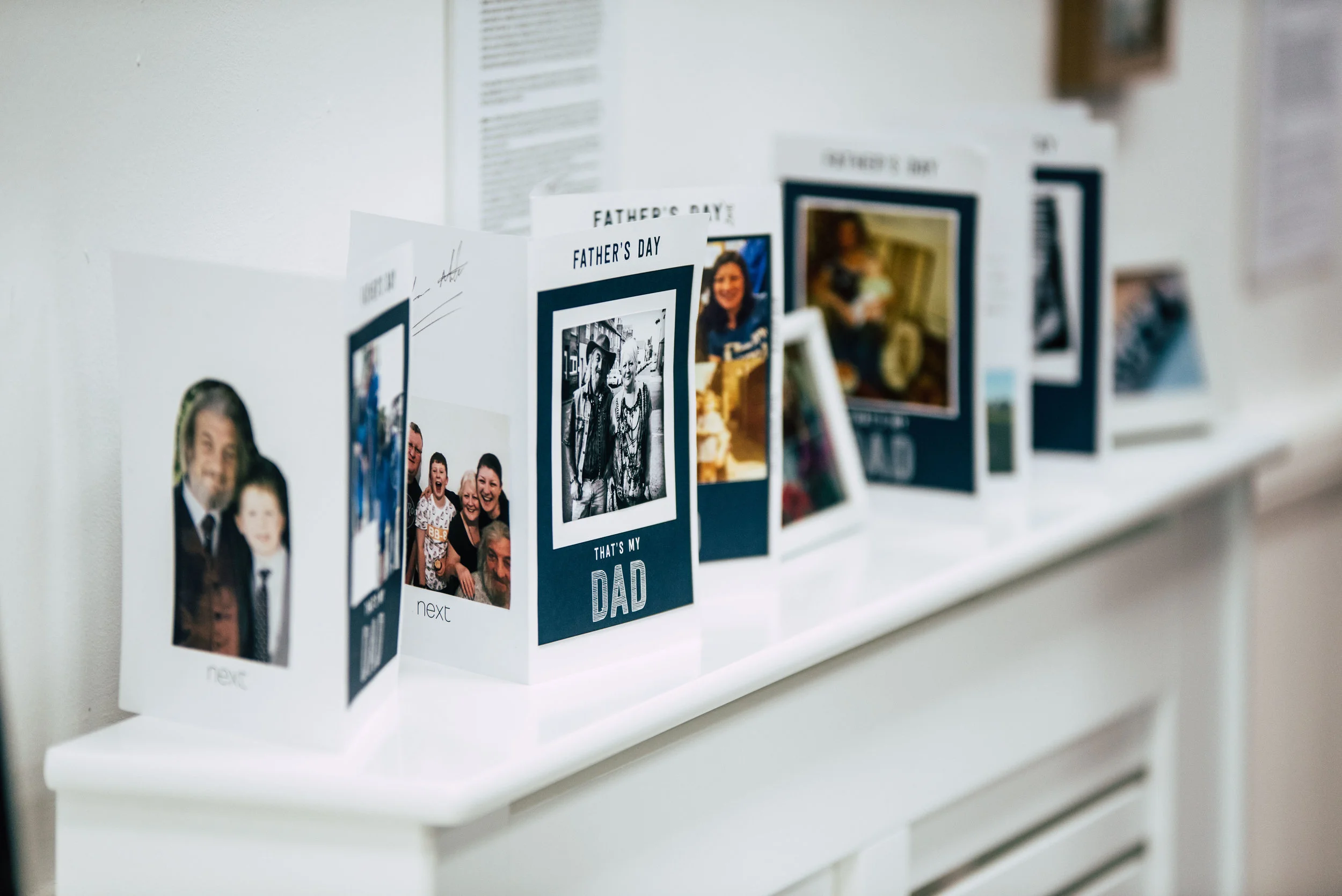
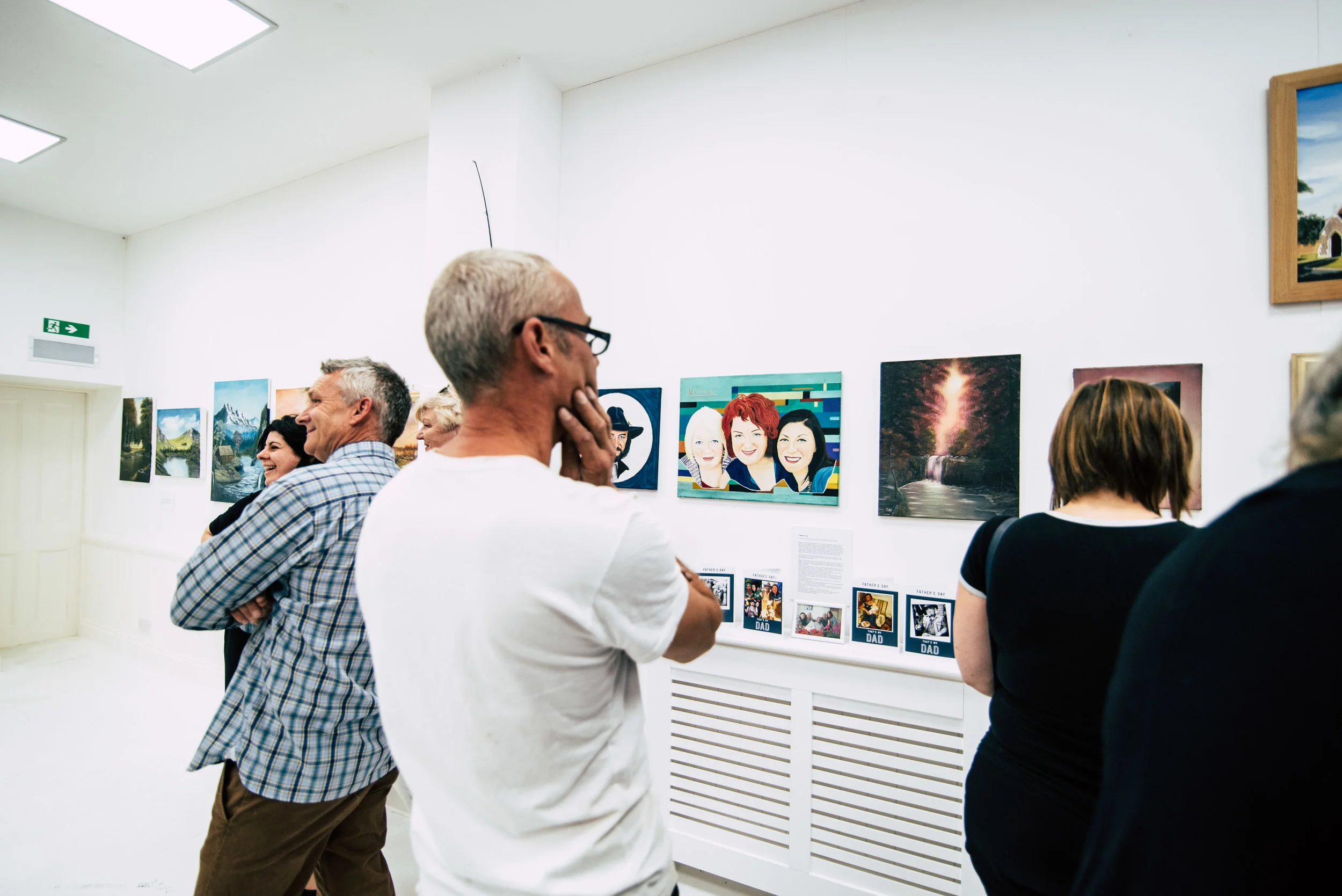
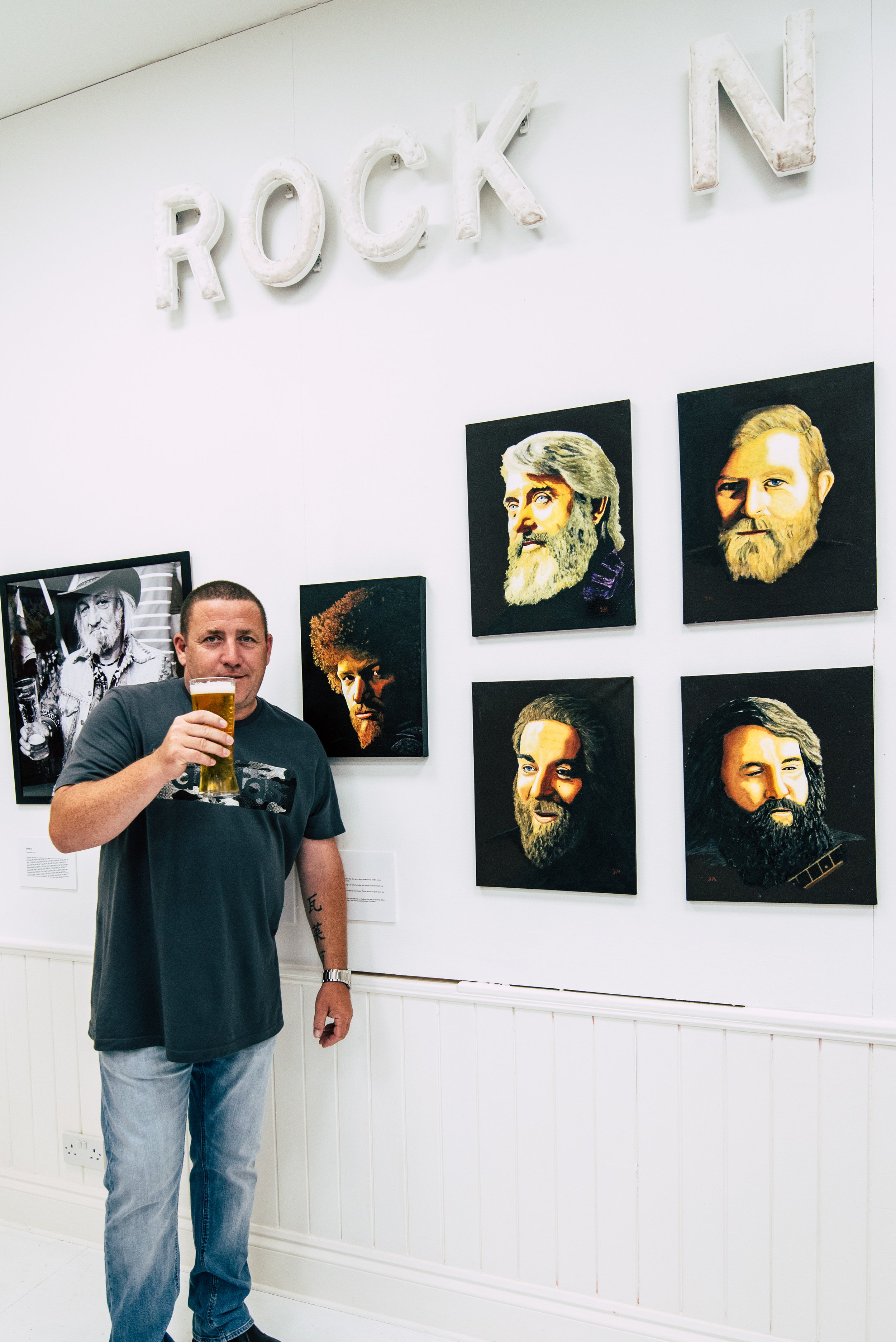
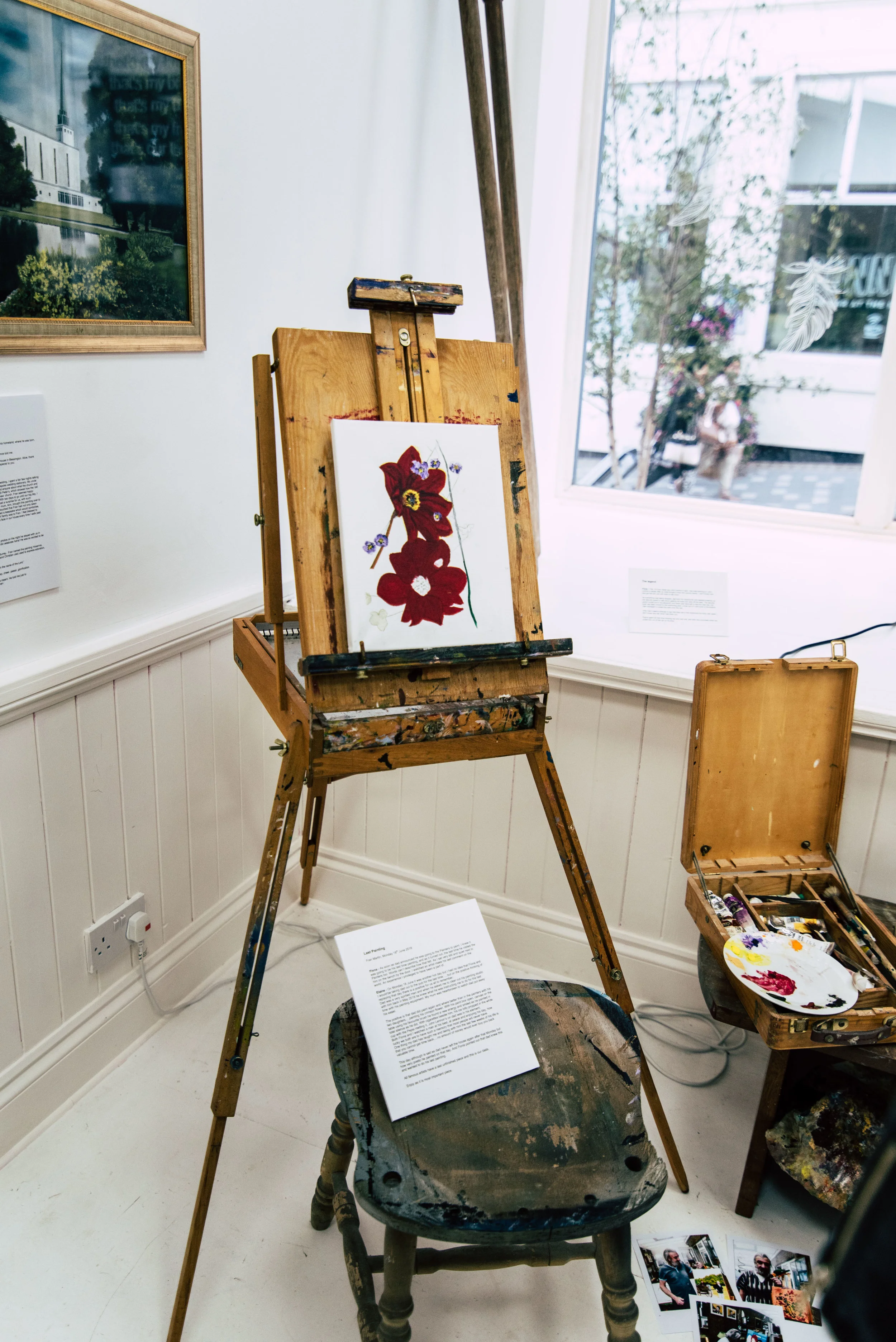
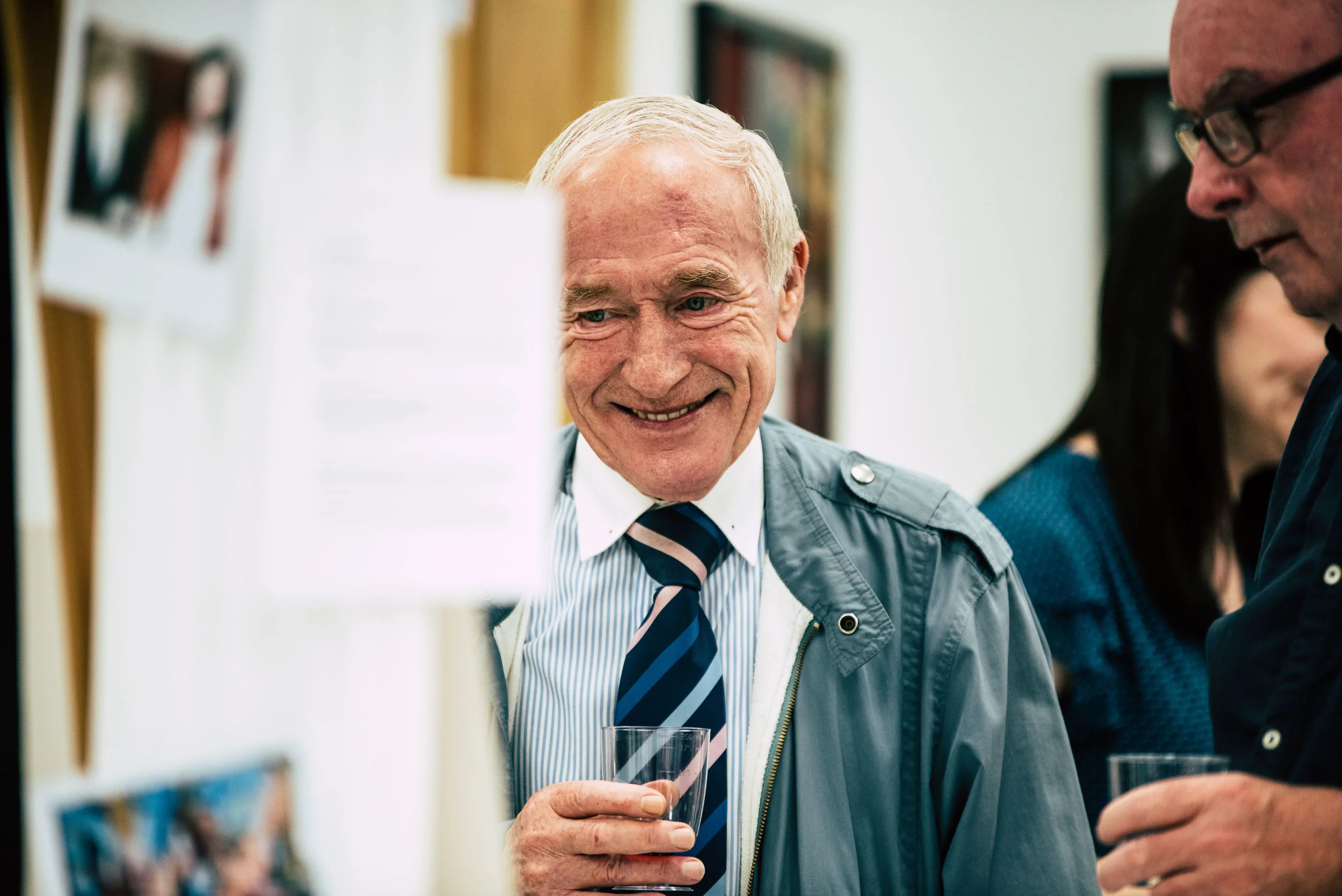
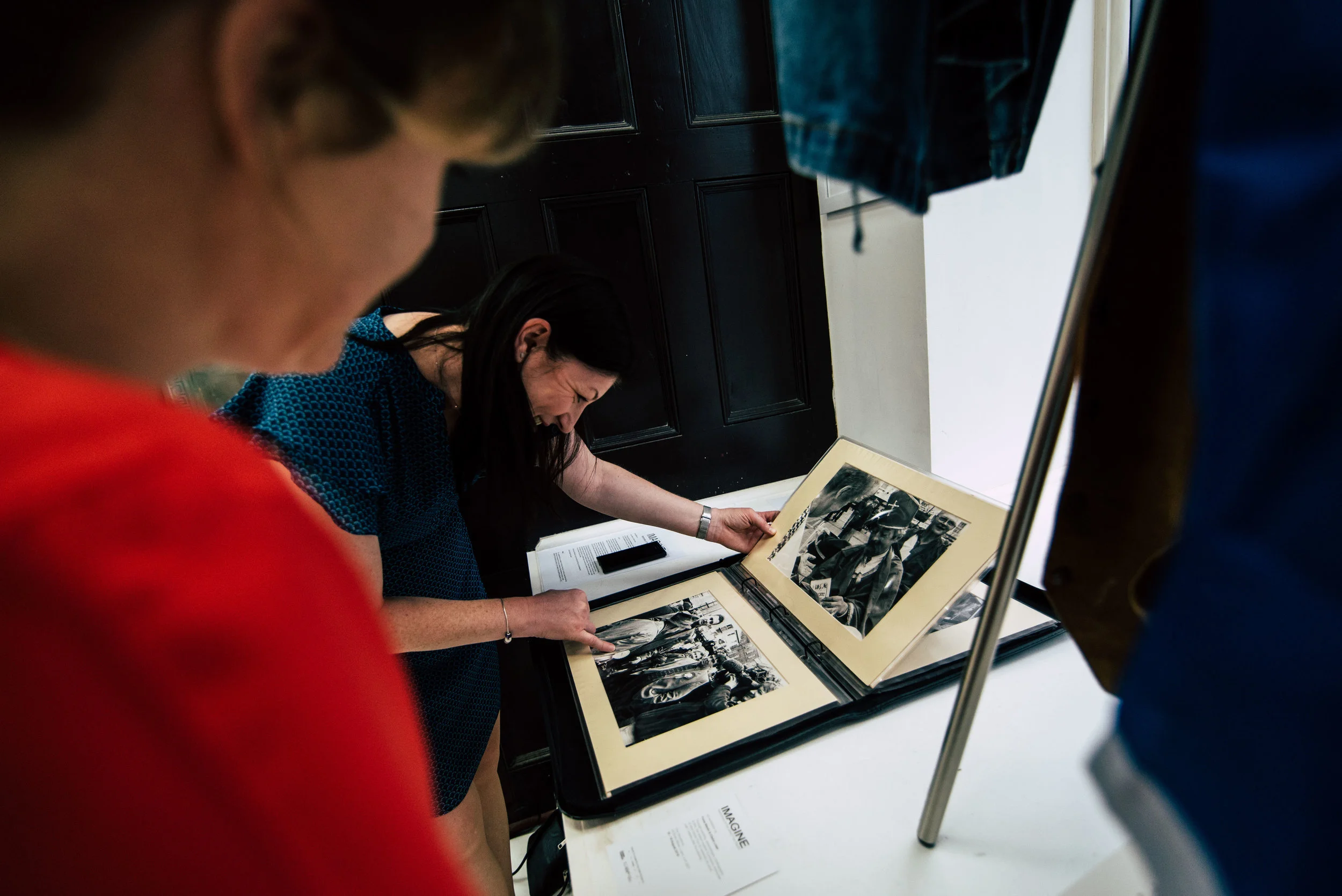
Imagine was a deeply personal collaborative exhibition created with my sister, Fiona Martin, in memory of our father, Francis Martin, a Luton-based artist and skilled welder. The work explored grief, memory, and legacy through the transformation of his personal belongings—denim, workwear, tools, and clothing—into sculptural and mixed-media artworks. Each piece reimagined fragments of his life and creativity, merging our memories with his materials and art. Through this process, we celebrated his craftsmanship and spirit, turning loss into an act of love and creative continuity—a lasting dialogue between father and daughters, art and remembrance.


Fiona Martin Profile
I am a multidisciplinary artist and cultural practitioner based in Luton, working across painting, installation, photography, video and digital media. My practice explores memory, storytelling and participation, focusing on how individuals and communities shape and share cultural memory through lived experience.
Much of my work sits at the intersection of art, research and community collaboration. I am interested in archives not as fixed historical records, but as living, evolving spaces shaped by migration, identity and collective experience. I work with communities to create artworks, stories and digital archives that foreground voices often absent from traditional heritage narratives.
My projects frequently draw on oral histories, personal narratives and shared creative activity, creating spaces where participants become co-authors rather than subjects. I am particularly interested in how creativity can support connection, wellbeing and belonging, and how storytelling can challenge stereotypes while celebrating the complexity of cultural identity.
Alongside my artistic practice, I develop socially engaged projects that experiment with new forms of digital and immersive storytelling, exploring how archives can be preserved, experienced and reimagined through contemporary technologies. My work aims to position art as a tool for dialogue and exchange — connecting past, present and future through collective acts of remembering.
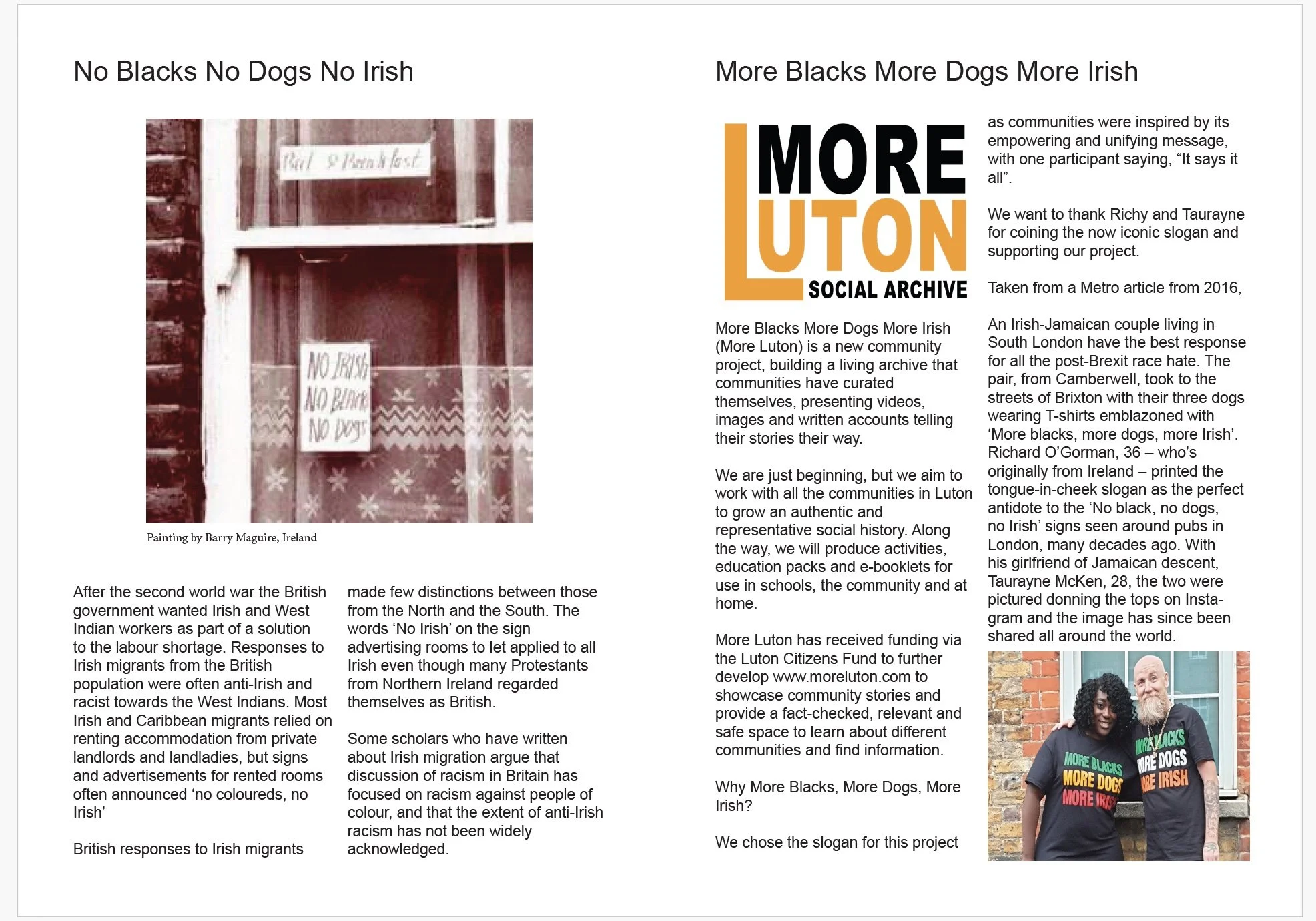
More Blacks, More Dogs, More Irish, More Luton- 2022-Present
More Blacks, More Dogs, More Irish, More Luton is an evolving digital social archive celebrating the cultural diversity and shared histories of Luton. Originally developed with the Luton Irish Forum, supported by the Luton Citizens Fund, the project brings together oral histories, photographs and film to create a living record of the town’s identity, shaped by the voices and lived experiences of its communities.
Development of the website is currently paused while I undertake a period of research supported by Arts Council England through the Develop Your Creative Practice programme. This research explores new approaches to community-led archiving, investigating how digital and immersive technologies can bring archives to life through interactive exhibitions, participatory storytelling and accessible online platforms. The work focuses on ethical and collaborative ways of preserving cultural memory, while exploring how archives can be experienced as active, shared spaces rather than static collections.
This research phase will inform the next stage of More Luton, ensuring the project develops sustainably and responds to new creative possibilities. While public updates are currently quieter, the archive remains an active and evolving practice, with new projects, collaborations and public outcomes expected to emerge from late 2026.

Fran Martin - Our Legend
Following my father’s passing, I co-created Imagine with Elaine—an audiovisual work that wove together fragments of our family’s shared history. The piece incorporated a family interview I recorded in 2005 as part of my BA Fine Art installation on memory and nostalgia. I also digitised an old cassette tape of my father singing his favourite song, Imagine, recorded during a karaoke night in the early 1990s. As both time and the tape itself began to deteriorate, preserving his voice became profoundly important.
The final work paired this fragile recording with a simple showreel of family photographs, creating a deeply personal meditation on love, loss, and legacy. Though the video’s quality reflects the limitations of ageing technology, its emotional truth endures. For our family, it has become an invaluable digital keepsake—a lasting echo of my father’s creativity and spirit.
This experience marked a turning point in my artistic practice, deepening my commitment to storytelling as both remembrance and renewal—a way to preserve not only memory, but the living presence of those we have loved.
Community Lead Storytelling
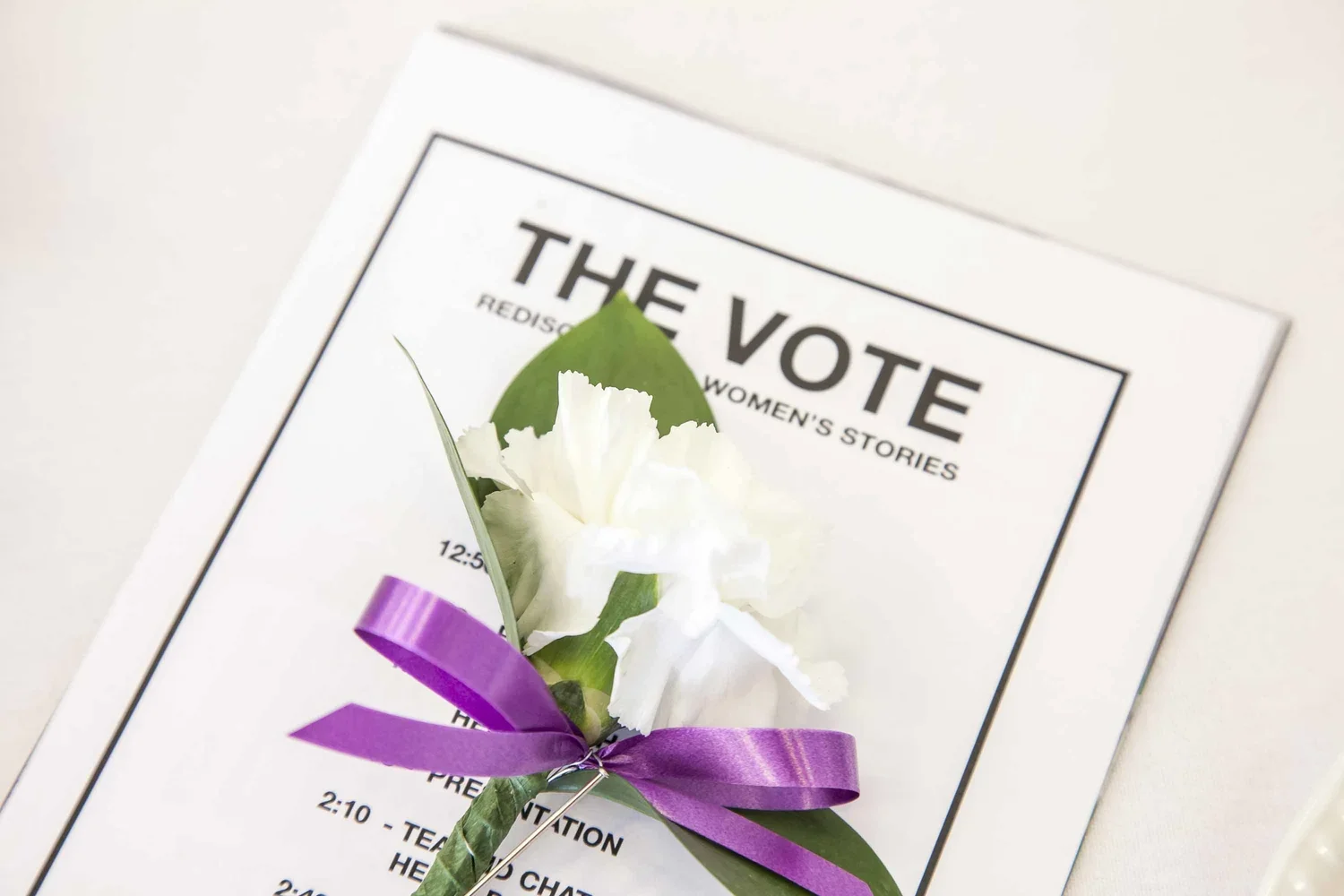
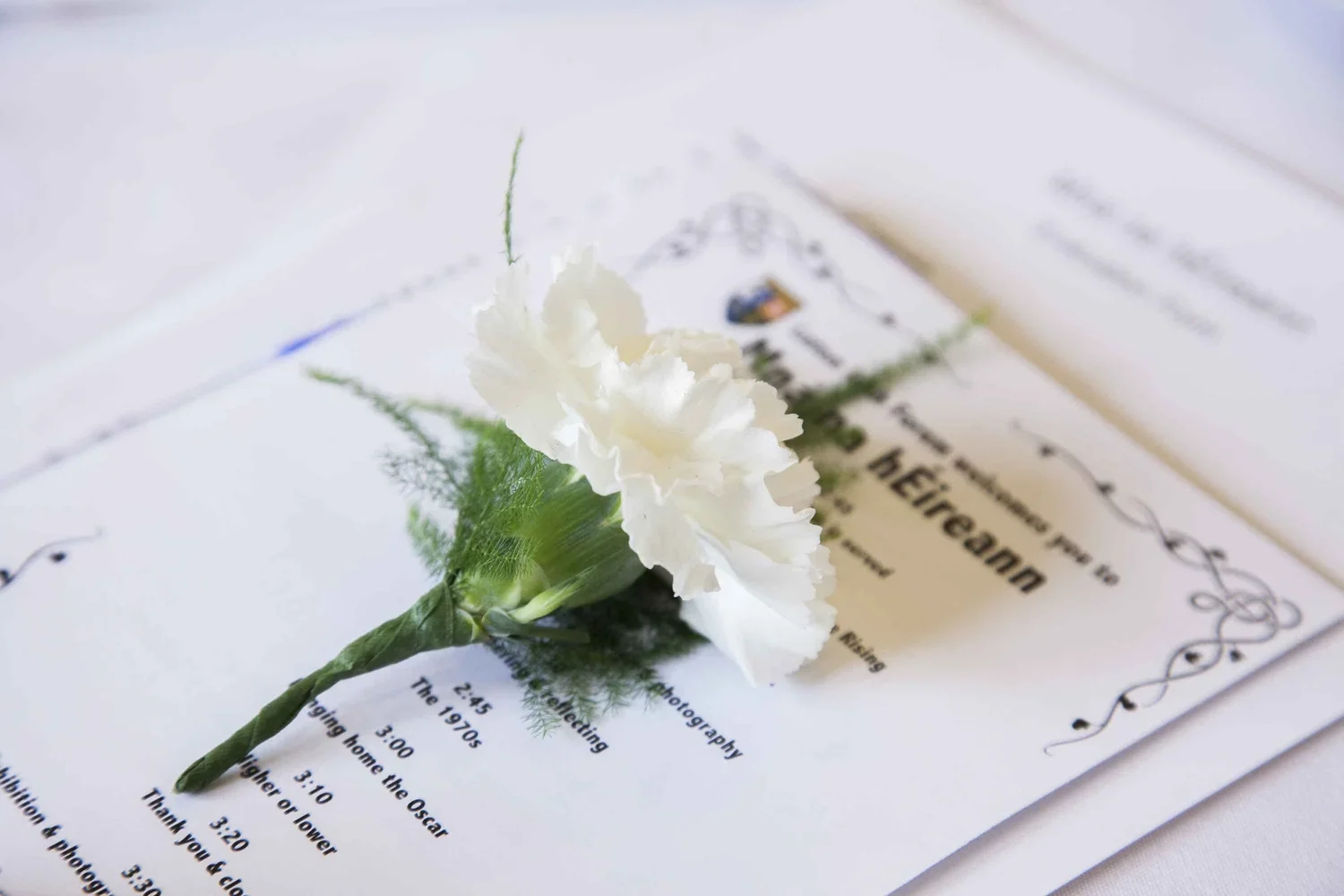
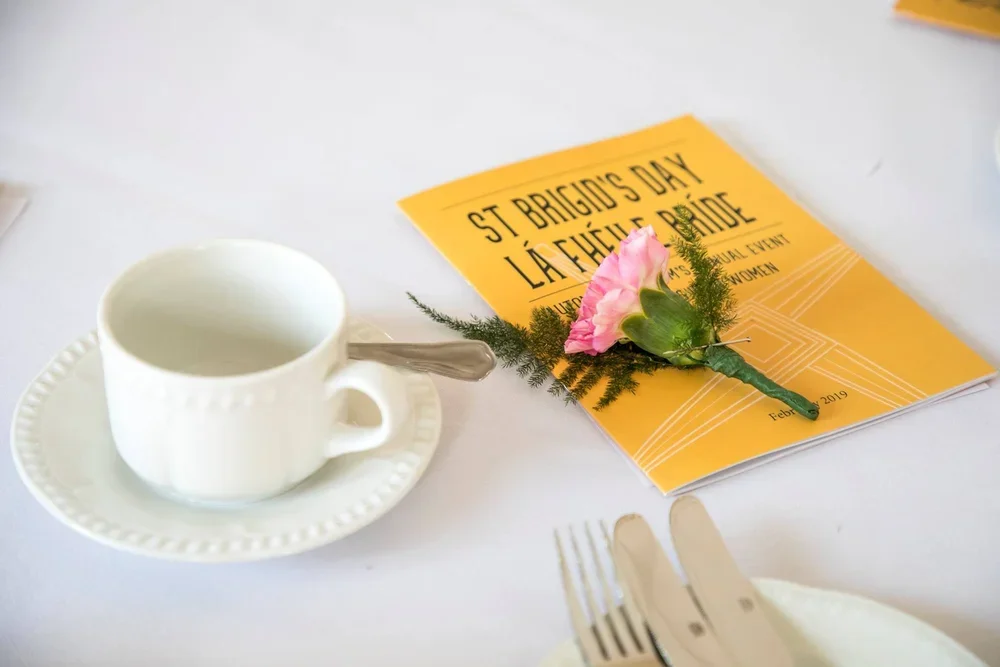
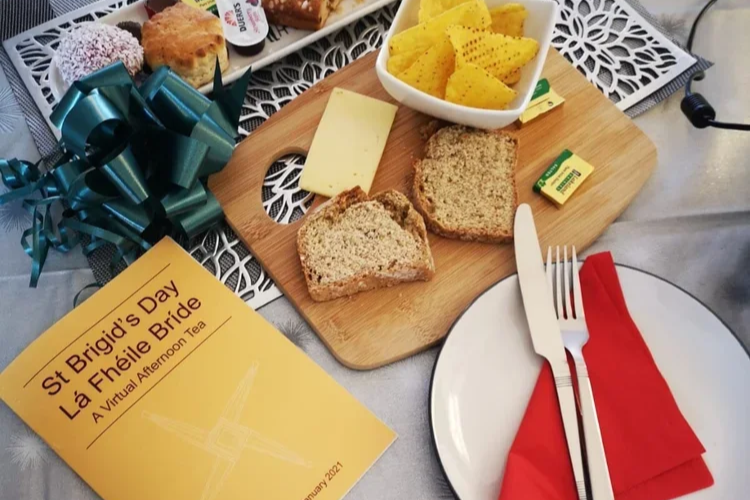
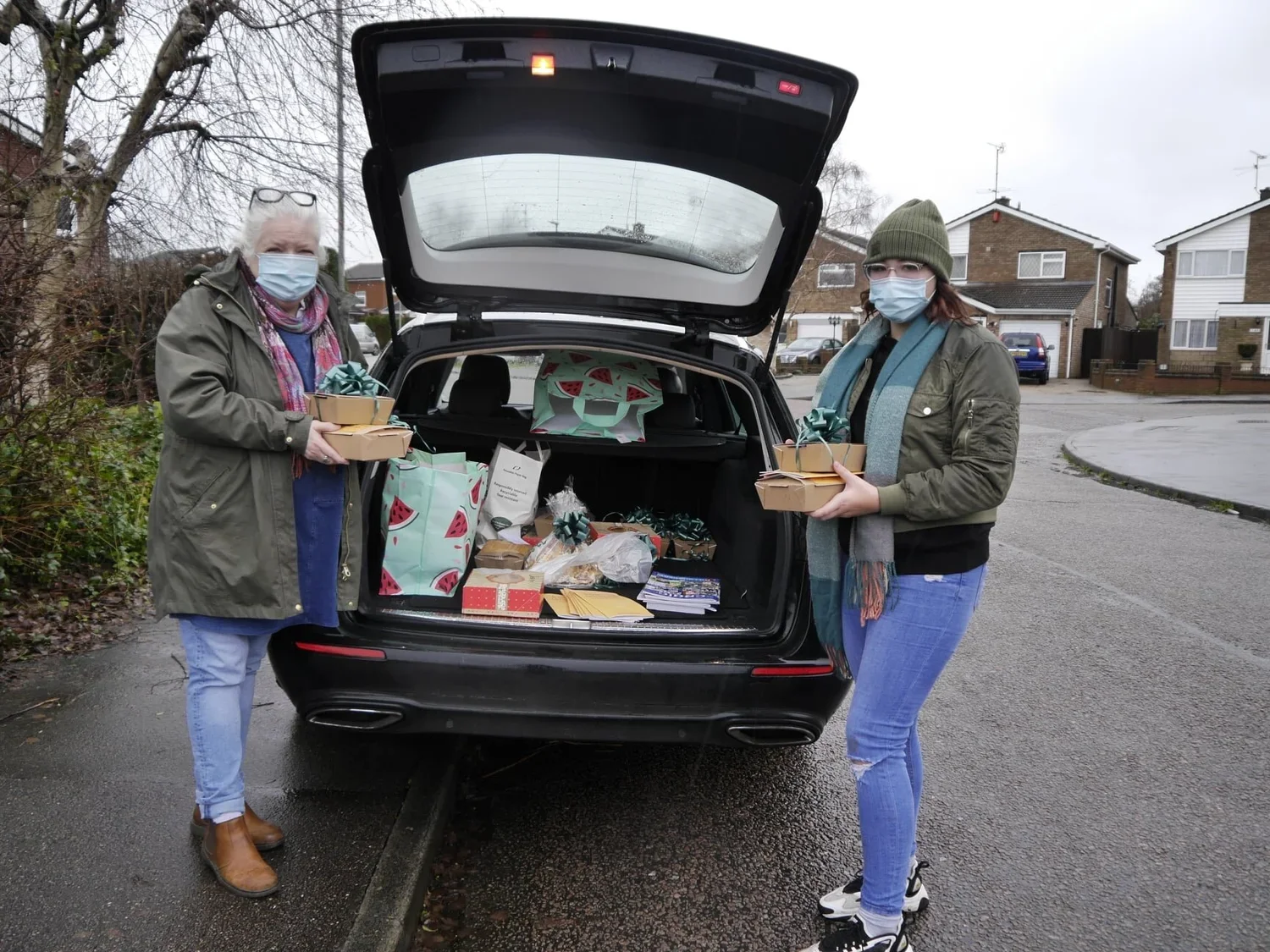
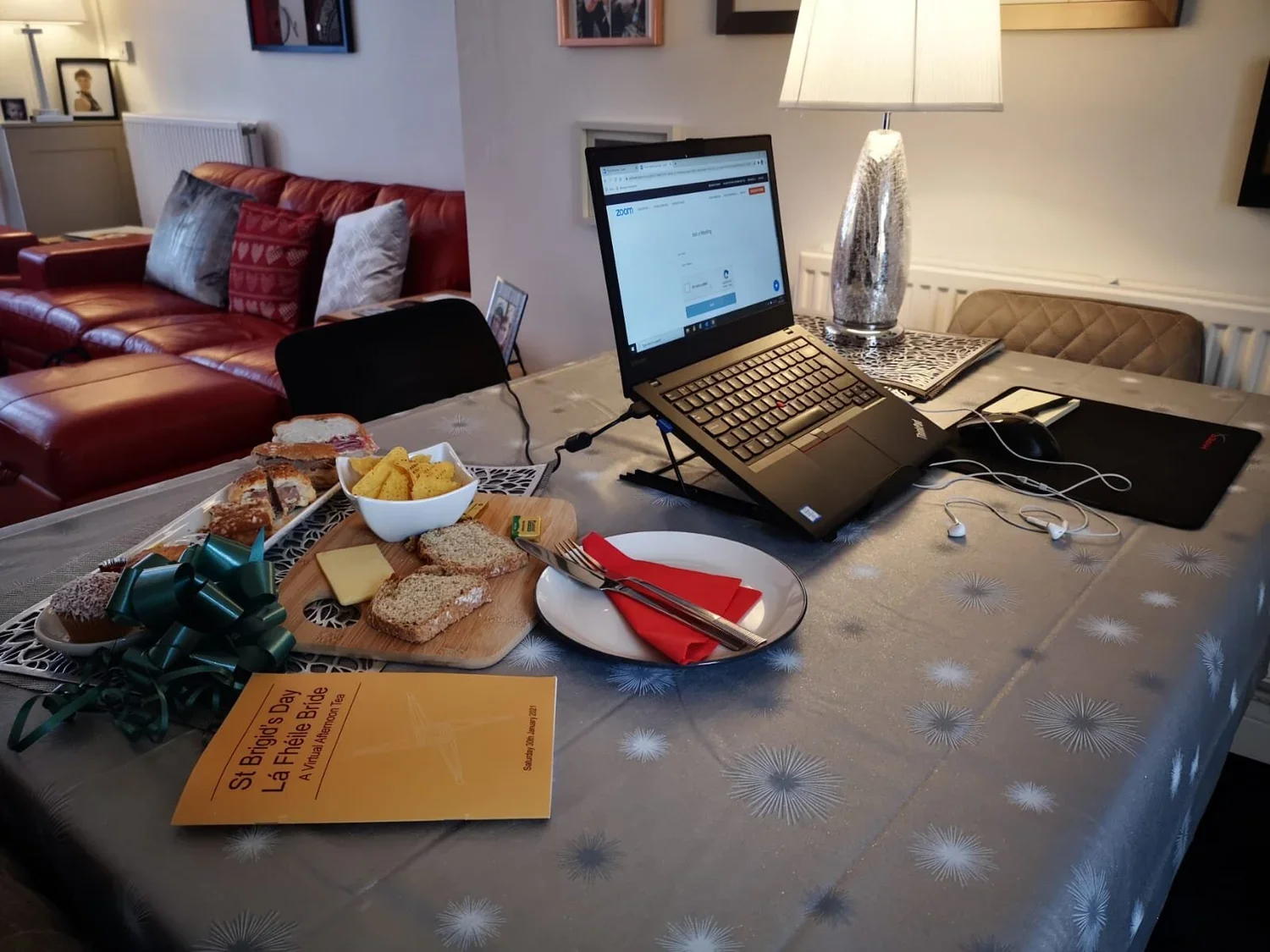
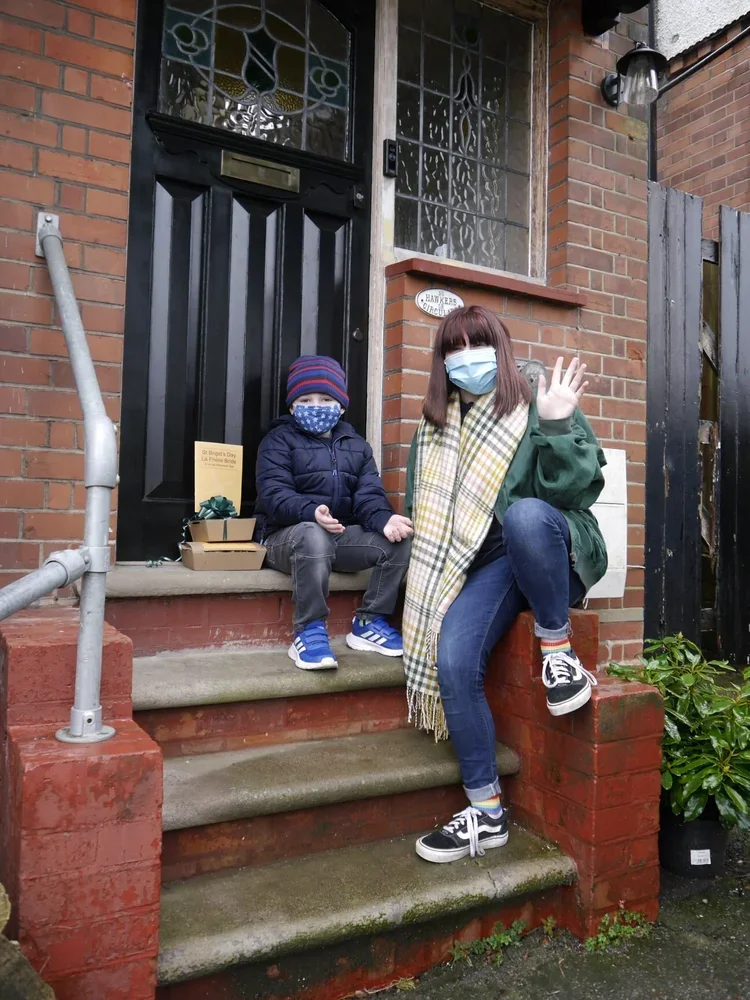
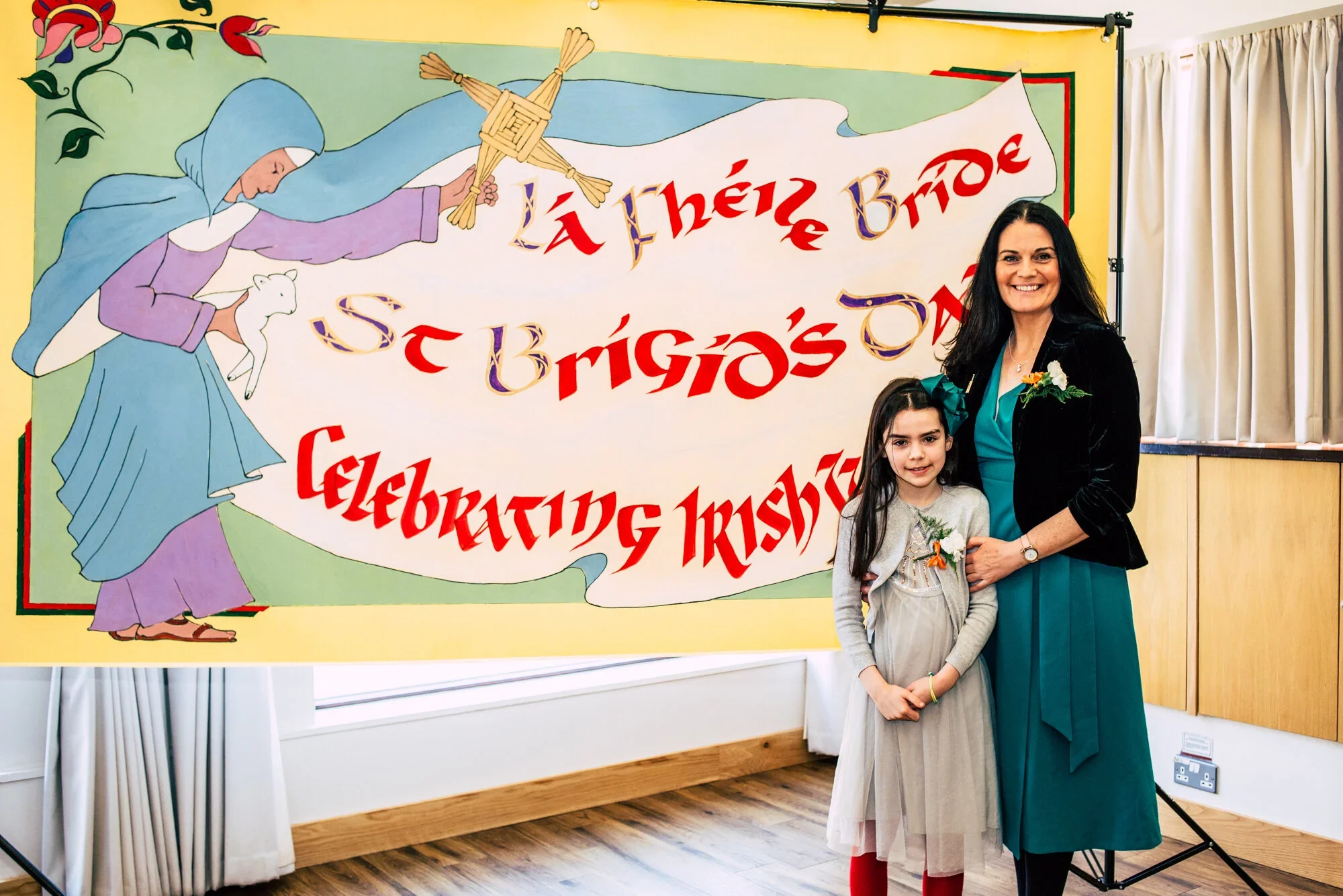
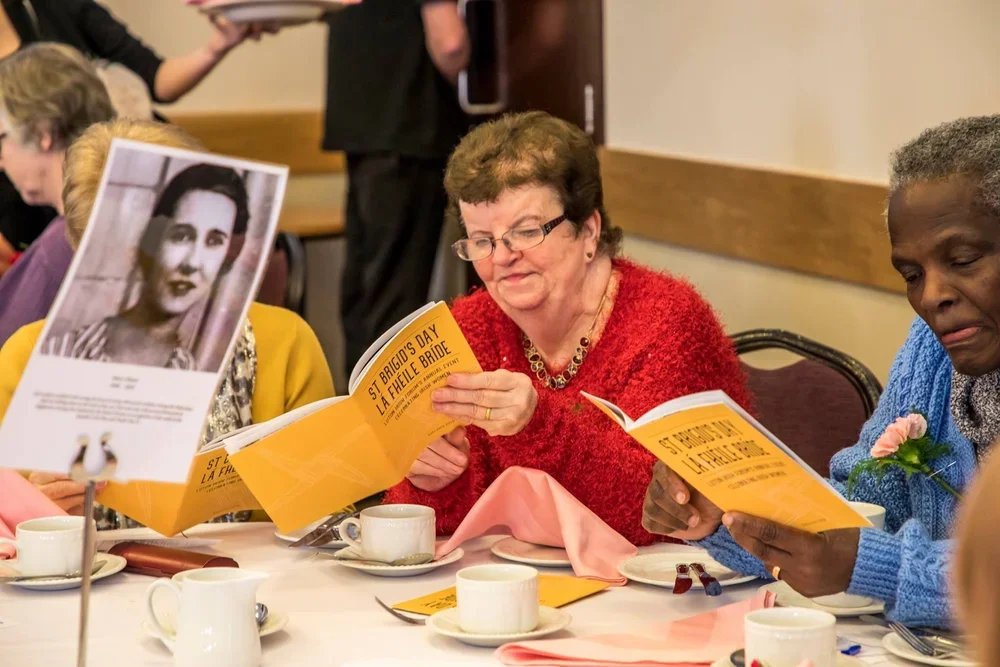
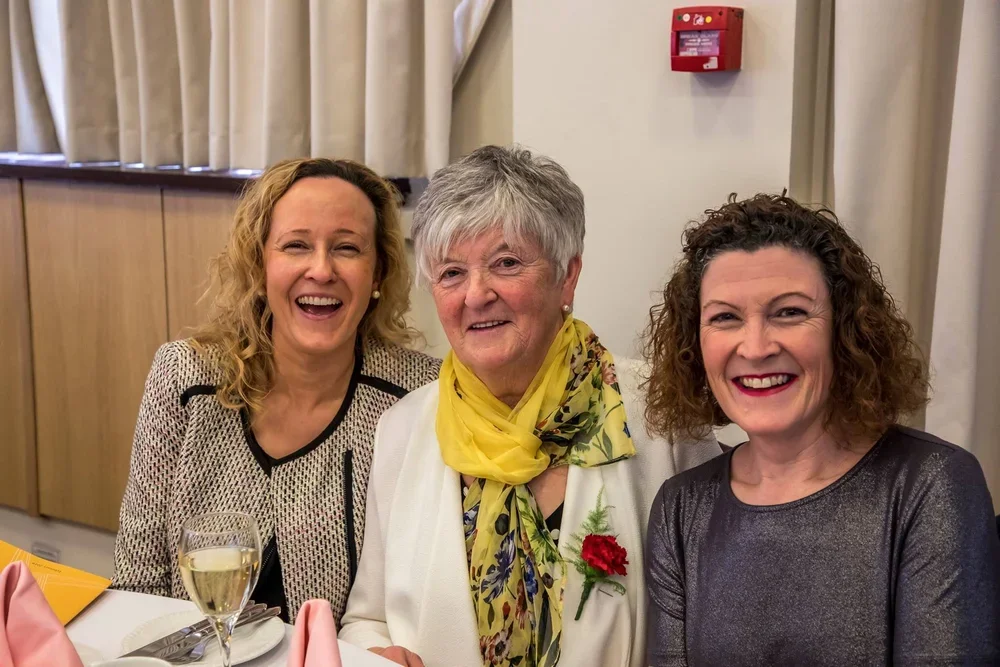
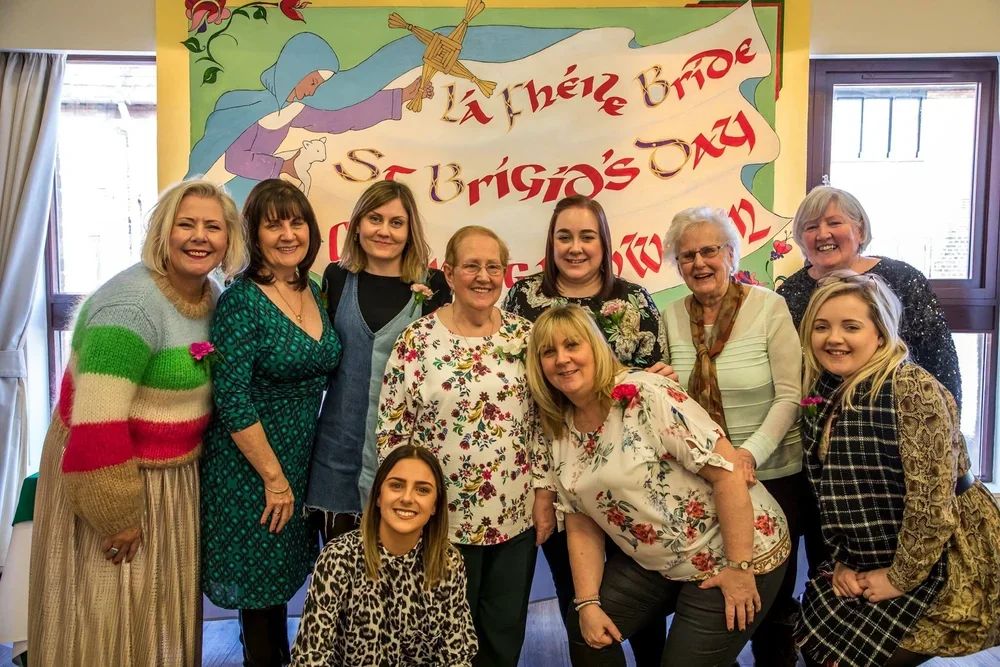
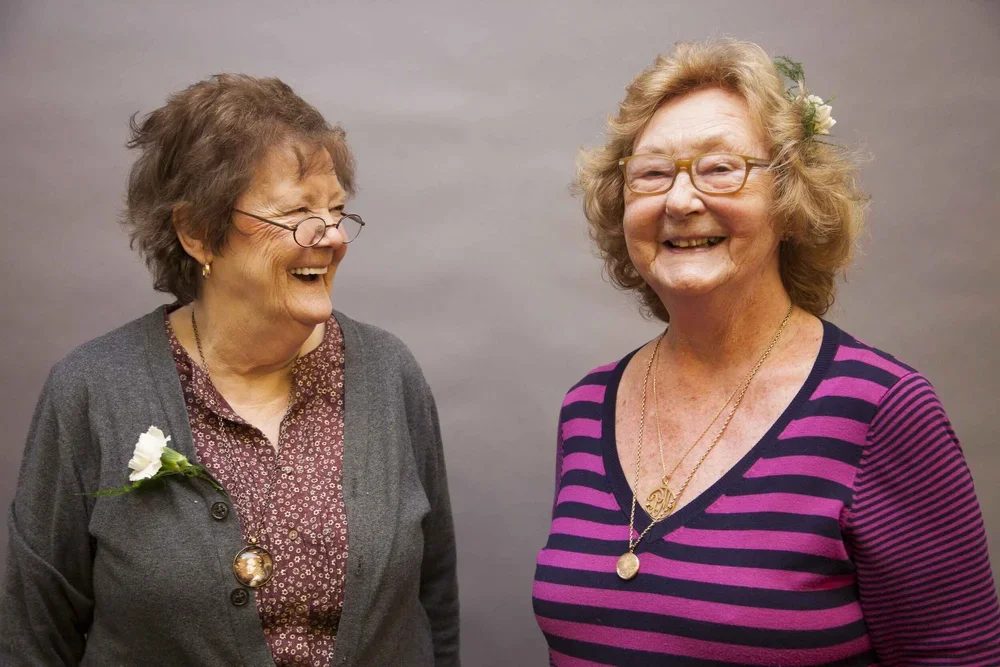
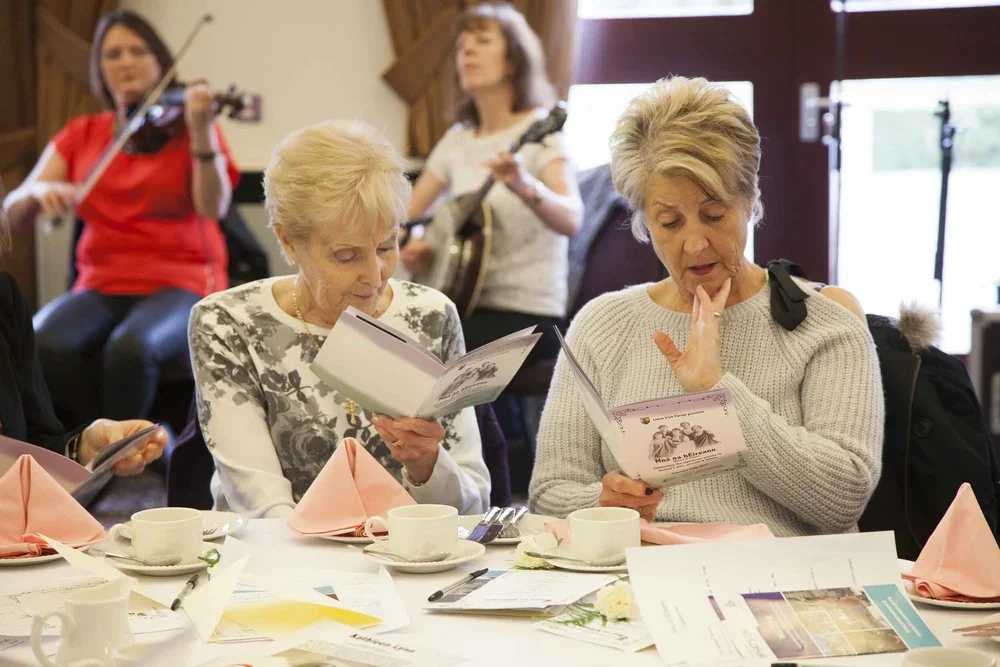
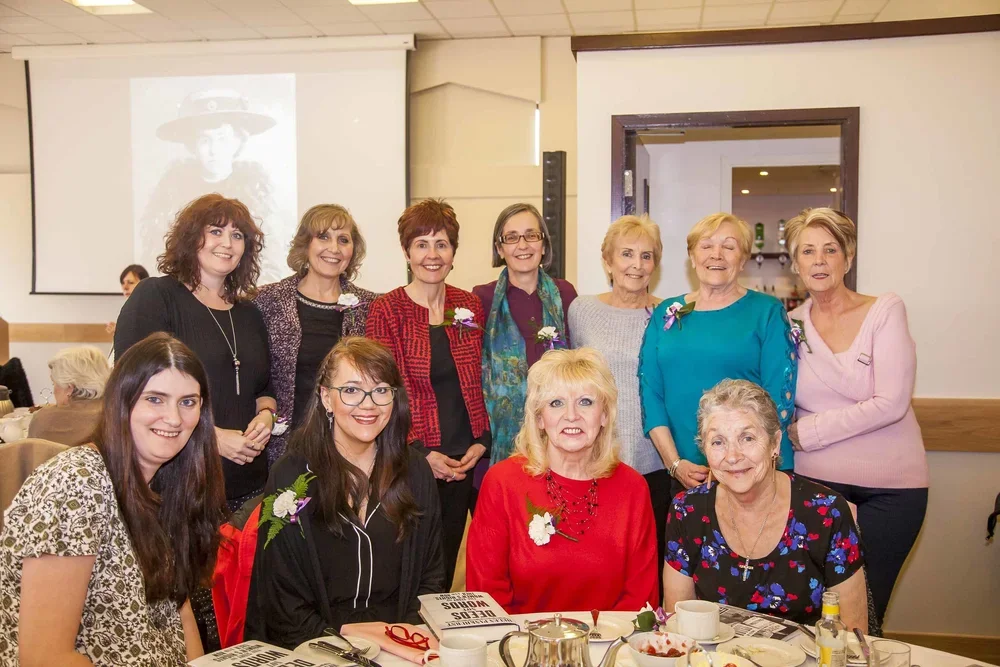
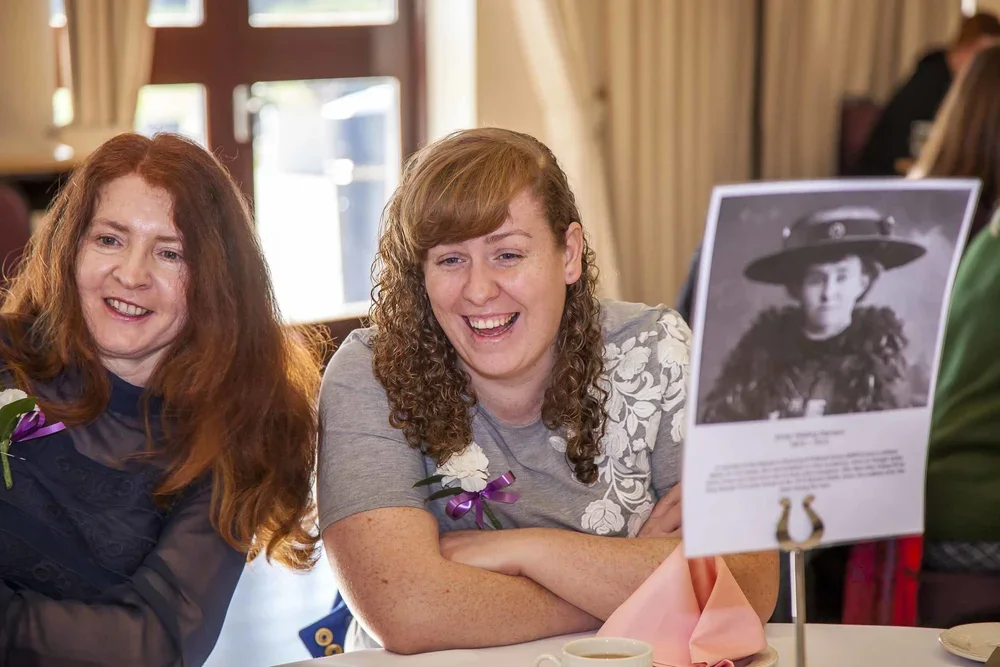
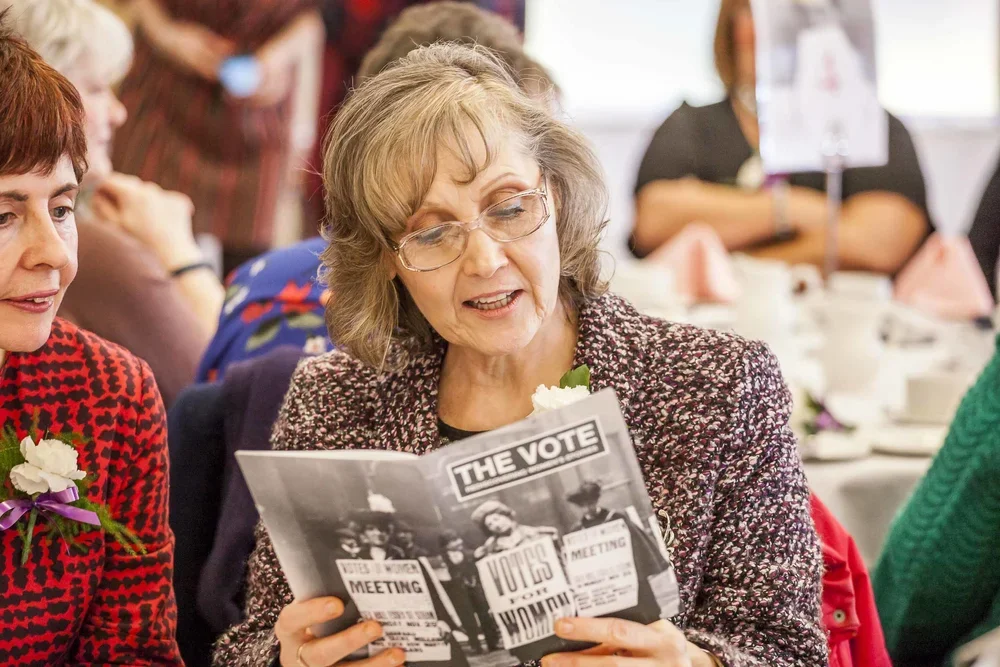
In collaboration with the Luton Irish Forum, I developed the annual St Brigid’s Day celebration, an event dedicated to honouring and celebrating Irish women in Luton. Through storytelling, the project shared the lives and experiences of local women, connecting their stories to wider historical and cultural contexts. Each year’s celebration was accompanied by a beautifully designed community booklet, capturing their words and images as a living memorial. The project became a heart-warming, community-led initiative that built confidence, encouraged self-expression, and celebrated women’s voices. By bringing generations together to share stories, St Brigid’s Day strengthened family ties and community bonds, creating a lasting record of resilience, heritage, and belonging.